
As the nation’s largest wildfire tears through Utah’s forests, officials admit they still do not know exactly who sparked it—yet they are already tightening controls on ordinary people’s lives.
Story Snapshot
- The Cottonwood Fire is now the largest active wildfire in the United States, burning more than 70,000 acres with zero containment.[7]
- Officials classify the blaze as human-caused, but the precise trigger and responsible person remain under investigation, fueling public distrust.[1][7]
- Utah’s governor declared a state of emergency and restricted fireworks statewide as crews struggle with dry forests, high winds, and stretched resources.[3][5][6]
- The fire has severely damaged Eagle Point ski resort and nearby cabins, while damage totals and many residents’ complaints still have not been fully counted.[1][5]
A Human-Caused Megafire With No Clear Culprit
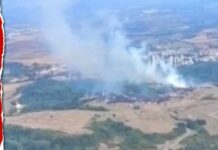
State officials say the Cottonwood Fire burning in southwest Utah is human-caused, but the exact source is still under investigation.[1] Fire managers report the blaze was first discovered on June 22 in Beaver County and quickly exploded across Beaver and Piute counties.[7] The fire grew to more than 70,000 acres within days and is now mapped at over 71,800 acres, making it the largest active wildfire in the United States.[7][6] That scale alone raises questions about how one ignition turned into a regional disaster.
Some outlets initially reported that the cause “has yet to be determined,” even as they noted that most fires this season are human-caused.[3][5] Later updates from Utah fire officials and local television described the Cottonwood Fire as human-caused while stressing the investigation is ongoing.[1][2] This shift in language, from “unknown” to “human-caused but under investigation,” creates space for doubt among residents who already feel official stories change too often. Many see it as another example of leaders demanding trust while keeping key facts behind closed doors.
Communities Caught Between Flames and Emergency Controls
The Cottonwood Fire has ripped through tinder-dry forest and rugged canyons, fueled by low humidity and strong winds.[6] It severely damaged the Eagle Point ski resort in Beaver County and destroyed multiple summer cabins, yet authorities still do not have a full count of homes and buildings lost.[1][5] Families who worked for years to afford a cabin now wait for slow damage reports, which deepen the sense that property owners come last in disaster planning. Many feel the promises of the American Dream literally went up in smoke overnight.
As the fire spread, Governor Spencer Cox declared a state of emergency and expanded the state forester’s authority to ban fireworks across Utah heading into the Fourth of July holiday.[3][6] Officials argue the ban is needed because this is one of the most severe wildfire seasons in recent history and fires are starting closer to homes and towns.[3][5][6] But for many residents, the order looks like another broad restriction on normal life, dropped from above, while the state still cannot stop a single blaze. To people on both left and right, it reinforces a picture of leaders quick to limit citizens, slow to control the real threats.
Power Shutoffs, 0% Containment, and Strained Trust
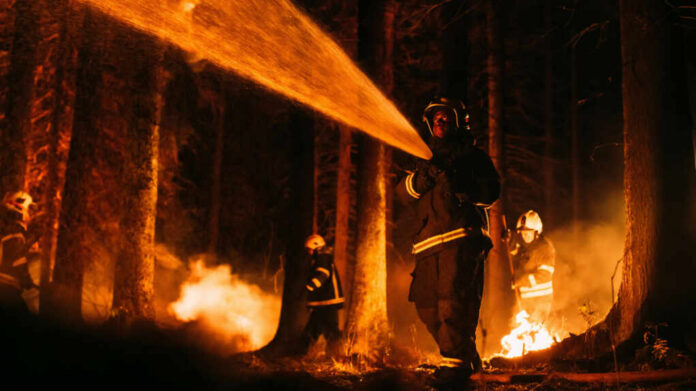
Fire crews are battling the Cottonwood Fire with hundreds of firefighters and aircraft, yet containment remains stuck at zero percent days after the first spark.[7][6] Officials say extreme fire behavior, steep terrain, and shifting winds make it unsafe to dig and hold lines.[6] Fire science backs this reality: hotter, drier conditions in the American West now create “fire weather” that makes large, fast-moving fires more common.[17] Still, when residents hear “0% contained” over and over, they see a government that talks about advanced tools but cannot deliver basic safety.
Utah wildfire (Cottonwood Fire) one of the most destructive — winds hampering crews as it burns through forests. Stay safe out West!#UtahWildfire #USWildfires #Breaking
— Jack Morgan (@jmorganct) June 28, 2026
Utility company Rocky Mountain Power has carried out public safety power shutoffs affecting thousands of people in southern Utah.[7] The goal is to keep power lines from sparking more fires in the dry, windy conditions.[6] Yet for families already facing evacuation alerts, smoke-filled air, and lost wages, the shutoffs feel like another hit. On the right, many see big utilities and state agencies protecting themselves first. On the left, many see vulnerable residents bearing the cost while wealthier interests stay insulated. Both sides read the situation as proof that the system works for the well-connected, not for ordinary people watching the ridgeline burn.
What This Fire Reveals About a System Under Strain
Utah’s own numbers show how often people and institutions light the match. State dashboards report hundreds of fires this year, with humans responsible for most of them.[6][16] National research finds that human-caused climate change is driving hotter, drier conditions that amplify wildfire risk across the American West.[17] That means regular people are asked to change their behavior, utilities are told to cut power, and governors ban fireworks, all while deeper structural problems—like aging grids, poor forest management, and political gridlock—remain largely untouched.
For conservatives frustrated by rising costs, weak borders, and “woke” distractions, a human-caused megafire that government cannot quickly contain looks like one more sign of misplaced priorities. For liberals angry about inequality, fossil fuel use, and treatment of minorities, it underscores how those at the bottom absorb the worst impacts of both climate and policy failure. The Cottonwood Fire is not just a natural disaster. It is a mirror held up to a federal and state system that struggles to prevent known risks, reacts slowly when crisis hits, and then responds by tightening rules on the very people already paying the highest price.
Sources:
[1] YouTube – Largest wildfire in the US spreads through tinder-dry forest in Utah
[2] Web – Utahns on notice as fast-moving as the Cottonwood Fire, the largest in …
[3] Web – Cottonwood Fire, the largest in the US, spreads overnight, forcing …
[5] YouTube – Utah’s Cottonwood Fire could be the worst in state’s history
[6] Web – Residents on notice as fast-moving fire in Utah, the largest in the …
[7] YouTube – Cottonwood Fire, nation’s largest wildfire, burns 92,000 acres in …
[16] Web – [PDF] Large projected increases in area burned and wildfire frequency …
[17] Web – [PDF] All About Wildfires – Natural History Museum of Utah