The detail that turns this case from a shocking crime story into something more instructive is not the five-hour drive with a body in the passenger seat — it is the fact that the victim was, by her own friend’s account, actively planning to leave. Decades of domestic-homicide research show that the weeks and months surrounding separation, or the mere intention to separate, are the single most dangerous stretch in an abusive relationship, more dangerous than anything that came before it.
Key Points
- Tyronne Brazille, 50, is accused of shooting his wife, Lanessa Bradford, 50, at Independence Community Park in Baton Rouge, Louisiana, following an argument.
- Police say Brazille then drove roughly five hours across state lines with Bradford’s body propped in the passenger seat before Memphis officers stopped him for a traffic violation.
- Bradford, an elementary school employee, was reported missing after she failed to show up for work, prompting a welfare check that preceded the traffic-stop discovery.
- A friend told reporters Bradford had been quietly saving money and coordinating with out-of-town relatives to leave the marriage.
- Separation and the intention to separate are among the strongest documented predictors of intimate-partner homicide, appearing in roughly 40 to 58 percent of cases in major domestic-violence datasets.
What Investigators Say Happened
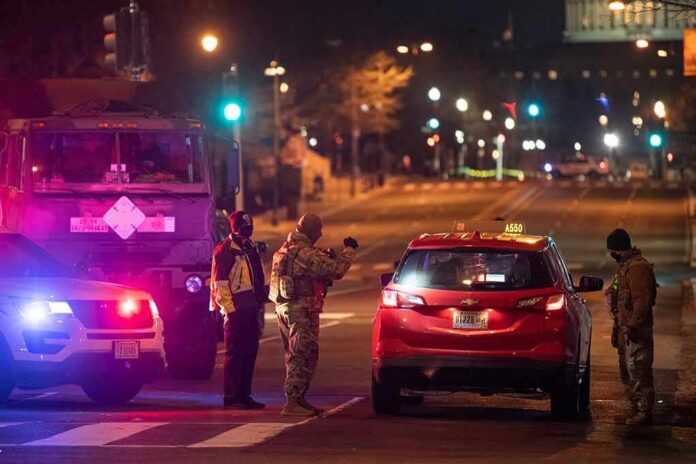
According to the Baton Rouge Police Department, Brazille and Bradford were together at Independence Community Park when a verbal argument escalated; investigators believe he shot her there. Rather than call for help or flee on foot, police allege Brazille placed Bradford’s body in the passenger seat of his vehicle and drove out of Louisiana, through at least one additional state, before Memphis officers pulled him over for a routine traffic violation Thursday night. Officers who approached the car discovered Bradford dead, and Brazille was taken into custody on the spot. Jail records show he was held by the Shelby County Sheriff’s Office pending extradition back to Louisiana to face a Baton Rouge murder charge.
The gap between the killing and the arrest matters because it explains how a homicide can travel undetected across state lines for hours. Bradford worked at an elementary school in Baton Rouge, and it was her absence from that job — not a 911 call from the scene — that first raised alarm among people who knew her. When she missed consecutive days without explanation, the school’s concern led to a police welfare check, a detail that places the discovery of her disappearance on an institutional timeline running parallel to, and initially separate from, the traffic stop nine hundred miles away in Memphis. Only after Brazille was stopped did the two threads converge.
The Warning Signs a Friend Says Were Already Visible
A longtime friend of Bradford’s, Shellica Decker, told reporters that Bradford had been methodically preparing to leave the marriage — setting money aside and arranging with relatives outside the area to take her in. Decker also said Brazille had a history of threatening self-harm or harm to Bradford whenever she raised the subject of leaving, and that he had recently turned physically abusive, even though Decker never believed he would go so far as to kill her. That combination — quiet, deliberate exit planning met with escalating threats — is not incidental color. It is the textbook profile that domestic-violence researchers have spent forty years documenting as the highest-risk configuration in intimate-partner relationships.
The research base on this point is unusually consistent across countries and decades. In an Australian family-violence homicide dataset, one or both partners had separated or intended to separate in 58 percent of cases where a man killed a female partner. A study of intimate-partner homicide in England and Wales found that 40 percent of victims had separated or were about to when they were killed. Canadian government analysis reached a similar conclusion: women face measurably heightened homicide risk in the first several months after leaving, a period researchers describe as more dangerous than the relationship itself. None of these figures explain any individual case, but together they establish that Bradford’s situation — an abused partner making concrete plans to leave — sits squarely inside the pattern criminologists consider most lethal.
Why Separation Is the Most Dangerous Phase, Not the Safest
The counterintuitive mechanism behind this pattern is control. Abusive relationships are often organized around one partner’s exertion of power over the other’s freedom, finances, and social contacts; a credible attempt to leave represents the collapse of that control, and for some perpetrators the response is not resignation but escalation. Researchers writing in the journal Policing describe separation as “a particularly vulnerable phase for the dynamics of violent escalation,” and note that threats to kill, prior strangulation, and firearm access compound the danger when a partner is actively leaving or has just left. A meta-analysis prepared for state legislative testimony found that where estrangement was a factor in intimate-partner homicide, a majority of killings occurred on the day of separation itself or in the immediate days after [and before, depending on dataset]. Firearm access, in particular, converts a volatile argument into an irreversible one in seconds — a mechanism plainly at work in Bradford’s killing.
This is why victim advocates resist the instinct to ask why a victim “didn’t just leave sooner.” The data say the opposite: leaving is frequently the trigger, not the solution, and the danger peaks precisely at the moment an abuser senses he is losing control. Decker’s account of Brazille threatening self-harm whenever Bradford discussed leaving is a documented warning sign in its own right — clinicians and law-enforcement risk-assessment tools both treat threats of suicide by an abusive partner as a marker of elevated lethality risk, because they signal a willingness to destroy the relationship entirely rather than survive its ending.
What Comes Next
Brazille faces extradition from Tennessee to Louisiana, where he is expected to be arraigned on a murder charge tied to Bradford’s death. The interstate transport of a body will likely factor into how prosecutors frame the case, both as evidence of intent and as a basis for additional charges beyond homicide itself, though the core prosecution will turn on the Baton Rouge shooting. For the broader public, the case is a stark, unusually visible illustration of a pattern that domestic-violence researchers have been documenting quietly for decades: that the decision to leave an abusive partner is not a resolution but a threshold, one that family, employers, and law enforcement should treat as a moment demanding heightened vigilance rather than relief. Bradford’s employer noticing her absence, and acting on it, is the kind of institutional attentiveness that advocates say should happen far earlier and far more often — before a welfare check becomes the only way a disappearance gets noticed.
Sources:
nypost.com, wafb.com, yahoo.com, newsbreak.com, ujsportal.pacourts.us, crimewatch.net, katv.com, courts.wa.gov, podcasts.apple.com