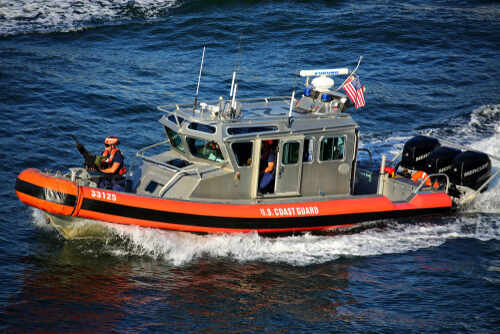
Washington just blew up another small boat in the Pacific based on secret intelligence the public cannot see, and both sides of the political divide are left to decide whether to trust the same institutions many already believe are failing them.
Story Snapshot
- U.S. Southern Command says the destroyed Eastern Pacific boat was a narco-terrorist vessel, but has released no public proof of drugs on board.
- The strike is part of Operation Southern Spear, a campaign that has killed more than 200 alleged traffickers since 2025 with no declared war or trials.[4]
- Officials frame the killings as a justified armed conflict with cartels; critics say Americans are being asked to trust classified evidence from a government they see as captured by elites.[1][4]
- Both conservatives and liberals who distrust “the deep state” see a pattern of unaccountable power, shifting labels like “terrorist” and “narco-trafficker” to justify lethal force far from U.S. shores.[4]
What Happened In The Latest Pacific Strike
United States Southern Command reported that a U.S. military asset struck a small vessel in the Eastern Pacific Ocean, killing two people that officials describe as “alleged narco-terrorists.”[2] The command said intelligence showed the boat was carrying illicit narcotics, traveling along a known drug-trafficking route, and operated by a designated terrorist organization, echoing language used in earlier announcements.[1][2] Released video shows a boat stationary on the water followed by a sudden explosion that obliterates the craft.[1][3] No U.S. personnel were harmed, and no survivors or seized cargo were reported.[2]
Military statements emphasize that the strike was ordered under Operation Southern Spear, the Trump administration’s ongoing campaign against alleged narco-trafficking vessels in the Caribbean and Eastern Pacific.[2][4] Officials describe the effort as part of a broader armed conflict against Latin American cartels and groups labeled as narcoterrorists, treating these boats as lawful military targets rather than suspects for arrest.[4] Supporters argue that hitting smugglers at sea protects American communities from deadly drugs and bypasses what they see as weak, politicized law enforcement onshore.[1]
A Deadly Campaign Built On Classified Intelligence
Since late 2025, the United States has carried out at least dozens of air and missile strikes on alleged drug-smuggling vessels, expanding from the Caribbean into the Eastern Pacific.[4] Reporting compiled from official releases and independent outlets indicates that as of early May 2026, at least 205 people have been killed in more than sixty strikes on sixty-three vessels, with only a handful of survivors captured alive.[4] Southern Command routinely states that each boat was engaged in narco-trafficking and operated by designated terrorist or criminal organizations, but it has not publicly identified many vessels or crews by name.[1][4]
Major news organizations, including CBS and regional outlets, note that the U.S. military “has not provided evidence that any of the vessels were carrying drugs,” despite repeated claims about confirmed narcotics cargo and known smuggling routes.[3] Press releases and videos show explosions at sea but no post-strike photos of seized packages, lab tests, or recovered debris that would independently verify drug shipments.[1] Southern Command also refers to “Designated Terrorist Organizations” but often declines to specify which group allegedly controlled a given boat, limiting public ability to cross-check sanctions lists or criminal records.
Why This Alarms Americans Across The Political Spectrum
Conservatives who backed an aggressive “America First” stance against cartels see an uncomfortable echo of past undeclared wars and secret drone campaigns when they hear that more than two hundred people have been killed on the basis of classified intelligence they are never allowed to review.[4] Many already distrust a permanent security bureaucracy they associate with endless wars, politicized investigations, and a two-tiered justice system that punishes ordinary citizens while shielding elites.[4] For them, calling a distant speedboat a “terrorist vessel” without public evidence looks like mission creep that could one day point inward.[4]
Liberals who oppose militarized drug policy and harsh immigration enforcement hear the same numbers and worry about human rights, due process, and the lives of poor Latin American crewmen who may be mules or coerced labor rather than cartel kingpins.[4] To them, a campaign that has killed over a hundred people at sea with no court cases, no names, and no independent oversight fits a pattern in which Washington uses fear of drugs or terrorism to expand unaccountable power while inequality and domestic crises deepen.[4] Both sides converge on a shared suspicion: a federal government comfortable taking life based on secret memos is not a government that feels answerable to its citizens.
The Legal And Accountability Questions No One Has Answered
Trump administration officials argue that cartels and allied groups qualify as enemies in an armed conflict, allowing the United States to use military force against them outside traditional battlefields.[2][4] However, public reporting so far does not include any detailed legal opinion from the Department of Justice or the Pentagon explaining how international law and U.S. statutes are satisfied when missiles destroy unflagged boats in international waters.[3][4] No court has reviewed individual strikes, and families of those killed have not had a clear path to challenge the government’s version of events.[4]
Journalists and watchdogs point out that this secrecy puts citizens in a bind: there is not enough information to prove the government is lying, but also not enough to verify that each dead man was a genuine narco-terrorist rather than a fisherman or low-level smuggler.[3] The absence of released cargo evidence, vessel identities, or specific group names means the public debate rests almost entirely on trust in the same national security institutions many Americans now believe are captured by an unaccountable “deep state.”[1][3][4] Whether one’s anger starts from the right or the left, the pattern reinforces a broader fear that Washington’s most lethal decisions are now made first and explained—if at all—much later.
Sources:
[1] Web – U.S. destroys alleged drug boat in Pacific, killing 2 more people
[2] Web – Lethal Kinetic Strike, Dec. 4, 2025 – southcom
[3] Web – Lethal Kinetic Strike, May 5, 2026 – southcom
[4] Web – 3 killed in latest U.S. strike on suspected drug boat in eastern …