
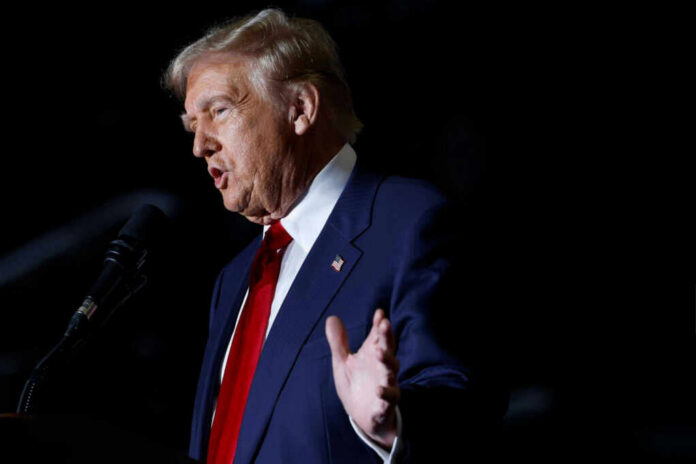
Trump’s threat to “obliterate” Iran’s power plants over the Strait of Hormuz shows how quickly this war can slide from military targets into a direct assault on civilian life—and a new wave of blowback that hits Americans at the pump.
Quick Take
- President Trump issued a 48-hour ultimatum demanding Iran fully reopen the Strait of Hormuz or face strikes on Iranian power plants.
- Iran’s leadership warned it would retaliate against U.S., Israeli, and regional energy and water infrastructure, including desalination facilities in Gulf states.
- After talks with Iranian figures and envoys, Trump paused the threatened strikes and extended the deadline, signaling a narrow window for de-escalation.
- The Strait of Hormuz carries roughly 20% of global oil, making the blockade a direct driver of higher energy costs and domestic political pressure.
Ultimatum Diplomacy Meets a War-Weary America
President Donald Trump escalated the U.S.-Iran conflict when he posted a 48-hour ultimatum demanding Iran reopen the Strait of Hormuz. Trump warned the U.S. would strike Iranian power plants, starting with the largest, if the strait stayed effectively blockaded. The threat landed in the fourth week of war that began February 28 with U.S. and Israeli strikes, as energy prices and war fatigue intensified at home.
For many Trump voters, the political tension isn’t theoretical. The same voters who spent years fighting “woke” culture and runaway spending are now staring down the old problem of open-ended foreign entanglements and rising household costs. The available reporting ties Trump’s pressure campaign to oil-market shock from the Hormuz chokepoint, which is central to global shipping. That reality is fueling a sharper debate inside MAGA over limits, objectives, and accountability.
Why Hormuz Matters: Oil, Shipping, and Leverage
The Strait of Hormuz is a narrow, high-traffic route that moves about one-fifth of global oil, and even partial disruption can jolt prices. Research summaries indicate Iran’s actions included attacks on shipping that stranded tankers and forced oil cuts, amplifying the economic pain. U.S. officials also moved on sanctions policy to relieve pressure, while still demanding reopening. The immediate takeaway is straightforward: a battlefield tactic can become an inflationary shockwave back home.
Iran has a history of threatening or testing closures around Hormuz during crises, including incidents dating back to 2019. What changed in 2026 is the war context: infrastructure threats are now being traded openly while missiles are already flying. Reports also describe strikes and re-strikes on nuclear-linked sites such as Natanz as the war continues. With so much commerce and energy on the line, both sides appear to view the strait as leverage rather than merely geography.
Infrastructure Targeting Raises Legal and Moral Stakes
Human rights advocates warned that targeting power plants can be unlawful if it predictably causes disproportionate harm to civilians. The research emphasizes that power loss can cascade into failures in water pumping, hospitals, food supply chains, and public health, especially in densely populated areas. Iranian officials, meanwhile, described attacks on power infrastructure as inherently indiscriminate. These aren’t abstract arguments; once electricity and water systems become battlefield chips, civilians pay first and hardest.
Iran’s retaliation warnings widened the danger zone beyond Israel and Iran. Iran’s parliament speaker, Mohammad Bagher Qalibaf, threatened that if Iran’s infrastructure is struck, U.S., Israeli, and regional energy assets could be treated as legitimate targets—explicitly including desalination and power facilities in Gulf Cooperation Council states. In a region where desalination keeps cities alive, that threat turns a war into a potential humanitarian crisis and could pull additional countries into the conflict.
Trump’s Pause: De-escalation Window or Tactical Reset?
Within days, Trump walked back the immediate threat, ordering a pause and extending the deadline while talks continued with Iranian figures and envoys. Reporting describes Trump saying negotiations were “very strong,” while indicating he wanted to see where talks lead. Policy analysis noted that the pause reduced the risk of crossing legal red lines while still leaving coercive pressure intact. The short-term reality is that the threatened strikes had not been carried out as of the latest updates.
Trump Threatens to Destroy All of Iran’s Power, Oil and Water Facilities as ‘Retribution’ #Mediaite https://t.co/MjROJJBIUM
— #TuckFrump (@realTuckFrumper) March 30, 2026
For constitutional-minded conservatives, the bigger question is what comes next: clear goals and an exit ramp, or another cycle of expanding targets and mission creep. The sources available focus on the ultimatum, retaliation threats, the strait’s economic importance, and a temporary pause. They do not provide a full public strategy for war termination or a detailed assessment of congressional involvement. That information gap is exactly why grassroots skepticism is rising—especially among voters who expected no new wars.
Sources:
Trump warning to attack Iran power plants is threat to commit war crimes
Trump pauses threat to hit energy sites
The latest: Trump says US will “obliterate” Iran’s power plants if it doesn’t open Strait of Hormuz