

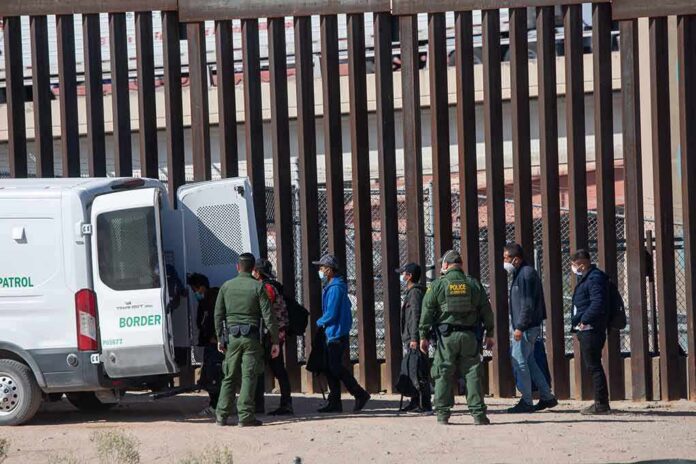
Four straight months of zero border releases and record-low encounters show President Trump’s enforcement is delivering real border control, not slogans.
Story Highlights
- Department of Homeland Security reports four months of zero releases and millions removed or self-departed.
- House Homeland Security briefings show historic lows in encounters after the inauguration.
- Southwest border apprehensions in fiscal year 2025 fell sharply from the prior year.
- Some outlets dispute deportation counts and urge caution on methods and claims.
What The Government’s Own Numbers Show Since Early 2025
Department of Homeland Security reported that since January 20, more than two million illegal aliens left the United States through deportations and self-deportations, and for four straight months United States Customs and Border Protection released zero illegal aliens into the country. Customs and Border Protection also described historically low nationwide encounters in late summer 2025, including a ninety-three percent drop from the prior peak under the last administration. These are official statements from federal agencies, not campaign talking points, and they mark a clear policy shift.
House Homeland Security Committee materials tracked the early slide in encounters. In February 2025, officials cited just 28,654 encounters nationwide and 11,709 at the Southwest border, with the daily apprehension average hitting the lowest level in Customs and Border Protection history that month. An earlier February brief called it the “Trump Effect,” noting that January encounters dropped sixty-six percent year over year and that Southwest border encounters fell thirty-six percent from December. These figures point to a sustained decline across several months.
How Much Of The Decline Ties To Policy Changes
Congressional border briefs attribute the trend to changes ordered by President Trump, including tighter screening and end-to-end enforcement that reduced releases into the interior. By November 2025, the committee reported that Southwest border encounters for fiscal year 2025 were seventy-nine percent lower than the prior year, and that September encounters were down more than eighty-two percent from the prior September. While seasonal and foreign policy factors can play roles, federal briefings directly connect the decline to the new enforcement posture.
Department of Homeland Security also highlighted outcomes beyond encounters, stating that more than 400,000 deportations occurred and an estimated 1.6 million people voluntarily self-deported in that same period. That mix matters to public safety and deterrence. When the government ends catch-and-release and speeds removals, word spreads quickly. Fewer crossings follow, pressure on border towns eases, and cartels lose easy entry lanes. Those results align with long-standing conservative goals of order, sovereignty, and the rule of law.
Sorting Claims About Deportations And Methodology Limits
Some press coverage has challenged parts of the administration’s deportation totals and pace. Reuters reported that removals in the first month were lower than the monthly average during the last full year of the prior administration, which critics argue undercuts “record” framing. National Public Radio later questioned broader deportation claims, pointing to inconsistencies across categories such as “returns,” “removals,” and “self-deportations”. These reports stress that definitions and counting rules can change how the totals look.
Government watchdogs and academics have long noted data limits. The Government Accountability Office has flagged that border metrics can blur repeat crossers and do not always tie an apprehension to a verified removal in a clean way. That makes apples-to-apples comparisons harder across years and programs. Readers should keep those caveats in mind when weighing any headline number, whether it supports or challenges enforcement success. Even so, the direction of change—steeply down for encounters and releases—remains clear in official reports.
Public Safety, Constitutional Order, And What Comes Next
Supporters see real gains for public safety and the Constitution. Ending releases protects border communities, frees local police from endless chases, and restores the promise that our laws mean something. Fewer crossings also reduce the odds that traffickers, gang members, or fentanyl couriers slip through. While the precise number of lives saved cannot be proven from encounter data alone, common sense says that fewer illegal entries and more removals reduce risks for American families.
Next steps should lock in this progress while boosting trust. Congress can fund more judges, detention capacity, and removal flights so cases move fast, with due process and clear outcomes. The administration can publish monthly reconciliations for deportations and self-deportations to settle definitional disputes. Independent reviews can test unique-person counts and repeat crossings. Those steps will blunt partisan attacks, keep pressure on cartels, and sustain a lawful system that puts American security first.
Sources:
pjmedia.com, civicintelligence.news, homeland.house.gov, executivegov.com, usatoday.com, azfreenews.com, dhs.gov