
Passengers and crew fought their way into a cockpit to stop an apparent mid-air attack, then helped save 174 lives.
Story Highlights
- Israeli officials say a Flydubai pilot stabbed his co-pilot and tried to crash the plane before passengers intervened.
- The aircraft made an emergency landing in Saudi Arabia; a reserve crew helped land safely, witnesses said.
- President Trump called the passenger intervention “an incredible story,” praising those who acted.
- The airline paused Israel routes while investigators review what happened aboard Flight FZ 1073.
What Officials And Witnesses Say Happened
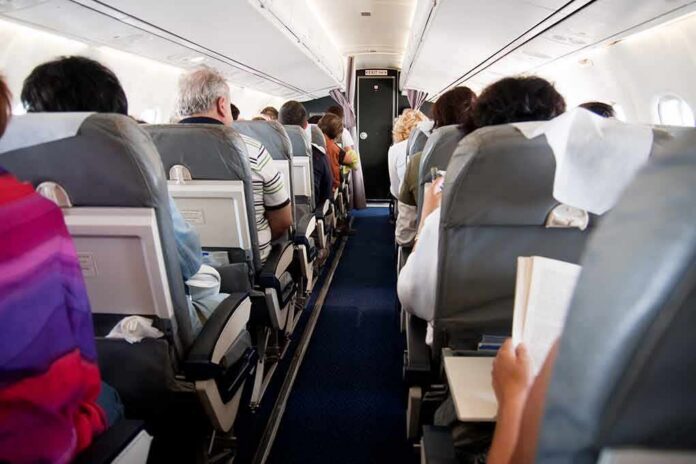
Israeli Prime Minister Benjamin Netanyahu said a Flydubai pilot stabbed another pilot and “apparently attempted to crash the plane” on a Dubai-to-Tel Aviv flight before passengers and crew forced their way into the cockpit and subdued the attacker. Passengers described a sharp, fast descent and calls for help that sent people racing forward. The plane diverted and landed in Tabuk, Saudi Arabia, after the struggle in the cockpit. No crash occurred, and the flight stopped safely.
Passengers recounted chaos as the aircraft dropped thousands of feet. One described seeing the stabbing, shouting for help, and pushing into the cockpit with others to pull the attacker away while the plane kept descending. Another passenger said people helped restrain the assailant as the flight crew worked to regain control of the aircraft. These accounts match the official statement that the threat came from inside the cockpit, not from a breach by someone outside.
How The Flight Landed Safely
Flydubai statements and passenger reports say the aircraft diverted to Saudi Arabia, where it landed at Tabuk after the intervention. A reserve Flydubai crew onboard helped complete the landing, according to a spokesperson cited by passengers and press coverage. That detail helps explain how the plane stabilized quickly after the struggle. The mix of trained pilots and determined fliers in close seats gave the crew enough time and control to get the jet on the ground.
President Trump told reporters the story was “incredible” and praised the quick action by passengers who helped stop the attacker and steady the aircraft. His comments aligned with public reports from Israel and international media that highlighted passengers pushing into the cockpit and restraining the suspect as the jet descended. The praise underscored a hard truth many feel today: in a crisis, regular people often step up when systems falter.
Why This Incident Hits A Nerve
Aviation safety since the September 11 attacks focused on keeping threats out of the cockpit. Reinforced doors have worked well against outside intruders. But experts note those barriers do not guard against a threat already inside the flight deck. That gap makes crew training and nearby passenger action vital. History shows that when violent onboard events erupt, the first responders are usually crew and nearby passengers, not outside help. This case appears to fit that pattern.
Hero at 30,000 Feet: Who Is Smit Machchhar, the Indian Pilot Who Saved Lives?
Captain Smit Machchhar, an Indian pilot flying a Flydubai flight from Dubai to Tel Aviv, is being praised for his courage after he was reportedly attacked by his co-pilot with a knife inside the… pic.twitter.com/2Z9Mq4NzPK
— DD NEWS JAMMU | डीडी न्यूज़ जम्मू (@ddnews_jammu) October 1, 2026
Authorities and the airline paused Flydubai’s Israel routes while they investigate Flight FZ 1073. That step is common after a severe in-flight emergency. It gives time to review procedures, support victims, and check for wider risks. For many readers, it also raises a larger concern: do leaders fix root problems, or do they wait for the next scare? People across the political spectrum want clear answers and real accountability when lives are at stake in the air.
Sources:
news18.com, bbc.com, bbc.co.uk, irishtimes.com, rmb.reuters.com, airguide.info