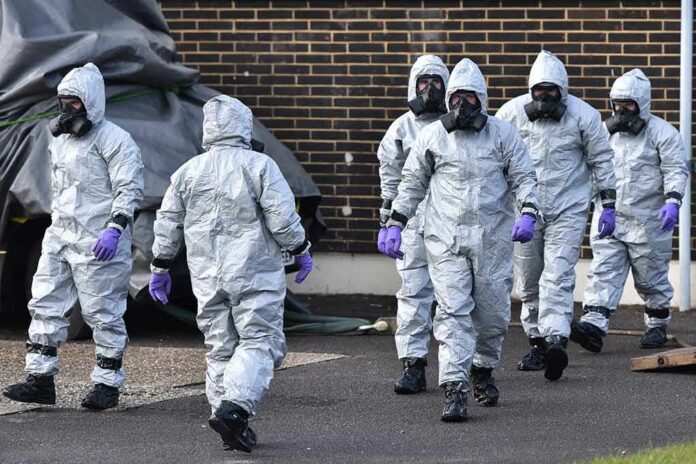
British police declared a major incident near a U.S.-used air base after arresting several men under the Explosives Act.
Story Snapshot
- Police arrested several men under the Explosives Act near RAF Fairford in Gloucestershire.
- Homes in Whelford were evacuated to a leisure centre while a cordon stayed in place.
- Army explosive ordnance experts examined multiple vehicles at the scene.
- Counter-terrorism police led the inquiry as officials said the incident was contained.
Arrests And Evacuations Near RAF Fairford
Gloucestershire Police said they arrested several men on suspicion of offences under the Explosives Act near RAF Fairford, a United States-used air base in southwest England. Officers declared a major incident and ordered evacuations in the nearby village of Whelford. Residents were moved to a local leisure centre as a safety step while police set up a cordon around key areas. Police stated that partner agencies were following established emergency plans, and that they believed the situation was contained.
The Army’s specialist explosive ordnance disposal team examined a number of vehicles tied to the operation, according to police statements reported by multiple outlets. Officials did not release details about what, if anything, was found in the vehicles. Police also did not name the suspects, give an exact number of arrests, or say what the motive might be. Counter-terrorism police were reported to be leading the investigation, reflecting the potential seriousness of the case.
Security Context Around A U.S.-Used Air Base
RAF Fairford hosts United States Air Force operations. That status raises the stakes for any nearby security scare because it links local policing to wider defense concerns. Local evacuations and an Army bomb unit presence often follow a clear playbook designed to protect the public first. Police used that approach here by moving residents to a safe site and holding a cordon while specialists checked vehicles and scenes. Officials stressed coordination with partner agencies throughout the response.
Early reports across national and regional outlets drew from the same short police statements. That pattern is common in the United Kingdom during fast-moving security events, where officials share limited details at first while safety checks and interviews continue. Reliable outlets documented the same core facts: arrests under the Explosives Act, evacuations, Army explosive experts on site, and a “contained” assessment. Those shared facts define the event while formal charges and forensic results, if any, come later.
What We Know And What Comes Next
Police confirmed arrests, evacuations, and the use of Army explosive specialists. Reuters linked the action to the area around RAF Fairford and confirmed the arrests on Explosives Act suspicions. The Independent and Press Association reporting said counter-terrorism police were leading the inquiry. As of those reports, police had not announced the discovery of explosives or named the men. That lack of detail is usual at this stage and may change if charges are filed or court records appear.
THIS MORNING. RAF FAIRFORD. 00:45.
A pensioner called 999. Not MI5. Not GCHQ. A villager spotted three suspicious vans heading toward a US bomber base and dialled 999.
Five men arrested under the Explosives Act, then upgraded to Section 5 of the Terrorism Act: preparation of a… pic.twitter.com/GdVROzs1pV
— Christian (@InTheTrenchesUK) September 27, 2026
This episode will feed wider concerns, on both the right and the left, that security threats can surface close to home while authorities share little in real time. People want clear answers about safety, competence, and accountability. Here, the system showed its standard steps: quick arrests, public safety moves, and interagency work. The next key facts will be formal charges, if any, and verified findings from vehicle searches. Until then, the confirmed public record is narrow but firm.
Sources:
bbc.com, www-cdn.abcnews.com, reuters.com