

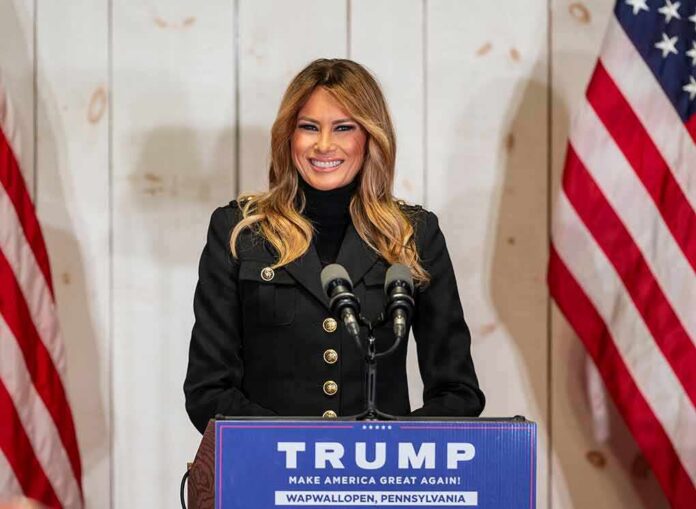
Nine more Ukrainian children were reunited with their families after a White House-led push that both Russia and Ukraine cooperated with, extending a rare bright spot in a long war.
Story Highlights
- The White House said nine additional children were returned to families with cooperation from Russia and Ukraine.
- The reunifications build on a six-day localized ceasefire in Oleshky linked to First Lady Melania Trump’s outreach.
- Major outlets reported on the Oleshky truce and evacuations enabled during the pause.
- Rights groups say family reunification aligns with urgent calls to return displaced Ukrainian children.
What Happened: New Child Reunifications Announced
The White House announced that nine more Ukrainian children were reunited with their families on November 25, 2026. The statement credited First Lady Melania Trump and said Russian and Ukrainian leaders cooperated to make the returns happen. The update follows earlier efforts that used a local pause in fighting to move aid and civilians. Reporters, aid workers, and families have focused on these small, concrete wins amid a grinding war that continues to separate children from relatives.
The children’s returns add to a series of exchanges reported this fall. Associated Press said the First Lady helped broker a short truce in Oleshky to let aid convoys enter and civilians leave. The White House and wire services described a six-day halt around the Russian-controlled city, which sits near the Dnipro River and suffered from severe shortages of food and medicine. The reunifications do not end the crisis, but they show that narrow deals can still move people to safety.
The Oleshky Ceasefire: A Narrow but Real Window
Reuters reported that Russia and Ukraine agreed to stop military action in and around Oleshky for several days to allow relief deliveries and evacuations. The White House framed the pause as the result of Melania Trump’s outreach to both sides. British and global outlets echoed that the truce aimed to prevent a looming disaster in a frontline city short on clean water and care. The pause ended, but it created space for aid groups and officials to organize limited evacuations, including children.
After the truce, the White House hosted Russian and Ukrainian representatives to discuss next steps and press for longer humanitarian access. The gathering highlighted an unusual channel: a First Lady urging practical deals focused on people at risk rather than sweeping political terms. Agence France-Presse said Melania Trump later called for a “more enduring” ceasefire after the six-day window closed, pointing to the need for follow-on arrangements. Each small deal may build habits of cooperation in a brutal conflict.
Why It Matters: Children, Law, and Moral Duty
United Nations investigators and European studies have documented the transfer and displacement of Ukrainian children since the invasion, and they call for clear paths to family reunification. International humanitarian law sets guardrails on moving children from occupied areas, and it urges that family unity be protected and restored whenever possible. The latest nine reunifications fit that goal. They are not a cure, but they align with repeated demands from rights bodies to return separated minors.
𝐌𝐄𝐋𝐀𝐍𝐈𝐀 𝐓𝐑𝐔𝐌𝐏 𝐁𝐑𝐎𝐊𝐄𝐑𝐄𝐃 𝐀 𝐂𝐄𝐀𝐒𝐄𝐅𝐈𝐑𝐄 𝐓𝐇𝐀𝐓 𝐒𝐀𝐕𝐄𝐃 𝟖𝟎𝟎 𝐋𝐈𝐕𝐄𝐒 — 𝐀 𝐅𝐈𝐑𝐒𝐓 𝐋𝐀𝐃𝐘 𝐅𝐈𝐑𝐒𝐓
First Lady Melania Trump didn’t need a diplomat’s title to pull off one of the only real pauses in the Russia-Ukraine war. Standing before a… pic.twitter.com/UdjuuzlPiL
— M.A. Rothman (@MichaelARothman) November 23, 2026
For many Americans, the story touches deeper worries about distant wars, broken systems, and leaders who often seem more focused on politics than people. Here, both sides in the war cooperated to return children home. That is a rare point of agreement. It shows that tightly scoped, practical deals can save lives even when big peace talks stall. Voters across the spectrum can see value in results that put children first and cut through the usual noise.
What Comes Next: Building on a Fragile Template
Future progress depends on repeatable steps. Officials will need secure corridors, verified lists, and neutral monitors to trace children and confirm guardians. The Oleshky truce offered one model: a defined place, a set time, and a single purpose—move aid and evacuate civilians. The White House statements suggest continued outreach to Moscow and Kyiv for targeted exchanges. Rights groups urge broader mechanisms so families do not wait months or years for a phone call that finally brings a child home.
Sources:
thegatewaypundit.com, whitehouse.gov, apnews.com, reuters.com, ru.usembassy.gov, bbc.com, afp.com, europarl.europa.eu