The most powerful man in Iran died in a foreign airstrike, and now the world is watching how his farewell ceremony doubles as a battlefield for competing stories about power, faith, and payback.
Story Snapshot
- Khamenei was killed in a joint United States–Israeli strike on his Tehran residence, confirmed by Iran’s own state media.
- The Iranian government declared 40 days of mourning and planned funeral events across multiple holy cities.
- His death ends nearly four decades of rule and opens a fierce struggle over succession and revenge.
The strike that ended a four-decade reign
Ali Khamenei did not die in bed. He died when American and Israeli jets turned his compound in Tehran into rubble during a wider military campaign targeting Iran’s top leadership. Iranian state media first tried to insist he was still “steadfast and firm,” but within hours they aired a formal declaration from the Supreme National Security Council confirming his death and framing it as “martyrdom” in battle against foreign enemies. That shift told you everything about how the regime wanted this story remembered.
The strike did not just kill Khamenei. Fars News Agency and other outlets reported that several close family members died in the same attack, including a daughter and granddaughter. That detail matters because it raised the emotional temperature inside Iran and allowed officials to talk not just about a fallen leader, but about a grieving family and nation. It also let them lean harder into a storyline American conservatives will recognize: a hostile foreign power, a wounded nation, and a promise of payback.
A mourning plan shaped by war and propaganda
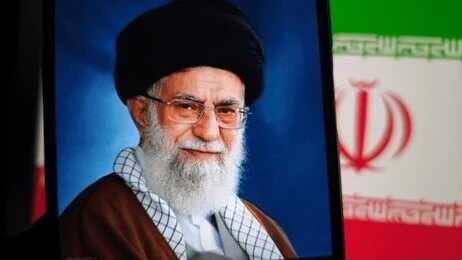
Right after confirming the death, the Iranian government declared 40 days of official mourning, plus a week of public holidays. On paper, this looks like a simple religious tradition. In reality, it is political theater. State television showed hundreds of thousands in the streets holding portraits of Khamenei, chanting, and crying. Yet this wave of public grief came after years of protests, internet shutdowns, and brutal crackdowns where many Iranians risked their lives to demand an end to his rule. That contrast should make any viewer ask how many mourners are sincere and how many are scared.
Funeral plans themselves show the tension between war and ceremony. Iran scheduled major events in Tehran starting July 4, followed by a service in Qom on July 7, and burial in Mashhad on July 9. Those dates were not random; the regime postponed the burial for months because fighting with the United States and Israel made large gatherings risky and logistically hard. When a state cannot bury its top leader on time because rockets are still flying, that is a sign of how unstable the ground really is under all the banners and prayers.
The farewell ceremony: unity on screen, doubt off camera
International delegates arriving in Tehran now walk into a carefully staged farewell ceremony meant to show that Iran is not alone and still commands respect across the region. Representatives from allied or friendly countries line up beside Iranian officials, cameras rolling, as the coffins of Khamenei and his relatives are placed on display for the crowds. From the regime’s point of view, every foreign flag in that hall is a signal to Washington and Jerusalem that Iran still has partners and will not fold.
The problem for that narrative is the record of Khamenei’s rule. Human rights groups estimate thousands of deaths in protests and a surge in political executions, especially after the latest war began. Reports describe shootings of peaceful protesters, mass arrests, and broad use of the death penalty as a tool of fear. For many Iranians and for Americans who value free speech and individual rights, the idea that this farewell represents “national unity” clashes with decades of evidence that opposition has been silenced, not convinced.
Succession, revenge, and what comes next
The Iranian constitution lays out a process for choosing the next supreme leader, but real power sits with the security services, clerical inner circle, and the Assembly of Experts, a body of senior clerics. After Khamenei’s death, officials talked about an interim leadership council while that assembly works toward naming a successor. Many analysts and outlets have pointed to his son Mojtaba Khamenei as the likely pick, a move that would tighten family control and signal that hardliners intend to keep their grip on the country.
Touch down 🛬 Tehran, for the farewell ceremony of Iranian Supreme leader Ayatollah Khamenei pic.twitter.com/rvZV86hQs6
— Mbuyiseni Ndlozi (@MbuyiseniNdlozi) July 3, 2026
At the same time, Iran’s president and top commanders speak openly about “avenging” Khamenei’s death as a duty and right. That language ties domestic politics to foreign conflict. If the new leadership frames every challenge to its authority as helping the United States or Israel, then calls for reform can be painted as treason. For American conservatives who believe in strong borders and clear national interests, this revenge talk is a warning sign: it suggests the regime will double down on aggression abroad to cover weakness at home.
Why this funeral matters far beyond Tehran
Authoritarian states often use funerals to reset their story. Saddam Hussein’s Iraq, Muammar Gaddafi’s Libya, and Iran after General Qasem Soleimani’s killing all tried to turn death into proof of moral strength and victimhood. The base rate for contested narratives in these kinds of events is high, and full verification of what really happened can take months or years. In Khamenei’s case, however, there is almost no serious counter-story. Iranian state media, Western outlets, and foreign governments all agree he died in a joint United States–Israeli attack.
That near-unanimous record makes this farewell ceremony different. The debate is not about whether Khamenei is dead or who killed him. The debate is about what his death means. For many inside Iran, it marks the end of a long era of fear and tight control. For the regime and its allies, it is fuel for a new wave of rage and resistance against the West. For Americans watching from afar, the best stance is clear-eyed: respect the human cost of war, remember the victims of repression, and understand that what looks like a religious farewell on television is also a high-stakes political show playing to audiences at home and abroad.
Sources:
youtube.com, bbc.com, aljazeera.com, axios.com, instagram.com, facebook.com, nbcnews.com, us.dk, hudson.org, amnesty.org