Defense Secretary Pete Hegseth just overturned decades of Pentagon policy to restore Second Amendment rights on military bases, but the timing of a top general’s sudden removal raises questions about whether this is about security or silencing dissent within the ranks.
Story Snapshot
- Hegseth signed directive ending gun-free zones on military installations, allowing service members to carry personal firearms for self-defense
- Army Chief of Staff Gen. Randy George removed from command hours after policy announcement, replaced by Hegseth ally
- New policy reverses presumption from denial to approval, requiring commanders to justify any rejection in writing
- Critics question whether documented security threats justify major policy shift or if ideological restructuring drives decision
Constitutional Rights Restored on Military Property
Defense Secretary Pete Hegseth signed a memorandum on April 3, 2026, titled “Non-Official Personal Protection Arming on Department of War Property,” ending longstanding restrictions on personal firearm possession at military installations. The directive invokes Section 526 of the National Defense Authorization Act for Fiscal Year 2016, authorizing off-duty service members to carry privately owned weapons for personal protection. Hegseth framed the policy explicitly as a constitutional issue, stating service members trained “at the highest and unwavering standards” deserve the same Second Amendment protections as civilians. Installation commanders now operate under a presumption of approval framework, requiring written justification for any denial.
Security Incidents Cited as Justification
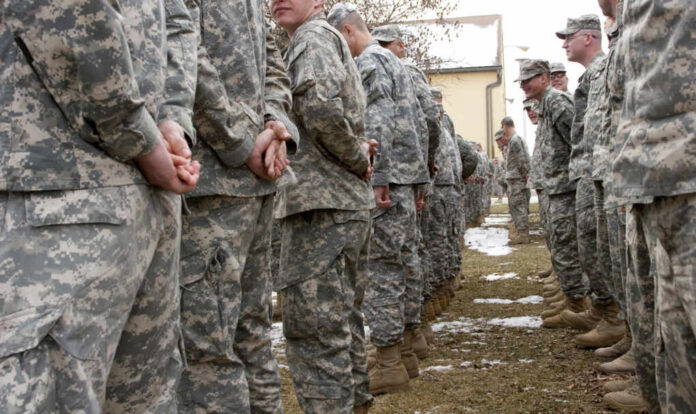
Hegseth cited active-shooter incidents at Fort Stewart, Holloman Air Force Base, and Pensacola Naval Air Station as evidence that military installations face genuine security vulnerabilities. He declared that “our military installations have been turned into gun-free zones—leaving our service members vulnerable and exposed,” arguing that service members should not be defenseless during emergencies where “minutes are a lifetime.” The previous policy required personnel to check firearms into secure storage and retrieve them only for authorized activities like hunting or range shooting. This created scenarios where trained military personnel remained unarmed while threats materialized on installations housing thousands of service members and families.
Top General Removed Amid Policy Rollout
Gen. Randy George, Army Chief of Staff, was asked to retire immediately on April 3, 2026, the same day Hegseth’s firearms policy took effect. Senior Pentagon officials stated the administration sought leadership willing to “implement President Trump and Hegseth’s vision for the Army,” suggesting George’s removal stemmed from resistance to the policy direction. Gen. Christopher LaNeve, currently Army vice chief of staff and a former military aide to Hegseth, is expected to serve as acting Army chief. The personnel change signals consolidation of control over military leadership, ensuring implementation of administration priorities. This pattern reflects broader restructuring within the Pentagon focused on eliminating what leadership characterizes as obstacles to operational readiness.
Implementation Questions and Operational Concerns
Installation commanders must now establish approval processes and firearms storage protocols aligned with state laws, creating immediate administrative burdens across hundreds of military facilities. The policy shift raises practical questions about liability for accidental discharges, friendly-fire incidents, or weapons misuse in environments housing families and civilian contractors. Pentagon critics note that military installations maintain armed military police and robust security infrastructure, questioning whether bases genuinely qualify as “gun-free zones.” An unnamed Pentagon official challenged Hegseth to publicly document violent crime data justifying the policy reversal, arguing that characterizing the most protected government properties as vulnerable contradicts operational reality and security assessments.
Broader Ideological Restructuring of Military Priorities
The firearms policy represents one element of comprehensive Pentagon restructuring under the Trump administration’s “lethality” focus. Hegseth has simultaneously pursued changes to equal opportunity programs, grooming standards, and fitness requirements, framing these as eliminations of “woke” military policies. The combination of policy changes and leadership removals suggests ideological reorientation takes precedence over incremental security improvements. This approach raises concerns among MAGA supporters already frustrated with administration decisions on foreign conflicts and energy costs. The question remains whether restoring constitutional rights on bases addresses genuine security gaps or serves primarily as symbolic victory while more pressing concerns about endless wars and fiscal responsibility remain unaddressed by leadership more focused on cultural battles than the promises that won elections.
Sources:
US ends gun-free zones on US bases invoking Second Amendment – Turkiye Today
Hegseth troops personal firearms military bases – CBS News
Trump Defense Department Iran Hegseth Civilian Casualties – ProPublica
Remarks by Secretary of War Pete Hegseth on the Arsenal of Freedom – Department of War