

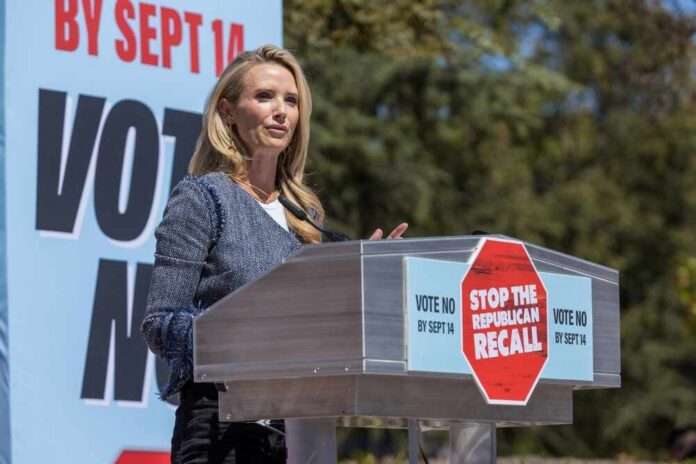
California’s political class is now openly pressuring Big Tech to treat mainstream self-help commentary like “extremism,” raising fresh concerns about speech, parental rights, and who gets to decide what your kids are allowed to hear online.
Quick Take
- California First Partner Jennifer Siebel Newsom said YouTube steers her sons from sports content into “alt-right, extreme, Jordan Peterson-type” material and urged holding tech leaders accountable.
- Her remarks land as courts and lawmakers push a “duty of care” approach that could expand platform liability and accelerate regulation of algorithms.
- Recent jury verdicts against Meta and Google/YouTube are being framed as a “Big Tech’s big tobacco moment,” though appeals are expected.
- Governor Gavin Newsom has recently vetoed a stricter child-focused AI companion bill in favor of narrower transparency rules, highlighting California’s internal split over regulation.
Siebel Newsom’s “Jordan Peterson-Type” Label Puts Content Policing Back in the Spotlight
Jennifer Siebel Newsom argued that her sons, after following sports figures on YouTube, encountered “alt-right, extreme, Jordan Peterson-type” content that she said promotes hate, racism, and misogyny. She called for tech leaders to be held responsible for what platform algorithms deliver to children and how companies profit from attention.
Siebel Newsom’s framing matters because it blends a child-safety argument with an ideological label. When public officials tie a named public intellectual to “extreme” content, the next policy step often becomes pressure on platforms to demote or remove lawful speech. Conservatives who already distrust elite institutions hear a familiar pattern: “protect the kids” gets used as a moral shortcut to justify broader information control, even when parents, not bureaucrats, are best positioned to supervise media.
Court Verdicts Are Fueling a New Push for “Duty of Care” Rules
California’s latest wave of tech regulation talk is being propelled by courtroom momentum, not just cultural arguments. Reporting describes two recent jury outcomes: a New Mexico jury ordering Meta to pay $375 million tied to failures to protect youth from predators and alleged misleading safety claims, and a California jury awarding $6 million to a woman who blamed Meta and Google/YouTube for mental health harms linked to childhood social media use. Both outcomes are expected to be appealed.
Lawmakers and advocates are increasingly describing these cases as a turning point—language that signals a shift from targeted enforcement toward structural regulation of platform design. The phrase “duty of care” is central because it implies platforms may be treated less like neutral hosts and more like product makers responsible for downstream harms. That model could reshape algorithms, recommendation systems, and content moderation at scale, while also creating new incentives to over-censor borderline or controversial speech to reduce legal exposure.
Newsom’s AI Veto Shows the Tension Between Child Protection and Silicon Valley Power
The broader California context includes a parallel fight over child safety and emerging AI products. Governor Gavin Newsom vetoed AB 1064, the LEAD for Kids Act, which would have restricted “harmful AI companions” for children, and instead favored a narrower transparency approach through SB 243. The California attorney general supported the stricter bill, while major tech-aligned groups opposed broad restrictions. That tug-of-war highlights how quickly “kid safety” debates can collide with lobbying and economic interests.
For conservative readers, the key issue is consistency and clarity: protecting children from genuine online dangers is a legitimate state interest, but regulatory tools that rely on vague categories can be repurposed to target disfavored viewpoints. When public figures use a catch-all like “Jordan Peterson-type,” it becomes difficult to separate genuine threats—predation, exploitation, coercion—from lawful commentary that some political actors simply dislike.
What This Means for Families, Free Speech, and the Next Regulatory Wave
California’s influence over national tech policy is outsized, and pressure campaigns often begin there before spreading. The immediate consequence of these remarks is political: they give activists a high-profile example to argue that algorithms “radicalize” kids through everyday content pathways like sports clips. The longer-term consequence could be legislative momentum toward algorithm restrictions, expanded liability, and more aggressive moderation demands—policies that can limit viewpoint diversity without ever formally banning speech.
Parents remain stuck between two realities: social media can expose children to disturbing material, and government-driven “solutions” often expand into speech management and institutional control. The cleanest line from this is that lawsuits and regulation are converging on platform accountability, while the definitions of “harm” and “extremism” remain contested. Until lawmakers offer narrow, clearly defined standards tied to verifiable harms, families should expect more politicized fights over what their kids are “allowed” to see online.
Sources:
California’s First Partner Wants to Hold Tech Leaders Responsible for ‘Jordan Peterson-Type’ Content
Newsom Sides with Tech Lobby in AI Companion Standoff