
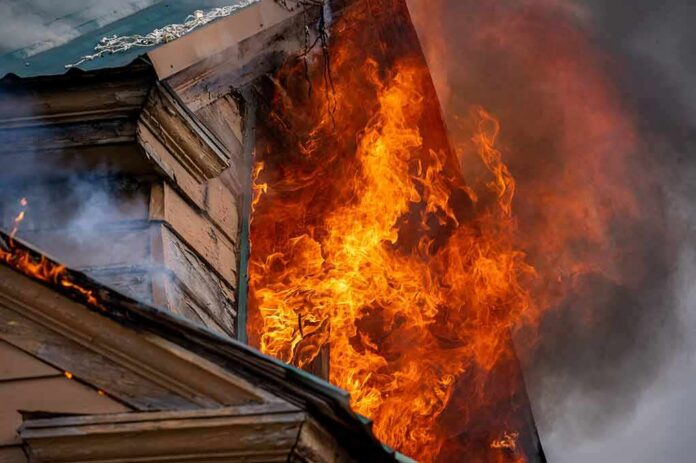
Amid powerful Santa Ana winds, Malibu’s Bryson Fire jumped to roughly 200 acres within hours, forcing fast evacuation orders and warnings.
Story Highlights
- Officials reported the Bryson Fire near Encinal Canyon Road and Mulholland Highway just before 5 p.m. Thursday.
- Evacuation orders and warnings followed as the fire spread in rugged Santa Monica Mountains terrain.
- Strong Santa Ana winds and heat created critical fire danger and hampered early containment.
- Officials said winds could keep risks elevated through Friday into the weekend.
What Officials Confirmed About The Bryson Fire
Los Angeles County officials said a brush fire called the Bryson Fire started near Encinal Canyon Road and Mulholland Highway in western Malibu just before 5 p.m. Thursday. Crews moved quickly as flames pushed through steep canyons in the Santa Monica Mountains. Authorities issued evacuation orders and warnings for nearby zones as the fire advanced. Reporters described rough terrain near the Ventura County line that made access hard and raised the risk of falling embers.
By Thursday night, estimates said the fire had grown to about 200 acres with little or no containment noted at that time. Local outlets and public safety updates reported shifting sizes during the first hours, which is common in wind-driven fires. Officials focused on life safety and structure defense as gusts made air and ground attacks more complex. Law enforcement closed roads and guided traffic to help residents leave the area in an orderly way.
How Santa Ana Winds Turn Small Fires Into Fast Emergencies
National and regional experts say Santa Ana winds act like a giant bellows. The winds blow hot, dry air from inland toward the coast, dropping humidity and speeding flames across brush and grass. Scientists with the United States Geological Survey found that wind speed and the number of separate ignitions best explain how much area burns during such events. In strong wind setups, embers can leap ahead of the main front, starting spot fires and stretching firefighter resources thin.
Research shows most Santa Ana wind periods do not produce fires. Fires need an ignition source, which can be human activity or infrastructure failures, but wind then drives spread and spotting. That means a small spark on a windy, dry day can become a large, fast-moving blaze before crews can box it in. The Malibu hills, with steep slopes, canyons, and homes near wildland, add more risk. This pattern matches what officials and residents witnessed on Thursday.
Why This Matters For Public Safety And Trust
City and county leaders warned that dangerous winds and heat could keep risk high into Friday and possibly the weekend. That matters for families weighing whether to stay or go and for workers trying to keep roads open and power lines safe. People across the political spectrum share a core worry here: when strong winds hit, basic services can feel fragile, and government can seem slow to protect neighborhoods before disaster strikes.
Wildfire in Malibu explodes to 200 acres amid dangerous winds, evacuations issued
From the article
Firefighters worked through the night to prevent a wind-driven wildfire in the Malibu hills from spreading farther, as dangerous Santa Ana winds threatened to complicate… pic.twitter.com/KG1lgsYWyP
— Roger X Patterson (@RogerP23486) October 17, 2026
Officials balance tough tradeoffs during wind events, like power shutoffs to prevent sparks and road closures to speed evacuations. Residents often see these steps as disruptive, yet they can save lives when minutes count. The record shows better brush clearance, stronger grids, and clearer evacuation maps help reduce harm. Clear, prompt communication from agencies builds trust when conditions change by the hour. Early reports from Malibu show that alerts and evacuations moved quickly as the fire grew.
Sources:
latimes.com, foxla.com, cbsnews.com, usgs.gov, psu.edu