
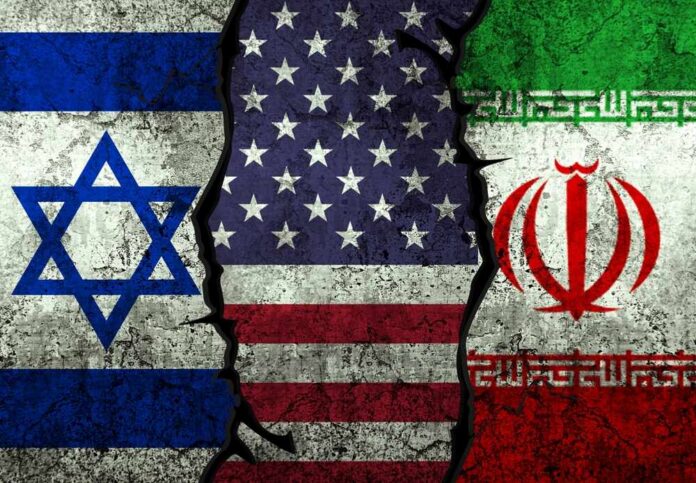
As America fights Iran, a media watchdog says major outlets are training the “war crime” label almost entirely on the U.S. and Israel—fueling fresh distrust among conservatives already tired of endless wars.
Story Snapshot
- CAMERA reviewed early coverage of the U.S.-Israel-Iran conflict and counted 32 uses of the phrase “war crime” across several major outlets.
- CAMERA said 88% of those “war crime” references targeted only U.S. or Israeli actions, while none targeted only Iran.
- The watchdog highlighted a U.S. strike alleged to have hit a school in Minab, Iran, as a flashpoint for one-sided framing.
- Competing media-criticism claims exist: CAMERA argues Western outlets tilt against U.S./Israel, while an Al Jazeera analysis argues Western language often favors U.S./Israel.
CAMERA’s count spotlights selective language during the opening weeks
CAMERA (Committee for Accuracy in Middle East Reporting and Analysis) says it used data analytics to examine how BBC, CNN, NBC News, The New York Times, and The Washington Post described the first three weeks of the current U.S.-Israel-Iran war. Across coverage dated Feb. 28 through Mar. 21, 2026, CAMERA reported 32 uses of the term “war crime,” with 28 applied solely to U.S. or Israeli actions and none applied solely to Iran.
For many conservative voters, the dispute lands in a raw political moment. Trump’s second term is now defined by a new Middle East war after years of campaign promises about avoiding fresh conflicts. That split—support for U.S. strength versus anger at open-ended intervention—means the language Americans see in headlines matters. CAMERA’s argument is not that civilian harm is irrelevant, but that the moral vocabulary appears rationed depending on who is blamed.
The Minab school strike became a “war crime” magnet in headlines
CAMERA pointed to reports about a U.S. strike that allegedly destroyed a school in Minab, Iran, as an example of what it views as asymmetrical scrutiny. In its accounting, “war crime” labeling surged around that incident when describing U.S. or Israeli responsibility, while comparable labeling was not applied solely to Iran for other actions referenced in the study period. CAMERA also said some instances were unattributed or applied to both sides, but those were a small minority.
The underlying facts of individual battlefield incidents can be hard to verify quickly in a fast-moving conflict, and CAMERA’s study is about how outlets used a specific term—not a definitive legal judgment about any single strike. Still, the watchdog’s tally raises a fair question for readers: if “war crime” is a standard applied for civilian casualties, why would Iran’s actions receive zero standalone use of the same label across the selected outlets during the same period?
What we know about the war’s start—and why it frames everything after
The war timeline described in the research begins Feb. 28, 2026, when the U.S. and Israel launched coordinated strikes on Iranian military and nuclear-related targets and command centers, and Iran’s Supreme Leader Ayatollah Ali Khamenei was reported killed. Coverage battles often start right there: whether the opening strikes are described as deterrence, escalation, or retaliation shapes how audiences interpret every later headline about casualties, proportionality, and intent.
CNN analysis cited in the research also tied the renewed fighting to Hezbollah, portraying the group as having “restarted the fight.” That matters because media framing frequently depends on who is treated as the initiator and who is treated as responding. Conservatives who remember how Iraq and Afghanistan were sold—and how long they dragged on—are sensitive to how quickly complex conflict turns into simplified morality plays that push the public toward permanent war footing.
A second critique claims Western outlets often favor U.S./Israel—showing the fight over narratives
An Al Jazeera Institute piece included in the research reaches nearly the opposite conclusion: it argues Western media language can function as a “weapon of war,” using terms like “self-defence” for U.S./Israeli actions and “provocation” for Iran, while influencing which victims feel publicly “grievable.” Put plainly, one critique says the West is blamed too easily; the other says the West is excused too easily. Both cannot be wholly right in every case.
The practical takeaway for Americans is that trust is collapsing from both directions. CAMERA’s numbers are concrete within its limited sample—32 uses of a term across selected outlets and dates—while the Al Jazeera critique is qualitative, focused on recurring language patterns. Neither, by itself, settles what is true on the battlefield. But together they confirm the information war is real, and it is competing to shape U.S. public consent at the very moment voters are questioning whether this conflict serves American interests.
Why conservatives should care: consent for war, accountability, and constitutional guardrails
For a conservative audience, the question is not just whether reporters used a loaded phrase unevenly; it is what that framing does next. If “war crime” language is selectively deployed, it can pressure policymakers toward escalations, restrictions, or open-ended commitments without clear objectives—especially when emotion runs high. If the public is steered by slanted narratives, Congress and the White House face less scrutiny on war powers, spending, and the long-term costs that follow every “temporary” intervention.
Watchdog blasts BBC, CNN, NYT for applying 'war crime' label almost exclusively to US, Israel in Iran conflict https://t.co/7F4Pst98NE via @foxnews
— Chris 🇺🇸 (@Chris_1791) March 28, 2026
At minimum, CAMERA’s study gives skeptics a measurable claim to interrogate: outlets can publish the datasets, show their own counts, and explain their editorial standard for using legally charged labels. If editors refuse to define those rules, the public will assume the rules are political. In a wartime environment already dividing MAGA voters—especially around Israel, energy costs, and the fear of another never-ending mission—transparent standards are the least Americans should demand.
Sources:
Al Jazeera Institute AJR article (3575)