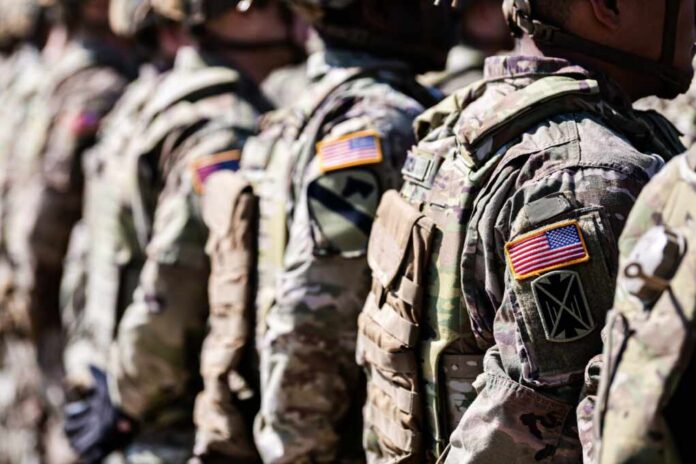
Iran is openly crowdsourcing target lists for American troops—while Washington’s war posture leaves U.S. forces and Middle East civilians tangled together in the same blast radius.
Quick Take
- Iranian military officials claim U.S. personnel have moved into hotels and offices across the Middle East, calling it an attempt to “use” local civilians as shields.
- Iran’s IRGC intelligence arm urged citizens to report U.S. and Israeli locations via Telegram so Iran can strike “precisely,” framing participation as a religious duty.
- Independent verification is limited: the reporting relies heavily on Iranian state-linked messaging, and no clear U.S. or Israeli response appears in the cited coverage.
- Iranian opposition voices separately warned Tehran’s own street rallies near security sites could put civilians in danger as human shields.
Iran’s “Human Shields” Claim Meets a Telegram Targeting Campaign
Iranian Armed Forces spokesman Brig.-Gen. Abolfazl Shekarchi and Iran’s IRGC intelligence apparatus are accusing the United States of dispersing troops into hotels, offices, and other private accommodations in Arab countries, arguing this placement complicates retaliation and risks civilian casualties. The same Iranian messaging calls on “Muslims” across the region to identify “hideouts” so Iran can deliver “precise” strikes. The central takeaway is not just propaganda—it is a direct public push for crowdsourced battlefield intelligence.
The timeline centers on mid-March 2026. An IRGC-linked message on March 12 urged people across the Middle East to report U.S. troop locations, specifically warning locals not to “shelter” Americans in hotels and to share where U.S. forces are “hiding.” In follow-on statements reported days later, Shekarchi referenced attacks in Tehran and promised retaliation, reinforcing the claim that Iran wants location tips to hit U.S. and Israeli assets without striking civilians.
What’s Known, What’s Not: Heavy Claims, Thin Independent Confirmation
The sources repeat consistent points: Iran says U.S. forces moved into civilian-adjacent facilities, and Iran wants ordinary people to report positions on Telegram. What is not clearly established is the scale, purpose, or command rationale for the U.S. relocations beyond Iran’s accusation. This flags uncertainty, including that “thousands” is asserted in one report and that no Western rebuttals or confirmation are included in the available coverage.
Conservatives watching the war with Iran should separate two questions. First, whether Iran is telling the truth about U.S. intent; second, whether Iran’s response is escalating risk regardless of intent. Even if the relocation is a standard force-protection step after attacks on bases, Iran’s public solicitation of targeting data increases danger for everyone near those sites. Civilians who live, work, or travel near hotels and office complexes become collateral risks when enemies treat everyday locations as part of the battlefield.
The Iran-Israel “Human Shield” Narrative War Is Expanding
Iran’s messaging does not stop at U.S. forces. Earlier reporting shows Iran also accusing Israel of using civilians in northern and central areas as shields to protect military officials. That broader narrative matters because it signals a coordinated information campaign: portray Iran’s enemies as hiding behind civilians while portraying Iranian strikes as morally restrained and “precise.” The reality is that once both sides talk this way, it becomes easier to justify operations around civilian infrastructure and harder for ordinary people to stay out of danger.
Opposition Warnings Undercut Tehran’s Moral Posture
Iranian opposition-linked reporting complicates Tehran’s claims of protecting civilians. As Israeli strikes hit Iranian security-related sites, opposition voices warned the regime’s encouragement of street gatherings near sensitive locations could effectively place civilians in harm’s way. That warning highlights an uncomfortable pattern in regional conflicts: governments and armed groups often accuse the other side of human shielding while taking actions that expose their own populations to retaliation. This do not resolve whose tactics are worse, but they do show the hypocrisy debate is active inside Iran.
What This Means for U.S. Supporters of Trump in a War Footing
The immediate operational issue is force protection: dispersed lodging may reduce the vulnerability of big bases, but it also blurs the line between combat zones and civilian spaces. For Americans already exhausted by decades of overseas conflict, the political problem is clarity—what is the strategy, what is the end state, and how does escalation stop? No definitive answers from U.S. leadership was gained. That vacuum feeds frustration among MAGA voters who expected fewer new wars, lower energy costs, and a tighter focus on America’s core interests.
Iran Accuses U.S. of Using Human Shields After American Soldiers Relocate to Hotels and Offices in the Middle East https://t.co/oQC4FoWyEF
— Mediaite (@Mediaite) March 26, 2026
Iran’s Telegram-style call for tips also raises a domestic warning sign for Americans: modern wars normalize mass surveillance and informal intelligence networks. When conflicts expand, governments often justify broader monitoring, tighter speech controls, and emergency powers at home. There’s no new U.S. measures, but it illustrates how quickly digital platforms become tools for targeting and control. If the war continues to spread, constitutional-minded voters should demand transparency, clear limits, and accountability—especially when the risks fall on troops and civilians far from Washington’s press conferences.
Sources:
Middle East Eye — Iran urges citizens across Middle East to report locations of US troops
Daily Times — Iran claims Israel using civilians as shields