
Nigeria has confirmed its first Ebola case of this outbreak, a traveler from Uganda now isolated in Abuja while health workers race to track 44 people she may have exposed.
Story Snapshot
- Nigeria’s health minister confirmed one imported case of Ebola virus disease in the Federal Capital Territory on October 20, 2026.
- Lab tests identified the Bundibugyo strain, the same virus driving an outbreak that started in the Democratic Republic of the Congo in May.
- The patient is a woman who recently traveled from Uganda and got sick four days after arriving in Nigeria.
- Officials have identified 44 contacts, including health workers, caregivers, and fellow travelers, and started an emergency response.
- Nigeria is the fifth country pulled into this regional outbreak, which has also reached Kenya.
Nigeria Announces First Case of Current Outbreak
Coordinating Minister of Health and Social Welfare Prof. Muhammad Ali Pate told reporters in Abuja on October 20 that Nigeria had confirmed its first imported Ebola case in the current outbreak. The patient tested positive for the Bundibugyo strain of the virus, a laboratory-confirmed result rather than a diagnosis based only on symptoms. The World Health Organization (WHO) separately confirmed the same lab result that day.
Officials say the woman traveled to Nigeria from Uganda and began showing symptoms on October 7, just four days after she arrived. She sought treatment at a private medical facility in Abuja on October 11, more than a week before her diagnosis was confirmed. Health authorities have not yet said where she picked up the virus or filled in every stop on her travel route.
Contact Tracing Already Underway
Nigeria’s Federal Ministry of Health says it has identified 44 people who may have had contact with the patient. That group includes health care workers who treated her, other patients at the facility, caregivers, and people she may have encountered while traveling. Officials describe this number as a starting point, not a final count, as the search for additional contacts continues.
This kind of response mirrors steps Nigeria took during its 2014 Ebola outbreak, when fast contact tracing and isolation helped stop the virus from spreading widely. That earlier outbreak was contained within weeks, and health officials credit the swift response for keeping the death toll far lower than in some other countries.
Part of a Widening Regional Outbreak
The Bundibugyo strain outbreak began in the Democratic Republic of the Congo, where officials declared it on May 15, 2026. Nigeria is now the fifth country to detect the virus during this outbreak, following cases in the Democratic Republic of the Congo, Uganda, and others. Kenya recently confirmed its ninth case in the same outbreak, showing how the virus keeps crossing borders.
Bundibugyo virus is one of several strains of Ebola and was first identified in Uganda back in 2007. Past outbreaks of this strain have had death rates ranging from roughly 25% to nearly 60%, depending on how quickly patients receive care. That history is part of why health officials move fast once a case is confirmed, isolating patients and tracking contacts before the virus can spread further.
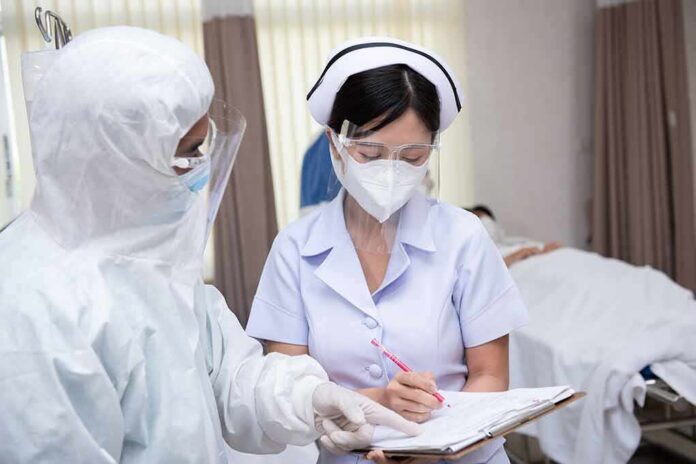
Nigerian authorities say the patient remains isolated and under medical care while the 44 identified contacts are being monitored for symptoms. The WHO has not yet reported whether any of those contacts have developed Ebola themselves. For now, the confirmed facts are straightforward: a traveler brought the virus into Nigeria, doctors caught it, and the country has begun the same kind of emergency response it used successfully more than a decade ago.
Ebola Case Reported in Abuja as Health Authorities Intensify Monitoring
Health authorities have reported an Ebola case in Abuja involving the Bundibugyo strain of the virus, prompting increased attention to surveillance, isolation and contact tracing.
The public is advised to… pic.twitter.com/48fcNr6iNq
— OyoNews (@OyoNews1) October 22, 2026
Sources:
insiderpaper.com, afro.who.int