
President Trump called Michigan Senate candidate Abdul El-Sayed a “Muslim Brotherhood guy” three separate times over ten days, without presenting documents, records, or testimony to back the claim.
Quick Take
- Trump first made the claim at a White House lunch on October 15, then repeated it in a Truth Social video and again at an October 25 Michigan rally.
- Republican Senate candidate Mike Rogers publicly called on El-Sayed to disavow the Muslim Brotherhood the same week Trump escalated the attacks.
- El-Sayed directly denied the claim at a Michigan town hall, saying “sure, yeah, absolutely” when asked to disavow the group.
- Vice President JD Vance joined in, calling El-Sayed a “weasel” as the Michigan Senate race tightened.
Trump Makes the Claim at the White House
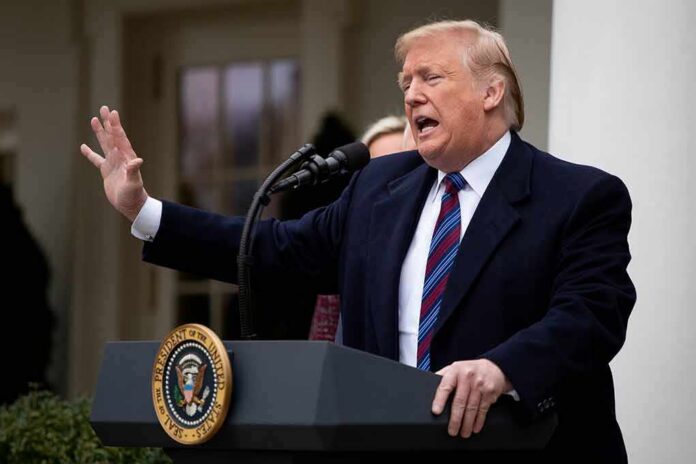
President Trump first raised the allegation at a White House Rose Garden lunch on October 15, 2026. “His name is Abdul, but I call him Mohammed Abdul el Sayed, and he’s a Muslim Brotherhood guy, 100%, 100%,” Trump said. The comment came as El-Sayed, a Democrat, campaigns for Michigan’s open Senate seat against Republican Mike Rogers.
Trump repeated the claim two days later in a video posted to Truth Social aimed at Michigan voters. “He’s a Muslim radical. He’s a Muslim Brotherhood member, even though he denies it,” the video stated. Trump has pointed to unspecified “past correspondence” as the basis for his claim, but no such documents have been made public.
Rogers and Trump Push a Coordinated Message
Rogers raised the same demand at a campaign stop in Birch Run on October 17, calling on El-Sayed to disavow the Muslim Brotherhood. Trump posted his video repeating the allegation that same day. The timing points to a shared campaign strategy between Trump and the Rogers campaign heading into the final weeks of the Michigan Senate race.
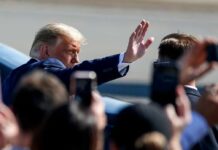
Trump escalated further at a Port Huron rally on October 25, telling the crowd he came to Michigan “to keep a jihadist Muslim Brotherhood member from becoming a United States senator”. Vice President JD Vance added to the pressure separately, calling El-Sayed a “weasel” as the race tightened in recent weeks.
El-Sayed Issues a Direct Denial
El-Sayed addressed the allegation head-on at a Michigan town hall on October 17. Asked whether he would disavow the Muslim Brotherhood, he answered “sure, yeah, absolutely”. He also pushed back on suggestions that he holds “dual loyalty” because of his Muslim faith, calling the implication offensive and unfounded.
No membership records, financial documents, communications, or intelligence assessments have been made public connecting El-Sayed to the Muslim Brotherhood. Reporting on the dispute shows what Trump, Rogers, and Vance have said, but does not show documentary evidence supporting the underlying claim.
Attacks Echo a Known Pattern Against Muslim Candidates
Trump’s rhetoric follows a pattern researchers have tracked for decades in American campaigns. A Rutgers University review of more than 30 cases involving Muslim American candidates and elected officials between 2001 and 2026 found recurring attack types, including claims of an “Islamic invasion,” accusations of divided loyalty, and associations with political violence. Coverage of the El-Sayed attacks has drawn similar comparisons, with some outlets and Arab American groups describing the rhetoric as anti-Muslim targeting.
At a Michigan rally backing Republican candidates, Trump accused Democratic Senate nominee Abdul El-Sayed of extremist ties and questioned whether he should serve in the Senate. El-Sayed has denied such allegations, and no evidence has been presented pic.twitter.com/SineTvXIIU
— MEAWW News (@meawwcom) October 26, 2026
The Michigan Senate race remains close heading into the final stretch, with recent polling showing a tight contest between El-Sayed and Rogers. Whatever the outcome, the exchange marks one of the most direct examples this cycle of a sitting president making an unsupported extremism claim against a named Senate candidate, then repeating it on the campaign trail three separate times.
Sources:
cbsnews.com, detroitnews.com, edition.cnn.com, newsweek.com, ndtv.com