

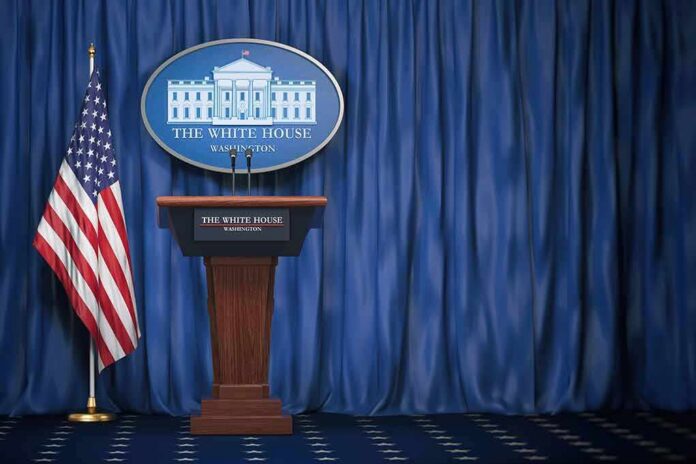
President Trump named Katie Zacharia White House press secretary and set her debut briefing for 9:30 a.m. in the briefing room, signaling a reset in how the administration will face the press.
Story Snapshot
- Trump announced Zacharia as press secretary and scheduled her introductory news conference.
- Reports identify her as succeeding Karoline Leavitt in the role.
- Zacharia thanked Trump and said she will work with the press corps.
- The Tuesday 9:30 a.m. briefing time was publicized in advance.
What The White House Announced And When
President Trump publicly announced that Katie Zacharia would serve as White House press secretary and said she would hold an introductory news conference at 9:30 a.m. in the White House Press Briefing Room. His post praised her loyalty and predicted she would do a “fantastic job,” according to coverage of the statement. Outlets that covered the announcement reported that she would start on a Monday and brief reporters the next morning at 9:30 a.m. in the Brady room.
Major news organizations reported the appointment and the planned timing for her first appearance. The Associated Press said Trump named Zacharia as the successor to Karoline Leavitt. NBC News likewise reported that Trump confirmed her as the incoming press secretary and highlighted his plans for her introductory briefing. Both reports tied the transition to a set schedule, reinforcing that the White House intended a prompt on-camera debut after her first day on the job.
Who Katie Zacharia Is And What She Says She Will Do
Coverage described Zacharia as a conservative media voice with ties to Trump’s media company. Reports also cited a short stint in a federal department earlier in her career. In public comments quoted by reporters, Zacharia called the job a “distinguished privilege” and said she looked forward to working with the White House press corps and with reporters across the country. She framed her role as sharing the administration’s record and plans in regular exchanges with the press.
Zacharia’s selection follows a string of communications shifts during Trump’s second term. Republicans control both chambers of Congress, and the White House has pushed an “America First” message on spending, border enforcement, and energy. Supporters expect firmer pushback on what they view as biased coverage and elite narratives. Critics worry about access limits and tougher treatment of dissenting questions. A capable press secretary can narrow that gap by giving clear answers and holding steady briefings.
Why A Scheduled 9:30 A.M. Briefing Matters
A scheduled, on-camera briefing sets a public marker for accountability and access. Reporters plan questions, camera crews plan coverage, and the press office lays out talking points and policy updates. Under past administrations, routine briefings came with transcripts and video posted to public archives. Those records let citizens read what was asked and answered. Setting a time and room signals a return to that standard cadence and offers a test of how the new press lead will engage.
TODAY: New White House Press Secretary Katie Zacharia will hold her first press briefing at 9:30am.
I’ll be in the seat for @NewsNation ready to ask some questions! pic.twitter.com/dX5KnXZTME
— Hannah Brandt (@HannahBrandt_TV) October 13, 2026
Regular briefings also help shape national debates that split older conservatives and liberals alike. Many conservatives want straight talk on border security, energy prices, and inflation. Many liberals want explanations on safety nets, immigration policy, and civil rights. Both groups distrust Washington insiders and the “deep state.” An effective press shop can help by answering direct questions, citing data, and explaining tradeoffs. That does not fix policy fights, but it builds a shared set of facts the public can check.
How This Fits Longstanding White House Practice
White House press briefings are an old institution. Libraries and archives from both parties hold transcripts and videos of almost daily sessions by prior press secretaries. The Obama archive shows weekday briefings posted with full transcripts for public review. The Reagan Library and other presidential archives preserve similar records across many years. That tradition gives the public a paper and video trail to hold leaders to their words and to measure follow-through over time.
Modern governments depend on that rhythm to explain policy in plain language. Clear answers on spending, wars, disasters, and rules affect family budgets and community safety. When a new press secretary steps up, the question is simple: Will the podium be used to inform or to spin? A scheduled debut sets expectations. Fair, frequent briefings can help rebuild trust across party lines, even when people disagree on policy. That is why the announced 9:30 a.m. session drew attention beyond the beltway.
What To Watch In Zacharia’s Early Briefings
Reporters will look for a few basics. First, will the press office post prompt, complete transcripts and video? Second, will Zacharia call on a wide range of outlets, including those that challenge the White House? Third, will she give concrete answers on spending, border actions, and energy plans? Those details matter to families who feel squeezed and shut out. They also show whether the administration is serious about being clear with the country it serves.
Sources:
youtube.com, abcnews.com, cnbc.com, dw.com