Troops facing hostile fire overseas will see their danger pay nearly double for the first time in 24 years, as the Pentagon raises combat compensation while the war with Iran continues.
Quick Take
- Hostile fire pay jumps from $225 to $450 per month, effective October 1, 2026.
- Imminent danger pay rises from $225 to $275 per month, or about $9.16 a day.
- This is the first increase to either special pay since October 2002.
- The change covers 58 designated danger zones, including areas tied to the Iran conflict.
- Officials call it a long-overdue fix to pay that stayed flat for 24 years.
Pentagon Doubles Key Combat Pay Rate
The Department of Defense announced the pay boost on October 1, 2026. Assistant Secretary of War for Manpower and Reserve Affairs Timothy Dill signed the memo setting the new rates. Hostile fire pay jumps to $450 a month, up from $225. Imminent danger pay rises to $275 a month, or $9.16 per day.
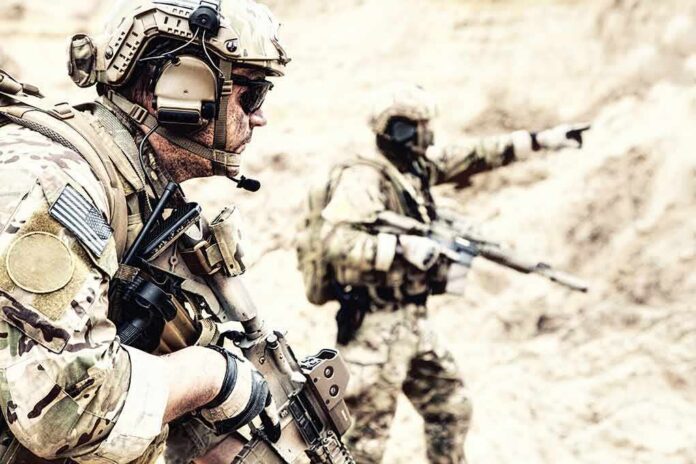
Both pays reward troops who face real danger on the job. Hostile fire pay goes to service members shot at, hit by hostile mines, or stationed close enough to an attack to share the risk. Imminent danger pay covers troops sent to places the Pentagon has flagged as unsafe, whether from war, terrorism, or civil conflict.
A Rate Frozen Since the Iraq War Era
Both pays sat at the same flat $225 monthly rate since October 2002, before the United States invasion of Iraq. That means a generation of service members deployed to Afghanistan, Iraq, Syria, and now the Gulf region collected the same payout, even as the cost of living climbed far higher over two decades.
Undersecretary of War for Personnel and Readiness Anthony J. Tata explained the Pentagon’s reasoning in blunt terms. “Those who face combat deserve higher compensation that reflects the risks that they willingly undertake on behalf of our nation,” he said. The statement frames the raise as overdue recognition rather than a new war bonus tied to any single conflict.
Where the New Rates Apply
The Defense Finance and Accounting Service lists 58 locations where troops currently qualify for imminent danger pay. Those zones stretch across the Persian Gulf, the Arabian Sea, the Gulf of Oman, the Indian Ocean, and parts of the Mediterranean Sea, regions directly touched by the ongoing conflict with Iran.
Hostile fire pay and imminent danger pay cannot be collected together. A service member qualifies for one or the other, not both, depending on their specific circumstances in a combat zone. That rule has not changed, only the dollar amount tied to each category.
Why the Timing Raises Questions
News outlets widely linked the announcement to the active war with Iran, and the timing lines up with that conflict. But the public record does not show a direct statement from Pentagon officials saying the Iran war specifically triggered this change, rather than a broader review of pay that had gone stale for two decades.
Government pay data backs up the idea that troops had gone a long time without a real raise. One Pentagon pay study found that combat-zone compensation has lagged far behind what civilian workers get paid for comparable risk increases, with estimates showing military hazard pay rising by only a few hundred dollars annually per unit of added risk, compared to thousands of dollars in civilian labor markets.
What Troops and Families Can Expect
For a service member qualifying for hostile fire pay, the shift from $225 to $450 a month adds up to an extra $2,700 a year. That is real money for military families, many of whom have said for years that pay has not kept pace with inflation or the risks troops take on. The Marine Corps had already made a smaller danger-pay adjustment weeks earlier, adding roughly $1.66 a day to some troop paychecks before this broader Pentagon-wide change took effect.
The increase lands as Americans across the political spectrum continue to question whether government institutions, including the Pentagon, move fast enough to fix problems that have been obvious for years. A pay rate frozen since 2002, through multiple wars and major inflation, fits a broader pattern many voters already distrust: slow-moving bureaucracy catching up to reality only when a crisis forces the issue.
The catch inside the Pentagon pay raise
Pentagon Doubles Combat Pay for Troops as Iran War Death Toll Rises
Read more: https://t.co/tAgdVq4X4n#Geopolitics #BreakingNews #Shorts pic.twitter.com/bFeH8rLMAP
— The Global Market Brief (@The_GMBrief) October 6, 2026
For now, the new rates stand as official Pentagon policy, effective immediately. Troops serving in hostile fire zones and danger areas tied to the Iran conflict will see the higher pay reflected in upcoming paychecks, according to the Department of Defense’s October 1 announcement.
Sources:
taskandpurpose.com, sofx.com, deseret.com, militarytimes.com