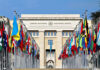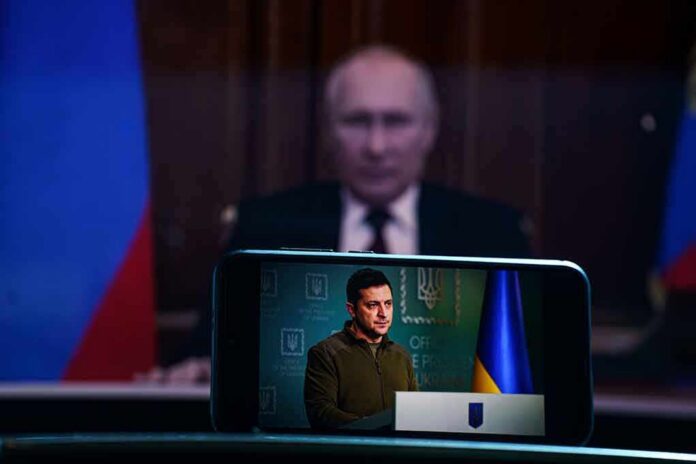
Ukraine’s president used the United Nations stage to demand tighter sanctions and global unity to choke off Russia’s war machine, warning that delay only grows the danger.
Story Highlights
- Zelenskyy urged nations to cut Russia’s war financing and isolate the aggressor.
- He called for stronger sanctions and steady weapons support to stop the invasion.
- Russia claims it is acting in self-defense under the United Nations Charter, a point disputed by Ukraine.
- Experts say sanctions bite over time but face evasion and slow impact.
Zelenskyy’s Core Appeal at the United Nations
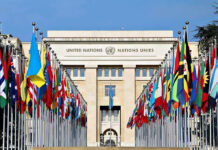
President Volodymyr Zelenskyy told world leaders that stopping the war requires cutting Russia’s cash, tools, and partners that keep the invasion going. He argued that aggression anywhere weakens safety everywhere, and that nations must act together, not wait for a perfect plan. His address pressed for tighter sanctions, continued air defense and artillery, and strict enforcement on middlemen who help Russia dodge controls. He framed this as a defense of the United Nations Charter and basic borders.
Zelenskyy said every oil dollar and spare part that reaches Russia fuels more strikes on Ukrainian cities and power grids. He urged countries to stop loopholes in energy price caps and to block trade routes that move banned electronics. He tied these steps to a “peace formula” that aims to protect civilians, punish war crimes, and secure Ukraine’s recognized borders. The message was simple: starve the war economy and the missiles slow, and talks have a real chance.
How Sanctions Pressure Works — and Where It Falls Short
Policy experts say sanctions can limit military supplies and lower long-term growth by cutting off technology and funding. They also say sanctions do not cause quick collapse. Russia has adapted by rerouting trade, boosting domestic industry, and using debt and taxes to fund spending. This mix blunts short-term pain but raises longer-term costs, like weaker productivity and bigger budget gaps. Stronger enforcement and secondary penalties may raise pressure over time.
Analysts tracking the past decade add that earlier sanctions after 2014 had mixed results. They imposed real costs but did not stop Russia from rebuilding stockpiles and shifting suppliers. That history explains why Zelenskyy stressed strict enforcement and closing back doors now. Cutting access to chips, machine tools, and cash can slow production of drones, missiles, and armor. The effect is uneven and delayed, but it compounds as bottlenecks spread across the supply chain.
Russia’s Defense and the Clash of Narratives
The Kremlin claims it acted under Article 51 of the United Nations Charter and portrays the invasion as a “special military operation” for self-defense. Moscow also blames the West and the North Atlantic Treaty Organization for raising threats near Russia’s borders. These arguments seek to counter Ukraine’s push for punishment and isolation. Ukraine rejects these claims and says Russia violated the Charter by using force to seize land from a sovereign neighbor.
This clash is not only legal. It is also about time and leverage. Ukraine wants faster sanctions and steady weapons to change facts on the ground. Russia bets that workarounds, energy sales, and public fatigue will outlast pressure. Many Americans, left and right, hear a familiar theme: world bodies talk while wars grind on, and powerful players dodge rules. That concern grows when sanctions leak and enforcement lags, feeding doubt that global systems still serve the public interest.
What This Means for Americans
For U.S. readers, the stakes are clear. If sanctions close and allies stay aligned, costs to Russia rise and the war’s tempo can slow. If loopholes stay open, Moscow adapts, and the war drags on with higher global risks and prices. Leaders often say “rules matter,” but results depend on follow-through: blocking gray-market trade, tracking shell companies, and keeping energy tools tight. That is unglamorous work, yet it is the part that tests whether promises beat power in the real world.
Sources:
youtube.com, president.gov.ua, gadebate.un.org, transcripts.cnn.com, kyivindependent.com, kyivpost.com