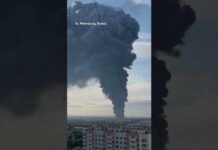
A flying object entered Polish airspace and crashed near Tarnawa-Kolonia during a heavy Russian strike on Ukraine, jolting NATO and reviving fears of spillover war into alliance territory.
Story Highlights
- Poland reported an unidentified object crossed into its airspace and fell near Tarnawa-Kolonia during Russian strikes.
- NATO states scrambled jets and boosted air defenses after the breach.
- Ukrainian officials said Russian cruise missiles briefly crossed into Poland during the attack.
- Polish experts are investigating the debris and crater; officials have not called it a deliberate strike.
What Poland Says Happened Near The Border
Polish authorities said an unidentified object entered Poland from the direction of Ukraine and came down near Tarnawa-Kolonia, close to the border. The breach happened while Russia launched a large overnight missile and drone attack on Ukraine. Local responders found a crater and debris, which point to a real impact event. Poland did not label it a deliberate attack. Instead, investigators began work to identify the object and understand the flight path and cause.
Ukrainian officials and tracking channels reported that Russian cruise missiles, including the Kh-101 type, briefly crossed into Polish airspace during the same wave of strikes. That account matches the timeline of the border breach. The shared battlefield and short distance from launch corridors to the Polish frontier make navigation errors or route deviations possible during intense salvos. Still, Poland has not released final forensic findings or radar data to the public yet.
How NATO Responded In Real Time
NATO governments treated the airspace breach as serious from the start. Allied aircraft were scrambled and ground defenses were activated to guard Polish territory and watch for follow-on threats. Leaders expressed solidarity with Warsaw and said the alliance would defend every inch of its land. This response follows standing procedures to treat any unknown object in allied skies as a risk until confirmed otherwise, especially along the war’s front edges.
The swift posture echoed a pattern seen in earlier border scares. In 2022, a missile explosion in Poland first raised fears of a Russian strike, but officials later assessed it was likely a Ukrainian air-defense missile fired during a Russian barrage. That case showed how early claims can harden fast, while technical answers arrive later. Today’s incident fits that same high-stakes, confirm-first-then-clarify process.
What Is Known, What Is Not, And Why It Matters
What is known: a flying object crossed into Poland during a large Russian attack on Ukraine and left a crater and debris near Tarnawa-Kolonia. NATO and Poland raised air defenses and scrambled jets. Ukraine says Russian missiles briefly crossed into Polish skies. What is not yet public: the final identification of the debris, detailed radar tracks, and a firm call on intent or malfunction. Officials have not alleged a planned strike on Poland at this stage.
Poland missile incident
Russian missile lands in Poland amid Ukraine strikes. NATO jets scramble.
— Hope 🕊️ (@MrMakiri) July 31, 2026
This matters for both security and trust. People on the right and left fear leaders will downplay risks or spin facts while borders feel less secure. A missile fragment landing inside a North Atlantic Treaty Organization member fuels that worry. Clear data can calm nerves: radar plots, forensic lab results, and a step-by-step timeline help citizens judge the risk and the response. Without that, rumor and anger can fill the gap and drive calls for rash moves.
The Bigger Picture: Spillover Risk And Public Patience
Each cross-border scare tests alliance discipline and public patience. Commanders must move fast to protect airspace. Investigators must move carefully to get the facts right. Those goals can clash under pressure. That tension is not partisan; it affects families worried about war widening, veterans who know fog-of-war errors happen, and taxpayers who expect competence over theater. Stable policy needs both speed and accuracy when the stakes involve potential war with a nuclear power.
What To Watch Next
Watch for Poland to release a technical report on debris and crater samples. Look for radar tracks and air-policing logs covering the minutes before and after the border crossing. Expect allied consultations to refine rules for future incidents, including how fast to share data with the public. If authorities confirm a Russian-origin missile drifted off course, pressure will grow for tighter air defenses. If it was another munition type, training and deconfliction may take center stage.
Bottom Line For U.S. Readers
The incident shows how fast a faraway war can touch a North Atlantic Treaty Organization member. It also shows why early certainty can be risky. Citizens want borders protected and honest answers without spin. That means fast defense moves paired with public evidence as soon as it is safe to share. Clear proof, not headlines, should guide next steps. That balance keeps the alliance strong and lowers the chance that one bad night turns into a wider war.
Sources:
military.com, deccanchronicle.com, devdiscourse.com, bbc.com, abc7ny.com, cepa.org