
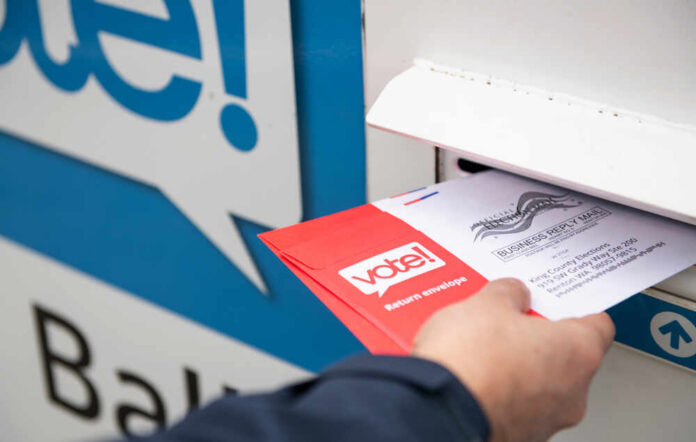
The Department of Justice is warning state election officials they could face criminal prosecution over noncitizen voting, as courts continue pushing back on parts of the administration’s election enforcement strategy and researchers argue documented cases remain rare.
Story Snapshot
- Federal law already makes it a crime for noncitizens to vote in federal elections.
- A new Trump executive order directs the Justice Department to target officials who allow noncitizen voting.
- Justice Department letters and lawsuits demand massive amounts of state voter data, including personal details.
- Courts have questioned parts of the administration’s election strategy, while multiple studies have found documented noncitizen voting cases to be rare.
What Federal Law Really Says About Noncitizen Voting
Federal law, specifically 18 United States Code section 611, makes it illegal for any noncitizen to vote in an election that includes candidates for President, Congress, or other federal offices. The statute applies no matter how the vote is cast, in person or by mail, and violations can be punished by fines, up to one year in jail, or both. Immigration law then adds another layer of punishment, allowing deportation or making future admission to the United States more difficult for noncitizens who vote unlawfully. These rules have been on the books for decades and were strengthened in the 1990s.
Legal summaries explain that the law covers almost all noncitizens, including people with green cards and legal visas. There is a narrow exception for someone who grew up here, had citizen parents, and reasonably believed they were a citizen when they voted. Immigration decisions show the government can deport a noncitizen for illegal voting even if the person did not know the act was against the law. In short, the system already treats noncitizen voting as a serious crime with heavy personal costs.
Trump’s Executive Order And DOJ Pressure On The States
A March 2026 executive order called “Ensuring Citizenship Verification and Integrity in Federal Elections” instructs the Attorney General to investigate and prosecute officials who allow noncitizens to vote in federal races. Following that order, Assistant Attorney General Harmeet Dhillon sent warning letters to election officials in states like Arizona, Georgia, and Michigan, saying they could face criminal charges if noncitizens are found voting on their watch. The Justice Department has also demanded broad voter information from at least 39 states to check for possible noncitizen voting and sued eight states that refused to turn over full data.
These demands have raised alarms across the political spectrum because they reach deep into voter records. One lawsuit in California involved a Justice Department request for unredacted data on about 23 million voters, including names, addresses, Social Security numbers, and voting histories. A federal district judge ruled that demand was unprecedented and violated separation of powers under the Constitution. The Campaign Legal Center reports that the Justice Department has lost all eight voter-roll lawsuits decided so far, suggesting courts are pushing back hard against this new federal pressure on states.
How Rare Is Noncitizen Voting, According To The Data?
Civil rights groups and election researchers agree that noncitizen voting in federal and state elections is already illegal and, in available data, extremely rare. A Brennan Center study of 23.5 million votes in 42 jurisdictions found only 30 suspected noncitizen voting incidents, about 0.0001 percent of ballots. The Fair Elections Center cites a 2024 letter from United States Citizenship and Immigration Services saying evidence is clear noncitizen voting in federal elections is “extremely uncommon.” Another Brennan Center report warns that many “noncitizen” flags from federal data tools are simply errors.
One of those tools, the Systematic Alien Verification for Entitlements program, was expanded to help states identify possible noncitizens on their voter rolls. According to the Brennan Center, this rush led to serious mistakes, with incorrect information sent to at least five states and claimed large numbers of noncitizen voters later proven wrong. A federal judge reviewing the revamped tool went even further, saying there was “no evidence at all whatsoever that noncitizens are voting or have voted in any election ever” based on the data in that case. Utah’s own review found zero instances of noncitizen voting, while Louisiana found only 79 potential cases out of 74 million ballots over four decades.
States Push Back, And The “Deep State” Fears Grow
Secretaries of state like Michigan’s Jocelyn Benson and California’s Shirley Weber have publicly rejected the Justice Department’s allegations as “factually baseless” and say they are prepared for “disruption” and “intimidation” from federal officials. Groups such as the American Civil Liberties Union and the Campaign Legal Center have filed lawsuits challenging both the executive order and the voter data demands, arguing that they threaten privacy, state power over elections, and basic civil rights. Meanwhile, organizations like the Brennan Center and the Center for Election Innovation and Research say sweeping claims about noncitizen voting mostly come from misunderstandings, misreading complex data, or outright fabrications.
For many Americans on the right and the left, this fight hits a nerve. People who worry about illegal immigration and election integrity see real cases of noncitizens charged with illegal voting in New Jersey and elsewhere and want the law enforced. People who fear government overreach see Washington using those rare cases to demand massive databases of personal voter information and threaten state officials, even when courts say the evidence is thin and the legal basis is shaky. Supporters say stronger federal enforcement is necessary to protect election integrity. Critics argue the administration is using isolated cases to justify broader federal involvement in state election systems.
Sources:
cbsnews.com, justice.gov, brennancenter.org, whitehouse.gov, electioninnovation.org, campaignlegal.org, votebeat.org, americanimmigrationcouncil.org