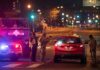

Arsenal’s title parade turned into a public test of how quickly celebration can blur into crowd risk when thousands of fans packed north London streets, lit flares, and left emergency services dealing with real fire concerns.
Quick Take
- Sky News described **jubilant crowds**, red flare smoke, confetti, chants, and sustained cheering around the team buses.[2]
- Arsenal framed the event as a club celebration for its Premier League title win, not as a security operation.[2]
- The London Fire Brigade said it attended a hotel fire believed to have been caused by a stray flare and reported flare-related fire alarm activations nearby.[3]
- The same parade drew both family-style celebration and criticism over pyrotechnics, showing a split public reaction to the scene.[2][3]
A Celebration That Filled the Streets
Arsenal hosted the parade as a victory event after winning the Premier League, and live coverage showed four open-top buses moving through Islington while supporters lined the route in large numbers.[2] Sky Sports also described crowds gathering in north London to welcome the team after its first Premier League title in 22 years.[3] The visual record is unmistakable: this was a mass celebration, not a small or private club moment.
That same coverage also captured the emotional scale of the day. Reporters spoke with fans who had come with relatives across generations, and the broadcast highlighted children reacting to seeing players such as Bukayo Saka.[2] Those details matter because they show why many supporters viewed the scene as communal and family-oriented. The atmosphere on camera was not one-note chaos; it mixed joy, noise, and a strong sense of shared identity.
Why the Safety Concerns Mattered
The London Fire Brigade said it attended a hotel fire that was believed to have been caused by a stray flare, and it said pyrotechnics were believed to have triggered fire alarms at several nearby locations.[3] That is a major distinction: even if many fans saw the red smoke as part of the spectacle, the official response tied the same behavior to actual fire risk. In a dense urban setting, that risk is not abstract.
GB News reported that emergency services rescued around 75 people from elevated positions during the parade, while the fire service also publicly urged supporters to avoid using pyrotechnics near stations and buildings.[1][3] Taken together, the reporting suggests the parade was not merely loud or messy; parts of it crossed into situations that required intervention. The evidence does not prove every flare user intended harm, but it does show that the celebration carried consequences beyond optics.[1][3]
The Bigger Pattern Behind the Headlines
This parade fits a wider pattern seen in major football celebrations: one side of the story emphasizes joy, and the other emphasizes crowd control, fire hazards, and public-order strain. Arsenal’s own event stream was designed to showcase triumph, while fire-service reporting focused on the damage and alarms created by pyrotechnics.[2][3] That split helps explain why the same footage can be read as either festive or irresponsible, depending on what is emphasized.
Arsenal’s trophy parade was incredibly peaceful despite the massive crowd. There were no reports of vandalism, destruction, or disorder, unlike some parades, yet people still label Arsenal fans as insufferable and unbearable.
The truth is, we’re the most emotional, passionate… pic.twitter.com/Ycc1Aoy7PB
— Ifeoluwani (@Philopearl_Afc) June 1, 2026
For readers frustrated by a public system that often reacts after the fact, the deeper issue is familiar: large events can expose gaps between planning, enforcement, and accountability. The parade was expected to draw very large crowds, and the route was built around a long public procession rather than a controlled stadium-style celebration. When a city invites mass turnout, officials still need clear rules for flares, climbing, and other behaviors that can turn celebration into preventable danger.[1][3]
Sources:
[1] YouTube – Fans paint London streets red with flares to celebrate Arsenal’s …
[2] Web – Arsenal title parade: London hotel ablaze, nine arrests made and 75 …
[3] YouTube – Arsenal fans take over live report during parade in north London