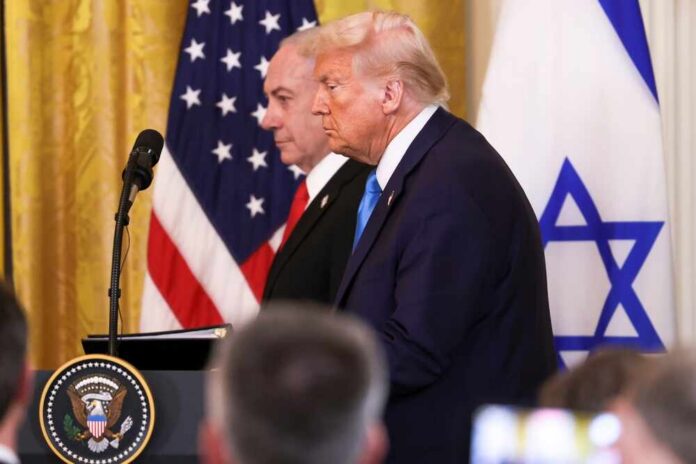
Israel’s diplomatic standing crumbles as Western nations distance themselves from escalating Middle East conflict, raising questions about whether America’s longtime ally has overplayed its hand and squandered decades of international goodwill.
Story Snapshot
- Israel faces mounting diplomatic isolation as Western allies express concern over military operations in Gaza and broader regional escalation
- United Nations Security Council sessions reveal growing distance between traditional U.S.-Israel alliance and European powers critical of humanitarian crisis
- Russian leadership issues warnings as regional tensions escalate, positioning Moscow as alternative mediator amid Western policy divisions
- Two years of Gaza conflict have destroyed 92% of housing infrastructure, displacing 80% of population and creating humanitarian emergency
- Energy markets face disruption as Strait of Hormuz tensions threaten global oil supplies, impacting American consumers at the pump
Growing Diplomatic Rift at United Nations
The United States finds itself increasingly alone defending Israel’s military actions at the United Nations Security Council, with France and Russia leading condemnation of humanitarian conditions in Gaza. Western European nations have broken from traditional solidarity, citing concerns over starvation tactics and civilian casualties that have claimed over 33,000 Palestinian lives according to Hamas-controlled health ministry statistics. This diplomatic fracture represents a fundamental shift in decades-old alliances, leaving American taxpayers to wonder whether continued military aid serves national interests when even close allies refuse to support the policies it enables.
Netanyahu’s Radical Turn Alienates Traditional Partners
Israeli Prime Minister Benjamin Netanyahu’s hardline approach has accelerated international isolation, with his dismissal of soldier abuse charges and endorsement of far-right elements as “heroic fighters” shocking Western governments. His administration’s policies—including 11-week aid blockades and systematic destruction of 84% of Gaza’s water and sanitation infrastructure—violate standards that democracies typically uphold. Netanyahu himself acknowledged this isolation in what observers called his “Sparta speech,” framing Israel as standing alone against global criticism. Yet this defiant posture raises fundamental questions: when a nation becomes an island unto itself, rejecting international norms that prevent starvation and collective punishment, does it still share values with Western civilization?
American Public Opinion Shifts Against Unconditional Support
Polling data reveals dramatic changes in American attitudes toward Israel, with growing majorities questioning unconditional military aid as images of humanitarian devastation circulate globally. Congressional representatives face constituent pressure to condition assistance on adherence to international law, a position that would have been political suicide just years ago. This grassroots shift transcends traditional partisan divides, uniting Americans frustrated with foreign entanglements that drain resources while domestic infrastructure crumbles and border security remains compromised. The bipartisan consensus that once guaranteed automatic support for any Israeli government action has fractured, replaced by demands for accountability that establishment politicians can no longer ignore without electoral consequences.
Regional Escalation Threatens American Energy Security
Expanded military operations targeting Iranian facilities and resulting closure of the Strait of Hormuz threaten global oil supplies, with American consumers facing potential price spikes that compound existing inflation from years of fiscal mismanagement. Russia’s warnings and offers to mediate position Moscow as an alternative power broker, undermining American influence in a strategically vital region. These developments expose the hollowness of elite foreign policy that embroils America in Middle Eastern conflicts without clear national security benefits or exit strategies. Working families struggling with energy costs have every right to question whether Washington’s entangling alliances serve their interests or merely the geopolitical games of a ruling class insulated from consequences.
The trajectory toward isolation appears self-inflicted, driven by policies that normalize violations of basic humanitarian standards even as they claim self-defense justifications. International relations experts warn that radicalization within Israeli society—evident in public celebrations of abuse and rejection of proportionality—creates lasting damage to diplomatic relationships that cannot be easily repaired. Whether through deliberate strategy or miscalculation, the current path risks transforming Israel from a nation that survived existential threats into one defined by them, alienating the very Western partners whose support enabled its security for generations. American policymakers face a choice: continue reflexive support regardless of actions taken, or acknowledge that true friendship sometimes requires honest reckoning with destructive behavior that serves neither party’s long-term interests.
Sources:
When a Society Radicalises: Israel’s Dangerous Path to Isolation – Modern Diplomacy
Israel Must Rebuild Global Trust Post-Gaza War – Jerusalem Post
Israel Is Becoming Isolated Even in the United States – WANA Institute
Ceasefire Won’t Halt Israeli Isolation, Boycott, Sanctions – +972 Magazine