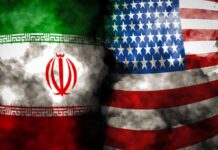

America just stepped back from the brink with Iran—but only for two weeks—raising hard questions about who is steering U.S. policy and what comes next.
Story Snapshot
- President Donald Trump said he paused a planned U.S. attack on Iran after appeals from Gulf leaders [1].
- Trump separately announced a two-week suspension of strikes while “serious negotiations” proceed [2].
- Reports indicate the pause is conditional, not a full stand-down, sustaining military pressure on Tehran [7].
- Analysts note this fits a long pattern of public threats paired with diplomatic pauses in U.S.–Iran crises.
Trump’s Pause, Not Cancellation, Of Planned Iran Strike
President Donald Trump stated that a planned military strike on Iran, scheduled for “tomorrow,” was halted after direct appeals from regional leaders in Qatar, Saudi Arabia, and the United Arab Emirates. The pause signaled that diplomacy had opened a narrow window, but that future action remained possible if U.S. objectives were not met. The announcement underscored the leverage Gulf partners sought to exert in shaping the pace and scale of Washington’s next steps in a volatile standoff [1].
Trump later said the United States would suspend “bombing and attack of Iran” for two weeks. He framed the pause as an opportunity for “serious negotiations,” rather than a retreat, keeping pressure while testing whether Tehran would make tangible concessions. The two-week timeline created a public clock, raising expectations for movement while preserving the option to reinitiate strikes if talks faltered or provocations resumed, according to the announcement and related coverage [2].
Signals Of Ongoing Coercive Pressure Despite Diplomatic Window
Coverage of the administration’s posture described continued readiness for renewed attacks if conditions deteriorated. Reporting highlighted warnings of severe consequences should Iran escalate, paired with indications that military options remained on the table. This combination suggested a tactical delay designed to influence negotiations, not a durable de-escalation. The messaging aimed to deter Tehran while reassuring regional partners that Washington retained credible capabilities and willingness to act if required [7].
Additional reports noted Trump’s claim that Iranian steps, including the reported cancellation of executions, influenced his calculus about immediate action. That development, if sustained, would illustrate how targeted pressure and limited pauses can generate short-term humanitarian or political responses. However, officials and observers cautioned that these signals can be fluid, and that tactical gestures do not necessarily translate into strategic change, especially amid competing domestic and regional pressures [3].
A Familiar Playbook In U.S.–Iran Crisis Management
Context from prior U.S.–Iran confrontations shows a recurring pattern: leaders pair public threats of force with short diplomatic pauses to shape deterrence and bargaining. Analysts emphasize that claims about imminent strikes are difficult to verify because key planning information is classified, while public statements are often calibrated for leverage. The current pause—announced with a defined timeline and regional mediation—fits that historical mold of coercive bargaining under intense domestic and international scrutiny.
🚨 BREAKING NEWS
U.S. President Donald Trump says he called off a planned new attack on Iran at the request of Gulf states, including Saudi Arabia, Qatar, and the UAE, to allow peace negotiations to continue.
Trump said the U.S. remains prepared for a “full, large-scale assault”… pic.twitter.com/tk7cxUSJGu— Global Updates (@GlobalUpdates_0) May 19, 2026
For Americans across the political spectrum, the episode echoes a broader frustration: decisions of war and peace can hinge on opaque conversations among elites at home and abroad. Supporters of a harder line worry that temporary pauses embolden adversaries; advocates of restraint fear another open-ended conflict with high costs and uncertain aims. The two-week suspension offers space for diplomacy, but also spotlights a system where momentous choices unfold behind closed doors, with citizens left to parse signals and hope prudence prevails [1].
Sources:
[1] YouTube – Trump halts planned Iran attack after Gulf leaders intervene amid …
[2] YouTube – Trump says US to ‘suspend bombing and attack of Iran’ for two weeks
[3] Web – Trump says Iranian cancellation of executions ‘had big impact’ on …
[7] Web – Trump warns of “critical period” in Iran war, threatening severe …