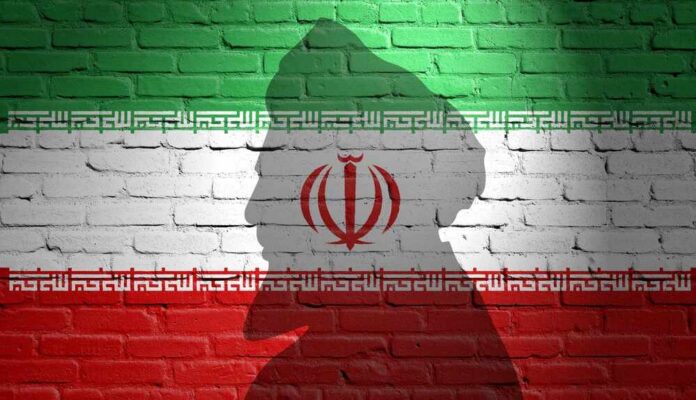
Iran’s newly appointed Supreme Leader Mojtaba Khamenei is reportedly wounded, disfigured, and in hiding just days after his formal installation, raising urgent questions about who actually controls the Islamic Republic during this critical moment in Operation Epic Fury.
Story Snapshot
- US Defense Secretary confirms Iran’s new Supreme Leader is wounded and hiding underground following March 7 installation
- Historic February 28 decapitation strike eliminated Ali Khamenei and Iran’s entire senior military command structure
- Mojtaba Khamenei holds formal title but US bounties suggest active efforts to locate incapacitated leader
- Iranian regime continues military operations despite leadership crisis, with death toll exceeding 1,400 civilians
Formal Leader Missing in Action
US Defense Secretary Pete Hegseth revealed on March 13 that Iran’s new Supreme Leader Mojtaba Khamenei is “wounded and likely disfigured” and currently in hiding. The Trump administration characterizes Iranian leadership as “desperate and hiding, they’ve gone underground, cowering.” This stunning admission comes just six days after the Assembly of Experts formally announced Mojtaba as successor to his father Ali Khamenei, who was killed in coordinated US-Israeli strikes on February 28. The US has announced bounties for information on Iran’s top leaders, including the new Supreme Leader, indicating active military efforts to locate him.
Iranian state media’s reliance on cameras and recorders rather than direct appearances by Mojtaba supports US claims that he cannot effectively lead. This presents a critical national security question for Americans: while the regime installed a formal successor, the actual command structure appears paralyzed. The simultaneous elimination of the Secretary of the Iranian Defence Council, Commander of the Islamic Revolutionary Guard Corps, Chief of the General Staff, Minister of Defence, and Head of the Military Office created immediate operational challenges that an incapacitated leader cannot resolve.
Historic Decapitation Strike Reshapes Middle East
The February 28 operation marked the first successful assassination of a sitting Iranian Supreme Leader, ending Ali Khamenei’s 37-year reign atop a command structure analysts describe as responsible for crimes against humanity across the region. The coordinated US-Israeli strikes targeted Iran’s entire senior leadership in Tehran simultaneously, representing an unprecedented military operation designed for regime change rather than containment. This strategic shift under President Trump demonstrates decisive action against a regime that threatened American interests and regional stability for decades.
Operation Epic Fury entered its third week by mid-March, with US forces hitting 15,000 targets across Iran while sustaining 13 military casualties. Iran continued striking targets in Israel and Gulf countries, though experts note these responses reflect “rational decision-making” with “calibrated responses proportionally” rather than emotional escalation. The death toll exceeded 1,400 Iranians by mid-March, including at least 53 killed at a girls’ school during initial strikes. Despite international warnings from France, Russia, and the UN about regime collapse, the Iranian Revolutionary Guard Corps maintains operations, protecting its entrenched military, political, and economic interests.
Leadership Vacuum Threatens Regime Stability
The succession crisis exposes fundamental weaknesses in Iran’s authoritarian structure that conservatives have long warned about regarding concentrated power without accountability. Analysts note that none of the potential successors “commands obvious consensus” and “the vacuum itself is destabilizing.” Unlike the 1979 revolution, no unified opposition exists to capitalize on elite disarray, leaving the IRGC as the primary stabilizing force. However, the question remains whether Iran will maintain concentrated authority or shift toward collective leadership designed to prevent future decapitation strikes.
The contradiction between Mojtaba’s formal status and functional incapacity reveals the regime’s desperation to project stability while actual governance remains paralyzed. This serves American interests by degrading Iran’s ability to coordinate regional proxy operations and develop nuclear weapons capabilities. The Trump administration’s willingness to execute such operations demonstrates renewed American strength after years of appeasement policies that emboldened Tehran. For Americans concerned about national security, this represents exactly the kind of decisive leadership needed to protect constitutional freedoms from foreign threats.
Sources:
Iran’s supreme leader is dead. Here’s what it means – Atlantic Council