California’s high-speed rail project, once promised at $33 billion, has now ballooned to an estimated $126-135 billion with zero passengers served, prompting Trump administration officials to label it the “worst public infrastructure failure in U.S. history.”
Story Snapshot
- Transportation Secretary Sean Duffy and Republican lawmakers condemned the project at a Los Angeles press conference, revealing nearly $16 billion already spent with no operational rail service
- Insider board member Anthony Williams confirmed costs reached $126 billion on “60 Minutes,” nearly four times the original $33 billion estimate promised to voters in 2008
- The Federal Railroad Administration issued a violation letter threatening to terminate $4 billion in grants due to overstated ridership projections and cost management failures
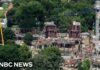
- President Trump vowed to investigate the project, which was supposed to connect San Francisco to Los Angeles by 2020 but remains incomplete with idle construction sites dubbed “Railhenge”
Promise Versus Reality: A Taxpayer Catastrophe
California voters approved Proposition 1A in 2008, authorizing $9 billion in bonds for an 800-mile high-speed rail system connecting San Francisco to Los Angeles in under three hours for an estimated $33 billion total cost. Nearly two decades later, the project has consumed over $16 billion in taxpayer funds yet delivers zero passengers and zero operational track. The California High-Speed Rail Authority continues construction on a scaled-back Merced-to-Bakersfield segment, but experts warn the full San Francisco-to-Los Angeles route may never materialize. This represents a textbook case of government overpromising and underdelivering on a massive scale.
Federal Scrutiny and Violation Findings
The Federal Railroad Administration sent a 315-page letter on June 4, 2025, documenting nine major violations including inflated ridership projections, a $7 billion funding shortfall, and unauthorized change orders. The letter threatens termination of $4 billion in federal grants if the California High-Speed Rail Authority fails to address these compliance failures. Transportation Secretary Sean Duffy’s recent press conference at Union Station escalated federal oversight, with the Trump administration launching a formal investigation into what the president called “the worst managed project” he has witnessed. This federal intervention underscores growing concerns about state-level fiscal responsibility and accountability to taxpayers nationwide.
Cost Escalation Without Accountability
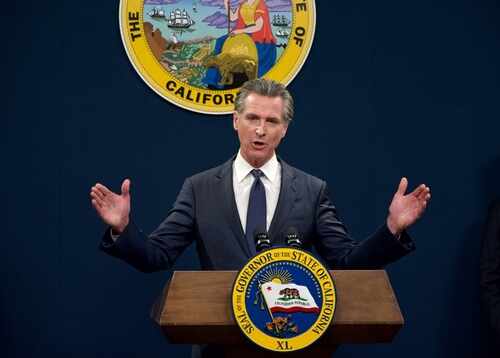
Project costs have exploded through multiple revisions: from $40 billion to $50 billion, then past $100 billion, reaching $126 billion according to board member Anthony Williams’ “60 Minutes” interview, and most recently hitting $135 billion in estimates from the Authority’s CEO in late April 2026. These escalations occurred despite Governor Gavin Newsom curtailing the project scope in 2019 to focus solely on the Central Valley segment due to uncontrolled costs and delays. The CEO now projects an additional two decades before most of the San Francisco-to-Los Angeles corridor could be completed, assuming funding materializes. For perspective, this cost overrun rivals the GDP of small nations while serving zero passengers—a staggering indictment of government project management.
Political Fallout and Symbolic Decline
Representative Kevin Kiley called the rail project a “blight” symbolizing California’s broader decline, while protesters at Duffy’s press conference chanted conflicting messages—some booing Kiley, others shouting “Build the rail!” The political clash reflects deeper frustrations: conservatives see wasteful spending epitomizing Democratic governance failures, while some progressives cling to the project despite its disastrous track record. Senator Shannon Grove dubbed the idle Central Valley construction sites “Railhenge,” highlighting visible reminders of taxpayer dollars squandered on incomplete infrastructure. This project has become a potent symbol in national debates about government competence, with the Trump administration leveraging it to illustrate the need for federal oversight of state spending.
New estimate for cost of California high-speed rail is at least $231 billion, about 7x the original estimate, before factoring in the costs of borrowing. "California’s high-speed rail now ‘worst project in history’ — as insiders reveal unbelievable new cost"…
— Joel Pollak (@joelpollak) April 29, 2026
The Eno Center’s 2019 analysis identified seven “worst practices” that doomed the project from inception: rigid Proposition 1A requirements that prevented adaptive planning, mismatched cost estimates versus available funding, and premature construction before finalizing route decisions. These structural flaws, combined with incomplete environmental reviews and lack of independent utility for partial segments, created a cascading failure that experts warned was inevitable. The project mirrors other U.S. high-speed rail failures like Texas Central Railway and rejected federal stimulus funds in Florida, Wisconsin, and Ohio—all suggesting America’s infrastructure bureaucracy remains fundamentally incapable of executing large-scale rail projects efficiently compared to international counterparts.
Sources:
California’s High-Speed Failure – Council for Citizens Against Government Waste
Why the California Bullet Train Project Failed: 7 Worst Practices – Eno Center for Transportation
US Transportation Secretary Announcement on California High-Speed Rail Project – FOX LA
High-Speed Fail – Cato Institute