
The real fight is not whether Democrats “want to lose” a Senate seat in Michigan; it’s over who gets to define what winning looks like — and who supplies the resources, endorsements, and message discipline that make victory possible.
The Short Version
- Bernie Sanders argued party leaders and donors were insufficiently backing Abdul El-Sayed, a progressive Michigan Senate nominee, risking a winnable seat.
- Public statements and endorsements from top Democrats after the primary undercut any claim of open sabotage; they aligned behind El-Sayed for November.
- El-Sayed’s finance records show meaningful fundraising capacity and heavy small-dollar support, even amid contested elite backing.
- The controversy reflects a larger structural dynamic in Democratic politics: centralized donor networks, selective elite endorsements, and issue cleavages — especially over Israel — shaping who is resourced as “viable.”
What Sanders alleged — and what the record actually shows
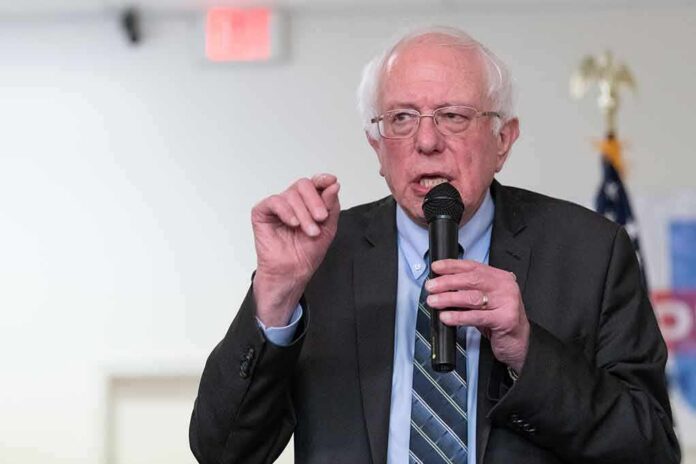
Sanders’s charge was blunt: the Democratic establishment was not “enthusiastic enough” to provide El-Sayed the support needed to win a battleground race. As a diagnostic, it speaks to perceived gaps in national committee attention, coordinated outside spending, and elite surrogates; as an accusation, it implies intentional under-resourcing relative to what a nominee requires in Michigan’s expensive media markets. But endorsements and statements from senior Democrats following El-Sayed’s primary win point in the opposite direction: Senate leaders Chuck Schumer and Kirsten Gillibrand said Democrats were united and pledged to work with El-Sayed to win, while Vice President Kamala Harris publicly endorsed him. Primary rival Haley Stevens and Michigan leaders likewise moved to close ranks — the standard post-primary choreography for a party intent on holding a seat.
This juxtaposition matters. A claim of deliberate undermining needs more than vibes and asymmetries; it requires named decisions to withhold money, staff, or infrastructure. The public record, by contrast, shows outward party alignment behind the nominee after the primary, not a campaign to tank him. That does not refute Sanders’s broader critique about uneven enthusiasm before or even after the primary; it does make “intent to lose” a stretch on the available evidence.
Follow the money: small dollars, big signals, and centralized networks
El-Sayed raised real money. Federal Election Commission data list total receipts north of $14.5 million — a serious sum, especially for a first-time Senate nominee who built much of it from individuals. His committee emphasized small-dollar fuel, reporting periods where 95% of donations were under $100, and touting no corporate money — a branding stance as much as a finance architecture. That profile signals two things: a resilient base that can be reactivated, and a ceiling that can bite when late-game air support — coordinated party spend, leadership-aligned super PACs, and high-dollar bundling — becomes decisive.
Political science has long described how centralized donor networks and elite cues shape who is deemed “viable” and, in turn, who gets more money, media, and endorsements. Democratic finance networks, in particular, are relatively stable and centralized over time; leadership status and super PAC activity correlate with who attracts funds. Endorsements also have localized, measurable effects on contributions, amplifying candidates who already slot neatly into party hierarchies. In that ecosystem, a progressive nominee who challenges donor orthodoxy can simultaneously post eye-catching small-dollar hauls and still face a relative deficit in institutional muscle compared with an establishment-favored alternative — especially in the run-up to, not after, a primary.
Where the friction really lives: Israel, outside spend, and intra-party legitimacy
Michigan’s race unfolded against a national backdrop where Israel–Palestine has become a sorting mechanism inside Democratic politics. Outside groups have concentrated spending in primaries to elevate moderates over critics of Israeli policy, and analyses have shown that officeholders more supportive of Israel tended to attract more pro-Israel contributions, reinforcing a cycle of resource concentration. That pattern does not prove sabotage; it does explain why certain progressives encounter organized resistance and why others, once nominated, still need to knit together a disparate coalition of labor, grassroots activists, and national Democrats who may disagree sharply on foreign policy.
Two caveats clarify, not blunt, this point. First, some corporate-aligned Democratic money often targets progressives in primaries; post-primary, much of that money stands down or pivots to defeating Republicans. Second, fact-checking in Michigan’s contest documented specific, bounded claims about corporate or utility PAC flows — for example, that the DTE PAC did not contribute to El-Sayed — reminding us to separate broad structural critiques from misfired particulars. The larger dynamic is a structural tilt, not a single smoking gun.
Endorsements and unity statements: ritual or reality?
Post-primary unity statements can be pro forma — important for signaling, insufficient for resourcing. Here, however, they were both rapid and specific: Schumer and Gillibrand promised to work with El-Sayed; Harris said she “proudly” stood with him; Stevens immediately offered support. Those gestures matter in three ways. They unlock national media oxygen; they reassure risk-averse donors; and, critically, they connect a nominee with the party’s voter-file, field, and legal infrastructures that individual campaigns cannot replicate. None of that eliminates pre-existing skepticism among segments of the party, and the intensity of follow-through — money in market, staff on the ground — is more telling than a press release. Still, the on-record alignment contradicts a thesis that leaders preferred to lose the seat.
Moreover, the finance ledger demonstrates capacity to capitalize on unity when it materializes. A $14.5 million war chest anchored by individuals is not a protest candidacy; it is a plausible statewide fund. The open question is whether institutional allies match the grassroots with late-game independent expenditures and coordinated turnout programs — the expensive, unglamorous investments that decide close races.
How to read claims of “sabotage” going forward
Three tests separate structural headwinds from intent. First, timing: if national committees and leadership-aligned outside groups spend to protect the nominee once the matchup is set, that points to unity; if they conspicuously abstain from standard support in a toss-up, skepticism earns a hearing. Second, parity: compare the nominee’s resource environment with similarly situated battleground Democrats — media reservations, coordinated field, legal protection, and surrogate deployment. Third, consistency: do unity statements translate into measurable contributions and independent expenditures when it counts? Political money is a lagging indicator of intent, but a decisive one.
Applied to the Michigan case, the evidence supports a narrower, more persuasive conclusion than Sanders’s broadside. Progressive nominees often face pre-primary resistance from centralized donor networks, particularly when they challenge foreign-policy orthodoxy; once nominated, party leaders nearly always converge, at least publicly, because losing a Senate seat is strategically unacceptable. The record here shows that convergence — and a nominee with proven fundraising capacity. Whether that alignment was enthusiastic enough, early enough, and operationalized with sufficient resources to win is an empirical question answered by spending reports and field outputs, not by rhetoric on either side.
Sources:
nypost.com, townhall.com, pbs.org, sbam.org, fundvoter.org, abdulforsenate.com, foxnews.com, newsmax.com, cnn.com, politico.com, brookings.edu, theguardian.com