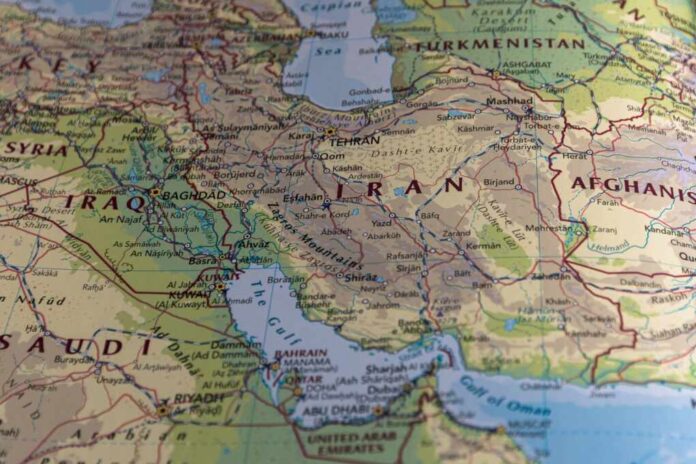
President Trump redeploys the USS Abraham Lincoln Carrier Strike Group to the Middle East, signaling a firm stance against Iran’s violent crackdowns on protests.
Story Highlights
- USS Abraham Lincoln heads to the Middle East amidst rising US-Iran tensions.
- President Trump considers military options following Iran’s protest suppression.
- Coordinated carrier deployments enhance regional military presence.
- Potential for increased U.S. military action to support Iranian regime change.
USS Abraham Lincoln’s Strategic Deployment
The USS Abraham Lincoln Carrier Strike Group (CSG) is en route to the Middle East from the South China Sea, a strategic move reflecting the United States’ response to Iran’s harsh crackdown on nationwide protests. This deployment is part of a broader strategy involving multiple carrier movements and enhanced air defense measures. The redeployment underscores President Trump’s commitment to countering Iranian aggression and supporting calls for regime change.
This initiative marks the first deployment of the USS Abraham Lincoln to the Middle East since the USS Nimitz’s departure in September 2025. As Iran continues its oppressive tactics against protesters, President Trump has ramped up rhetoric demanding new leadership in Tehran. The Lincoln’s presence aims to deter further Iranian provocations while providing the U.S. with credible strike capabilities in the region.
Watch:
Escalating Tensions and U.S. Response
In recent days, the U.S. has intensified its military posture in response to Iran’s brutal suppression of protests across more than 100 cities. The decision to send the Abraham Lincoln from the South China Sea to the Middle East coincides with bomber activity at Diego Garcia and air defense reinforcements. These coordinated military actions illustrate a resolve to back Trump’s rhetoric while deterring any retaliatory measures by Iran.
President Trump has warned of “grave consequences” if Iran continues its violent crackdowns, emphasizing the need for a decisive U.S. military presence. The Gulf region has seen increased transport flights and personnel evacuations, indicating preparations for potential escalations. The move is a clear message to Iran and its allies that the U.S. is prepared to act decisively in defense of its interests and those of its allies.
Potential Impacts and Global Implications
This military buildup serves as a deterrent to Iranian threats against U.S. bases in the Middle East, where approximately 30,000 American troops are stationed. The deployment of the Abraham Lincoln and other carriers reinforces U.S. alliances with regional partners, such as Israel and Gulf states, while also enhancing CENTCOM’s operational readiness.
The long-term implications of this strategic positioning include potential military strikes on Iranian targets, which could lead to significant regional instability. However, it also strengthens the U.S.’s deterrence credibility, potentially forcing Iran to reconsider its aggressive stance. The economic, social, and political repercussions could be substantial, particularly if military actions disrupt global oil supplies and further strain U.S.-Iran relations.
Sources:
Carrier Lincoln Leaves South China Sea, USS Tripoli Back Underway
USS Abraham Lincoln en route to Middle East amid US-Iran tensions
The U.S. Navy Just Deployed 3 Supercarriers in ‘Coordinated Strategy’
Pentagon Eyes Surging Carrier Group to Middle East Amid Tension