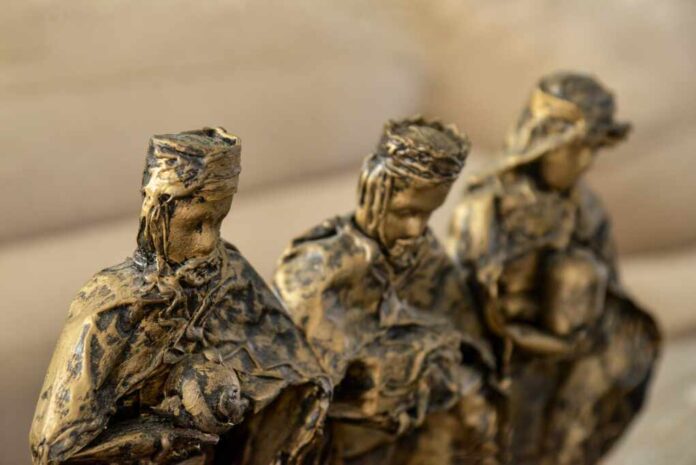
A biblical scholar’s new theory about the Three Wise Men challenges traditional beliefs, sparking debates among Christians.
Story Highlights
- Margaret Barker claims the Magi were exiled Jewish priests, not kings from the East.
- Their gifts were rituals to restore ancient Jewish traditions, not merely symbolic presents.
- This theory reframes the Nativity as fulfilling Jewish temple traditions.
- Current scholarly debate questions the traditional Nativity narrative.
Margaret Barker’s Revolutionary Theory
Margaret Barker, a respected biblical scholar, has presented a controversial new theory about the Three Wise Men in a December 24, 2025 episode of *Arroyo Grande*. According to Barker, the Magi were not kings from the Far East but exiled Jewish royal priests from the Kingdom of Nabataea, a region in Arabia. This interpretation challenges the traditional depiction and suggests that their gifts—gold, frankincense, and myrrh—were intended to restore the Melchizedek priesthood and Solomon’s Temple theology.
Barker’s theory implies that the Nativity story is not merely a tale of simple homage but a significant event tied to Jewish temple traditions. This reframing positions the Magi’s visit as an act of prophecy fulfillment rather than folklore. The timing of this revelation, right before Christmas, has sparked significant interest and debate among Christians and scholars alike.
Historical Context and Traditional Beliefs
The story of the Magi is found solely in Matthew 2 of the New Testament. It describes “wise men from the East” who followed a star to present gifts to Jesus. Traditionally, art and popular culture depict them as three kings from distant lands, arriving on the night of Jesus’ birth. However, these portrayals are not biblically supported. Barker’s theory traces the Magi to Nabataean Jewish exiles who preserved First Temple traditions, providing a fresh perspective on an ancient narrative.
While early church fathers debated the date of Christmas, eventually fixing it on December 25 between 300-400 AD, medieval traditions added the idea of the Magi being kings and assigned them names like Caspar, Melchior, and Balthazar. Barker’s research argues against these additions, suggesting a more historically grounded understanding of the Magi and their purpose.
Watch:
Impact and Reactions
Barker’s claims have stirred discussion among Christian audiences and biblical scholars. The theory challenges long-held beliefs, potentially shifting views towards understanding the Nativity through a lens of Jewish temple roots. Some see this as enriching their faith with newfound depths, while others fear it could alienate traditionalists who cherish the symbolic interpretations of the Nativity.
Despite its controversial nature, Barker’s theory has not been universally accepted. It remains an interpretive scholarship, not a consensus. Nonetheless, its dissemination through platforms like YouTube and iHeart has succeeded in engaging audiences and encouraging further exploration of biblical history.
Sources:
Investigating the Bible After Christmas
What Many Get Totally Wrong About Three Kings
The True Wise Men: Unpacking the Nativity’s Hidden Secrets
The Fourteen Posts of Christmas 2025-2026 Edition