
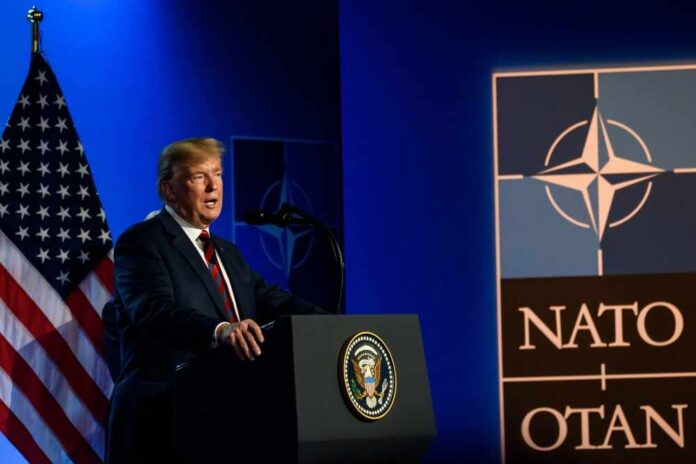
Trump’s offhand “probably” about pulling U.S. troops from Italy and Spain is rattling NATO at the exact moment Americans are paying for a high-stakes Iran air war and a world energy chokepoint crisis.
Quick Take
- President Trump said he would “probably” withdraw U.S. troops from Italy and Spain after criticizing both countries’ support during the U.S.-Israeli air war against Iran.
- The remark followed Trump’s announcement of a review of potential troop reductions in Germany, signaling a broader Europe posture rethink.
- Trump tied troop presence to alliance performance, including access to bases and help reopening the Strait of Hormuz after its closure during the war.
- No formal Pentagon decision has been announced yet, leaving U.S. service members and host nations in limbo.
Trump’s “Probably” Turns a Press Q&A Into Alliance Leverage
President Donald Trump told reporters on April 30 that he would “probably” pull U.S. troops out of Italy and Spain when asked directly at the White House. Trump’s comments came one day after he said his administration was reviewing troop reductions in Germany. In his answers, Trump criticized Italy for being “no help” and singled out Spain for refusing to allow U.S. bases to be used for Iran-related missions.
Trump framed the issue as a NATO burden-sharing dispute intensified by wartime realities, not an abstract debate about alliance theory. The immediate trigger is the U.S.-Israeli air war against Iran, which began Feb. 28, and the wider disruption that followed, including the Strait of Hormuz closure. Trump has argued allies should contribute materially when U.S. forces shoulder the heaviest load, especially when global shipping and energy routes are at stake.
Why Italy and Spain Matter: Bases, Access, and Mediterranean Reach
Italy and Spain are not symbolic locations; they are central nodes for U.S. and NATO operations in the Mediterranean. Reporting cited roughly 12,500 U.S. personnel in Italy and about 3,000 in Spain, anchored by installations that support air, naval, and logistics missions. Those sites also affect how quickly the U.S. can surge forces, track threats, and sustain operations across Europe, North Africa, and the Middle East.
That practical military reality is why Spain’s refusal to allow base use for Iran-related missions became a flashpoint. Trump previously threatened a full trade embargo on Spain over the access dispute, underscoring that the administration views basing as a privilege tied to cooperation, not an entitlement. For conservatives skeptical of globalism, this is the clearest expression yet of a transactional alliance model: benefits flow when obligations are met.
The Germany Review Signals a Wider Europe Posture Reset
The Italy-and-Spain comments did not occur in isolation; they followed Trump’s April 29 statement that his team was reviewing troop reductions in Germany. That sequencing matters because it suggests the administration may be weighing a broader rebalancing of U.S. force posture in Europe rather than a single-country punishment. As of May 1, coverage indicates no formal decisions or troop movements have been announced, keeping the matter at the signaling stage.
One constraint frequently cited in reporting is the scale of the U.S. presence across Europe and the operational planning baked into it. Another is uncertainty about what “pull out” would mean in practice—full withdrawals, partial reductions, or mission reshuffles to other allied territories. That ambiguity cuts both ways: it gives the White House negotiating leverage, but it also injects instability into planning for military families and commanders who rely on predictability.
Hormuz, Energy Pressure, and the Domestic Politics of “Paying the Bill”
Trump’s linkage between troop basing and the Strait of Hormuz highlights how foreign policy now collides with everyday economics. Hormuz is a major artery for global energy shipments, and the reporting emphasizes that its closure during the Iran war has raised the stakes for naval cooperation. When allies decline to contribute in a crisis that can push energy costs higher, the political backlash in the U.S. is predictable—especially among voters still angry about inflation and high energy prices.
Democrats are expected to attack the posture shift as reckless, while many Republicans will frame it as overdue accountability for allies who, in Trump’s telling, want the protection without the risk. Both sides, however, are likely to face the same underlying voter question: why does Washington keep writing checks and issuing guarantees that feel disconnected from results? In 2026, distrust in institutions and “elite” decision-making is no longer a fringe view; it is a shared national mood.
What Happens Next: Decisions, Negotiations, and the Cost of Uncertainty
The next step is not a viral clip but a formal Pentagon process: basing talks, readiness assessments, diplomatic bargaining, and—if reductions occur—hard choices about where missions relocate. Italy and Spain also have their own domestic politics, including periodic anti-base sentiment, which can constrain leaders even when they want to preserve U.S. ties. If talks escalate, expect NATO leaders to push for de-escalation while also trying to avoid appearing weak at home.
Sources:
Trump says ‘probably’ when asked if he might pull US troops out of Italy, Spain
‘Yeah, probably’: Trump floats reducing US forces in Spain, Italy, Germany