

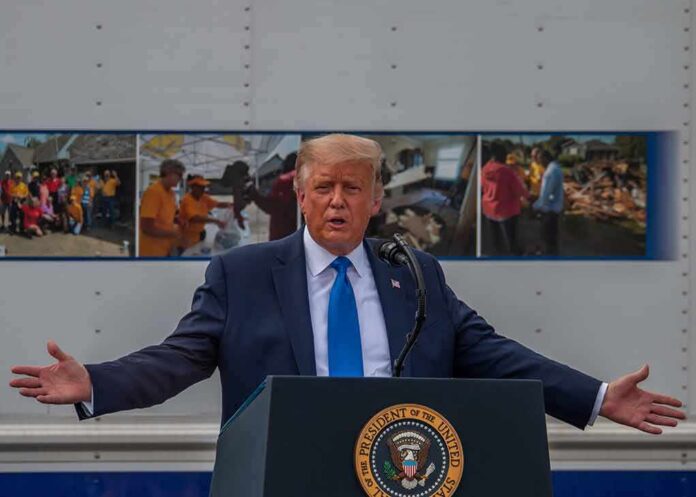
President Trump said he would “veto everything” if Democrats take Congress, using the threat to force deals on his terms.
Story Highlights
- Trump said repeated vetoes would push Democrats to negotiate if they win Congress.
- Trump described his veto as a bargaining tool that leads to deals.
- History shows Congress rarely overrides presidential vetoes, boosting White House leverage.
- Vetoes rise when the president faces an opposition Congress, making gridlock more likely.
What Trump Said About Using Vetoes To Force Deals
President Trump told reporters he would “veto everything” if Democrats gain control of one or both chambers, arguing that hard veto lines would bring Democrats to the table to cut deals. In a separate exchange, Trump said, “Look, I have strong veto,” and added that presidents “end up working out deals” when using that power as leverage. These remarks set the ground for a standoff approach if the midterms shift control of Congress.
🚨 TRUMP SAYS HE’LL BECOME “MR. VETO” IF DEMOCRATS TAKE CONGRESS — BUT LEAVES DOOR OPEN TO DEALS
President Donald Trump is outlining his strategy for the final two years of his term if Democrats capture one or both chambers of Congress in Tuesday’s midterm elections.
Rather…
— MDBayNews (@MDBayNews) November 1, 2026
Trump’s framing fits a basic tactic in divided government: force Congress to send narrower bills or accept White House priorities. He suggested Democrats would return after a string of vetoes to ask, “How do we get it done?” and then strike an agreement. His comments do not guarantee success, but they reflect a clear plan to use constitutional tools to shape any agenda a Democratic Congress might pass to his desk.
Why The Veto Matters In Showdowns With Congress
Historical records show vetoes are powerful because overrides are rare. Since the nation’s founding, presidents issued thousands of vetoes, and Congress overrode only a small share, giving the White House strong leverage in negotiations. That math matters if Democrats control Congress. To beat a veto, they would need two-thirds votes in both chambers. That threshold is hard to hit, especially on hot-button issues like spending, border policy, and energy rules.
Past data also show veto use climbs when the president faces an opposition Congress. Research on modern eras found that presidents vetoed a larger share of bills under unified opposition control than under unified party control, signaling more frequent clashes and harder bargaining. If Democrats win Congress, that pattern suggests more veto threats, more narrow bills, and more gridlock. It also suggests more last-minute deals to keep the government open and avoid shutdowns.
What This Means For Policy Fights Voters Care About
Budget deadlines would test both sides right away. Trump could veto large spending packages that do not match his border, energy, or crime goals, betting Democrats would trim demands to avoid shutdowns. Democrats could answer with smaller, targeted bills or try to build two-thirds coalitions. Either path points to stopgap funding, policy riders, and short windows to act. The risk is stalemate; the reward, for either side, is shaping the final bill.
🚨 THE POST-MIDTERM ILLUSION: WHY A SHIFT IN CONGRESSIONAL POWER MAY NOT BRING INSTANT RELIEF TO U.S.-CANADA TRADE TENSIONS! 🚨
As the final hours tick down to the November 3 midterm elections, trade analysts and political experts are offering a sobering reality check for… pic.twitter.com/QRjIyNPDSr
— Boardroom Patriot (@nwmsound) October 31, 2026
Oversight and investigations would likely intensify. A Democratic Congress could issue subpoenas and hold hearings, while Trump could use vetoes to block linked legislative efforts. On foreign policy, Ukraine aid, Israel policy, and China trade tools could face new conditions. On domestic policy, energy rules, immigration enforcement, and social spending would grind through a slower, harder process. The veto would not end debate, but it would narrow it to what can survive both chambers and the President’s desk.
Sources:
facebook.com, rollcall.com, congress.gov