

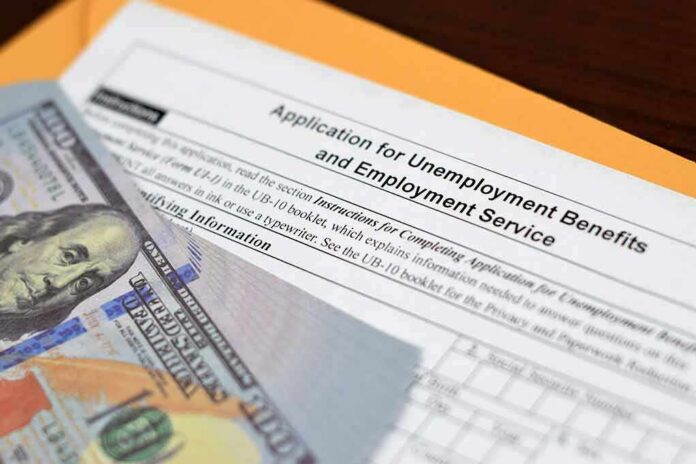
More than 10,000 million-dollar earners collected unemployment checks in 2024, sparking a fresh fight over whether jobless aid should go to people who are not in financial need.
Story Snapshot
- 10,100 tax filers with $1 million-plus incomes received about $97.4 million in 2024 unemployment compensation.
- Federal rules allow high earners to qualify because unemployment insurance is not means-tested.
- A 1964 Labor Department decision bars states from denying benefits based on income, a policy still in force.
- Critics say the payouts misuse a safety net; supporters say the program works like earned insurance, not welfare.
What the New Numbers Show
New reporting says 10,100 tax filers with incomes of $1 million or more received nearly $97.4 million in unemployment compensation in 2024. That figure follows earlier disclosures that thousands of high earners also collected benefits in 2021 and 2022. The numbers are small compared with total jobless aid, but the optics are powerful. Many taxpayers see “unemployment help” and expect it to target people in clear financial need, not households earning seven figures.
These payments are lawful under current federal and state rules. The Congressional Research Service states that unemployed workers, including high-income workers, may receive benefits if they meet eligibility rules, which are based on past covered wages and work history, not on current income or assets. That design choice explains why a person can report very high income for the year and still receive checks after a job loss, as long as they qualify under state law.
Why High Earners Qualify Under Current Law
Unemployment insurance works like social insurance, not a poverty program. The law asks if you lost your job through no fault of your own, earned enough wages in a base period, and are able and looking for work. It does not ask about household income, savings, or wealth. A long-standing federal decision from 1964 bars states from using a means test to deny unemployment benefits based on income level. This rule leaves states little room to screen out millionaires.
Government documents describe unemployment benefits as “a matter of right” for eligible workers who show prior attachment to the labor force. That means benefits are not means-tested like food aid or housing vouchers. Supporters say this approach treats unemployment insurance like earned coverage tied to work and payroll taxes, not charity. The Social Security Administration’s overview underscores this point and explains the logic behind non–means-tested, work-based eligibility.
The Policy Clash and Public Frustration
Critics on the right and left question why the trust fund pays checks to people with million-dollar incomes when many middle-class families still struggle. They argue this looks like a system that serves insiders while regular workers face red tape and rising costs. They also say every dollar sent to high earners is a dollar not available to those who truly need help keeping lights on and rent paid. The concern feeds a broader belief that government rules are out of touch with common sense.
Defenders reply that the program is insurance against job loss, not a wealth test, and that changing it could punish people who paid in through years of work. They warn that adding an income screen would be complex, would slow payments, and could spark errors or unfair denials. They also note that states already use strict rules about recent earnings, job separation, and active job search, which filter claims without checking bank accounts or tax brackets.
What Reform Could Look Like
Lawmakers face a hard trade-off. An income cap could align benefits with public views of need and protect the trust fund. But it would break with decades of policy and might raise court and systems challenges. If Congress revisits the 1964 bar on means testing, it would need to set clear income thresholds, define household versus individual income, and guard against delays that hurt laid-off workers with normal claims.
Without new law, states cannot impose their own income test. Any change must come from Congress or a new federal rule that survives legal review. For now, the facts are plain: the program pays eligible workers regardless of income, and recent data confirm that includes a small slice of very high earners. Voters who see this as upside down are not imagining it; the system was built this way on purpose, and only new policy can change the outcome.
Sources:
washingtontimes.com, congress.gov, sgp.fas.org