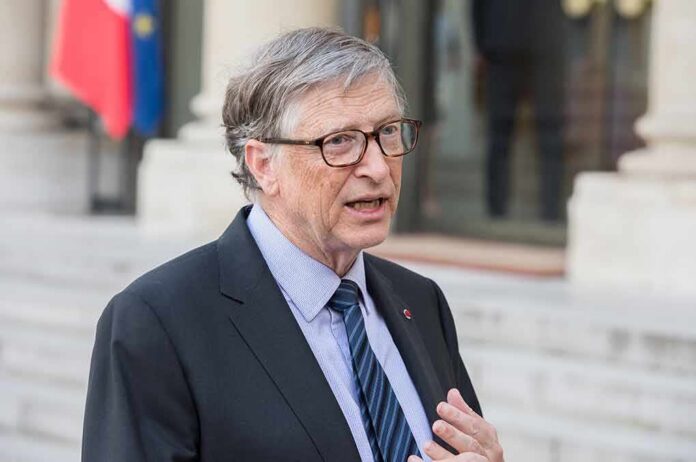
Bill Gates warned that artificial intelligence, in the wrong hands, is powerful enough to drive events that cause a billion deaths, and he wants government-required safeguards to stop it.
Story Snapshot
- Gates said malicious people using advanced AI could spark mass-casualty events.
- He urged mandatory government monitoring and safeguards, not just industry promises.
- He argued a simple “kill switch” is not enough to contain worst-case misuse.
- He said getting countries to agree on rules will be harder than Cold War nuclear talks.
What Gates Said On Meet the Press
NBC’s Meet the Press aired Gates saying AI is “powerful enough” to cause a billion deaths if used by people with ill intent. He did not claim AI would act on its own. He framed the risk as bad actors supercharged by new tools. He also said a lone “kill switch” is not a full answer, since misuse can spread across systems and borders. Other outlets repeated the quote from the same interview, underscoring its public impact.
Gates pushed for concrete policy steps. He said the public cannot rely only on tech companies to police themselves. He called for law enforcement and elected leaders to set rules, define monitoring, and require safeguards. He used firm language about making this involvement mandatory. His message targeted the gap between fast AI rollouts and slower public protections. The core idea was simple: when stakes are this high, voluntary codes alone are not enough.
Why He Wants Government In The Loop
Gates argued that the mix of human intent and AI capability creates a new kind of weapon. He warned that people who want to cause harm can use powerful tools to plan, scale, and hide. He said that is why a basic off-switch is not a plan. If systems are copied or spread, you cannot shut them all at once. He urged rules that help detect abuse before it cascades into real-world damage.
He also pointed to the global challenge. He compared governing AI to nuclear issues but said it may be even harder to align nations on rules. Countries have different laws, values, and strategic aims. Some will want speed and market edge. Others will fear job losses or control by foreign firms. He suggested that, despite these divides, shared guardrails are still needed to manage cross-border risks.
How This Fits A Wider Risk Debate
Academic and policy work has tracked rising concern about catastrophic AI risks. Surveys highlight worries about dangerous capabilities, weapons, cyberattacks, and the concentration of power. These studies show experts see tail risks that could become severe, even if timing and size are uncertain. Gates’s warning sits inside that trend. It reflects a push for earlier action before harmful use cases become cheap, scalable, and hard to stop.
"AI is certainly powerful enough to drive events that cause a billion deaths." -Bill Gates
Extraordinary claims require extraordinary evidence. While misuse risks (bio, cyber, autonomous weapons) are real, does forecasting a billion deaths help safety efforts or just fuel panic? pic.twitter.com/Oy1ZCzLFPH
— TechCos (@TechCos_AI) September 28, 2026
For many Americans, the stakes connect to daily trust in government. Voters on the right and left see rising costs, social strain, and a system that often protects the powerful. They want leaders to prevent avoidable disasters, not argue after the fact. Gates’s call for required safeguards challenges both big tech and slow agencies. It asks Congress and the White House to move from talk to enforcement, without handing total control to any one industry or bureaucracy.
What To Watch Next
Watch whether the administration outlines a monitoring plan that reaches across agencies. Key questions include who detects misuse, how evidence is shared, and when shutdown orders apply. Congress could seek a risk-based law that focuses on the most dangerous models and uses. Coordination with allies will matter, since harmful tools and data can cross borders in seconds. Progress will be measured by specific rules, audits, and penalties, not speeches.
Sources:
yahoo.com, nbcnews.com, independent.co.uk