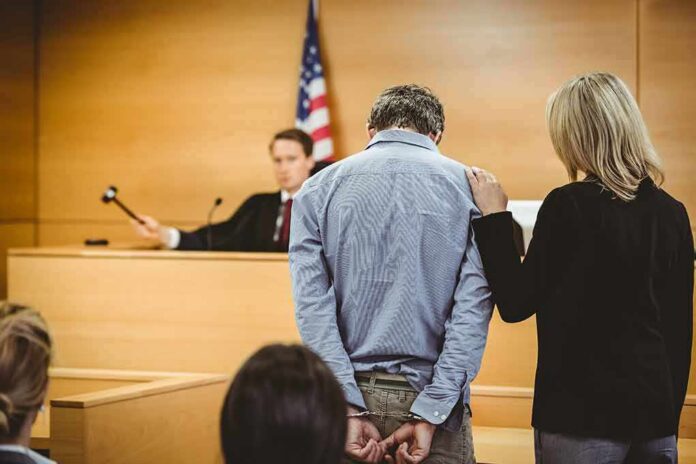
A Brooklyn judge released a man accused of two back-to-back assaults, including a rabbi’s beating caught on video, because the top charge was a misdemeanor not eligible for bail under New York law.
Story Snapshot
- Police charged Eric Avrutov, 31, in two same-night assaults, including a 66-year-old rabbi.
- Prosecutors sought cash bail, but the judge ordered supervised release under state rules.
- Police say the rabbi attack was random and is not being treated as a hate crime.
- New York’s bail reforms limit bail for most misdemeanor assaults, tying judges’ hands.
What Police And Prosecutors Say Happened
New York City police arrested Eric Avrutov, 31, after a Wednesday night incident in Kensington, Brooklyn. Police say he attacked a 66-year-old rabbi on Dahill Road, striking him and putting him in a headlock. Minutes earlier, he allegedly slugged a different man at a gas station, suggesting a quick pattern of repeat violence that night, according to reports citing police and prosecutors. Authorities charged Avrutov with assault, criminal obstruction of breathing, and harassment.
Prosecutors in Brooklyn asked the court to set bail, citing the paired incidents and public safety concerns. Coverage says they requested $10,000 cash bail or a $20,000 bond. The judge instead granted supervised release. Reporting attributes that decision to the charge level: the top count was a misdemeanor assault that is generally not bail-eligible under New York’s statute, limiting judicial options at arraignment.
How The Case Is Classified, And What It Is Not
Police said the beating of the rabbi appears to be a random, unprovoked assault. They are not investigating it as a hate crime at this time. That framing, repeated across outlets, aligns with the victim’s report that a man walked up and began punching him without warning. The lack of a hate crime designation shapes both public perception and charging options, which can affect bail eligibility and potential penalties later in the case.
The classification matters because hate crime enhancements can elevate charges. Higher charges can change bail eligibility. In this case, the reported misdemeanor top count kept the judge within narrow legal lanes. While many people expect judges to detain someone after a violent outburst, New York’s rules focus on charge categories and court return risk, not a broad “dangerousness” test at arraignment.
Why New York’s Bail Rules Drove The Outcome
New York’s bail reforms, passed in 2019 and adjusted in 2020, limit when judges can set bail. For most misdemeanors and nonviolent felonies, the law directs release on recognizance or conditions like supervision to ensure a defendant returns to court. Judges must consider ability to pay and choose the least restrictive means that meets that goal. These rules narrowed bail use and removed a general power to detain based on risk of reoffending.
Let's hope that everyone is enjoying being "randomly" attacked by "crazed" assailants.
─────────────The crazed attacker who allegedly pummeled a rabbi in a random attack this week — minutes after he slugged another stranger pumping gas — was cut loose by a judge in… pic.twitter.com/Zz6yhkNcxI
— Crime In NYC (@Crime_In_NYC) September 25, 2026
Critics see a gap between public safety needs and what the law allows in cases of serial low-level violence. Supporters argue broad pretrial detention harms poor people and does not improve safety. This case highlights that clash in plain view. Prosecutors flagged two alleged assaults within minutes. The judge still followed the statute and ordered supervised release, because the charged offense did not trigger bail under the law’s categories.
What This Means For New Yorkers Right Now
New Yorkers who watched the video and read the accounts are asking a simple question: How can someone accused of two quick assaults walk free before trial? The answer is not a shrug; it is the rulebook. The statute directs judges to release many people charged with misdemeanors, even after scary events, unless specific legal triggers are met. That gap between fear and law fuels anger at a system many believe protects insiders and misses basic safety.
Lawmakers can change the rulebook. They could expand bail eligibility for certain repeat misdemeanor assaults or create clearer paths to hold people after same-night violence. They could also invest in fast-track mental health holds or better supervision that actually checks in, not just paperwork. Until then, judges will keep following the law as written, prosecutors will push its edges, and the public will keep seeing cases like this as proof the system is failing ordinary people.
Sources:
nypost.com, brooklyneagle.com, nydailynews.com, us.headtopics.com, news.com.au