A little-watched court fight just turned into a $1.7 million warning shot for America’s partisan media circus.
Story Snapshot
- A federal judge awarded Hunter Biden $1.7 million in punitive damages against former Overstock chief Patrick Byrne for defamation.
- Byrne defaulted and refused to properly take part in the case, leading the court to treat Biden’s claims as admitted.
- The case shows how extreme political conspiracy claims can carry real legal and financial risks, even for powerful insiders.
- The ruling raises hard questions about free speech, “deep state” distrust, and how much protection political commentators should have.
Judge’s Ruling: $1.7 Million Punishment for Defamation
A federal judge in Los Angeles has ordered former Overstock.com chief executive Patrick Byrne to pay Hunter Biden $1.7 million in punitive damages in a defamation case. Punitive damages are intended to punish particularly wrongful conduct and deter similar conduct by others. The judge also awarded Biden the $1 in nominal damages he requested for his “defamation per se” claim, which does not require proof of emotional or reputational harm. On top of that, Byrne must pay about $35,000 in past court sanctions he already owed.
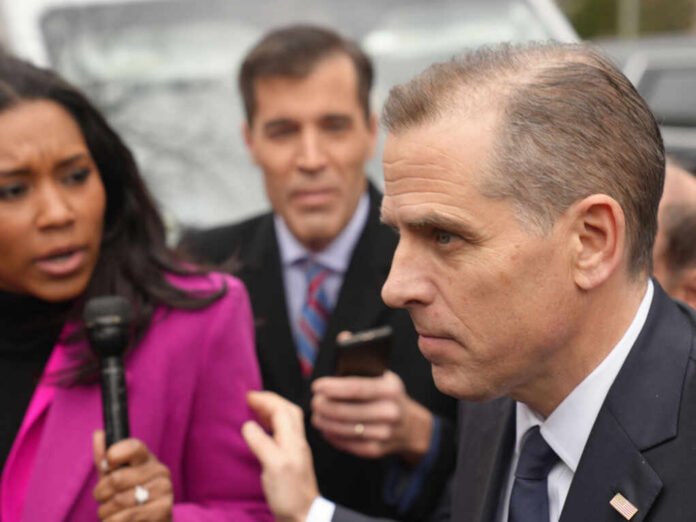
This case began after Byrne accused Biden of reaching out to Iran and offering to have his father, President Joe Biden, unfreeze Iranian funds in exchange for a bribe. Biden’s lawsuit described those claims as “wild, false political conspiracy stories” and “complete nonsense,” and said they wrongly painted him as corrupt and treasonous. Because Byrne defaulted, the court accepted the factual allegations in Biden’s complaint for purposes of entering judgment.
How Byrne’s Default Turned Allegations Into Legal Facts
Hunter Biden filed the defamation suit in November 2023 in federal court in California. Court records show the case was set for trial in 2025, giving both sides time to argue and present evidence. Instead of taking part, Byrne repeatedly failed to show up and follow court orders. After months of missed steps and what the judge called efforts to dodge trial, the court entered a default against Byrne. A default means the defendant loses on liability because they refuse to defend themselves.
Once a default is entered, courts generally treat the plaintiff’s factual claims as admitted for purposes of deciding damages. That is what happened here. Biden asked for only $1 in nominal damages, plus strong punitive damages to punish Byrne’s conduct. The judge later signaled Byrne could face up to a $5 million penalty if he kept ignoring the case. The final award landed at $1.7 million in punitive damages, plus the symbolic $1 and the unpaid sanctions. Legally, the ruling stands, but it arrived without a full trial testing every claim.
Defamation Law, Public Figures, and the Free Speech Tension
Under United States law, defamation means a false statement of fact that harms a person’s reputation. For normal private people, it is usually enough to show the speaker was at least careless with the truth. For public figures, the bar is much higher. Thanks to the Supreme Court’s 1964 decision in New York Times v. Sullivan, public figures must prove “actual malice.” That means the speaker either knew the statement was false or seriously doubted it but said it anyway.
Hunter Biden is treated as a public figure, so this tougher standard applies. In most defamation suits, proving actual malice is very hard. That high bar is supposed to protect strong political debate and a free press. But when a defendant defaults, like Byrne did, there is no full adversarial test of this standard. Instead, the court accepts the plaintiff’s version of events to decide punishment. That makes default cases legally valid but sometimes fragile, because the core facts were never litigated at trial.
Political Spin, “Deep State” Anger, and What This Case Signals
This case plays into a wider mood where many Americans, left and right, feel the system protects insiders while average people struggle. Byrne was not a random internet troll. He was a wealthy former chief executive and a well-known backer of former President Donald Trump and “stop the steal” claims about the 2020 election. Biden is the president’s son and a frequent target of conservative media and social feeds. To many people, this looks like a fight inside the elite class, far from everyday life.
Hunter Biden Scores $1.7 Million in Damages From Former Overstock CEO in Defamation Case https://t.co/IucG2iEHRm
— Mediaite (@Mediaite) July 11, 2026
Yet the stakes touch ordinary citizens too. On one side, many conservatives worry that defamation cases will be used to punish political speech and silence critics. On the other side, many liberals are tired of unsubstantiated conspiracy allegations being blasted online with no consequences. This ruling shows that when political talk crosses into detailed false claims of criminal deals with foreign governments, courts can impose substantial civil damages. It does not fix deeper anger at Washington, but it does illustrates the potential legal consequences of defamatory statements.
Sources:
reddit.com, yanglawoffices.com, courthousenews.com, facebook.com, courtlistener.com, supremecourt.gov, abcnews.com, susmangodfrey.com, freedomforum.org, amundsendavislaw.com, aclu.org, law.stackexchange.com