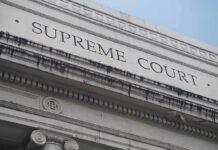
Vice President JD Vance called the Supreme Court’s birthright citizenship ruling a “major mistake,” signaling that the administration intends to keep pursuing the issue through the political process.
Quick Take
- The Supreme Court ruled against Donald Trump’s effort to narrow birthright citizenship, but Vance called the ruling a “major mistake.”
- The White House order would have denied citizenship to some children born in the United States to parents here unlawfully or on temporary status.
- The court’s decision did not end the political fight, and Trump allies are already signaling a new push.
- The legal ruling leaves supporters searching for other avenues, including legislation or, more fundamentally, a constitutional amendment.
The ruling and Vance’s response
The Supreme Court blocked Trump’s executive order, but the ruling did not silence the White House. On Fox News, Vance said the court’s decision was wrong and argued that the administration still had a way to keep pushing the issue. His comments suggest the administration views the ruling as the end of one legal battle rather than the end of the broader policy debate.
Trump’s order, Executive Order 14160, aimed to deny citizenship to children born in the United States to some noncitizen parents, including people present unlawfully or only temporarily. The White House framed the move as a defense of the meaning of citizenship. Supporters argued the order would reinforce existing immigration law, while opponents said it conflicted with longstanding constitutional interpretation and Supreme Court precedent. Critics said it would break with long-standing law and strand children in legal limbo.
What the court left standing
The legal core of the case remains the Fourteenth Amendment, which says people born in the United States and “subject to the jurisdiction thereof” are citizens. The Supreme Court’s majority upheld the long-held reading of that clause and pointed to precedent reaching back more than a century. The majority reaffirmed the longstanding interpretation of the Fourteenth Amendment, leaving existing birthright citizenship rules in place.
Even so, the dissenting justices gave Trump allies a talking point. Justices Samuel Alito, Clarence Thomas, and Neil Gorsuch objected to the majority’s approach and argued that the issue should not be closed the way the court closed it. The dissents ensure the constitutional debate continues in legal and political circles, even though the majority opinion now governs nationwide.
Why the next move is political, not just legal
The White House and its allies now face a harder problem than winning a news cycle. Changing birthright citizenship after this ruling would likely require either a constitutional amendment or a future Supreme Court willing to overturn longstanding precedent following a different legal challenge. Legal experts cited in the research package said the president cannot do this alone, and Congress has not enacted an exception. That leaves supporters with a long path and a very public test of political will.
The issue also lands in a country already split over immigration, citizenship, and trust in institutions. Supporters of Trump’s position see the ruling as proof that unelected judges block border control. Opponents see the executive order as an attack on a basic constitutional rule. Both sides also see a deeper problem: Washington keeps turning the same fight into a national crisis instead of solving it through law that lasts.
JD Vance Says the Fight Over Birthright Citizenship Is Far From Over https://t.co/Y90xxCCfXf
— Arick Matt (@ArickMatt) July 1, 2026
That is why Vance’s message was more than a sound bite. By saying there was still an opportunity to reverse the decision, he signaled that the administration wants the battle to continue on friendly ground. Whether the next step comes through Congress, future litigation, or a constitutional amendment, the issue is likely to remain a major national political debate for years to come.
Sources:
mediaite.com, foxnews.com, youtube.com, pbs.org, whitehouse.gov, thehill.com, supremecourt.gov, brennancenter.org, hls.harvard.edu, aclu.org