
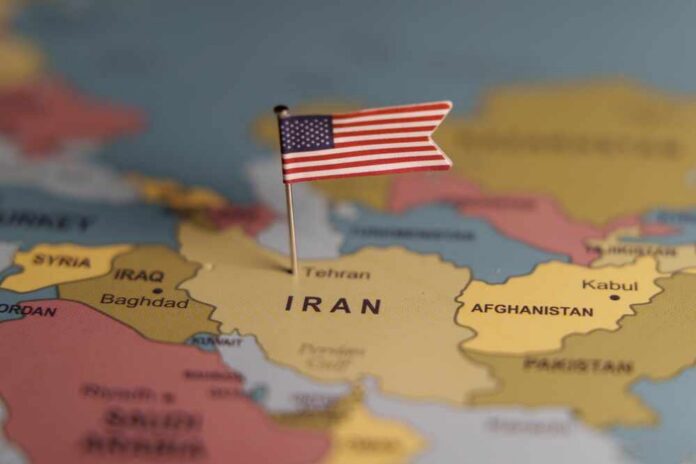
America just carried out “self-defense” strikes on Iran over a downed U.S. helicopter, even as officials admit the facts are still “cloudy.”
Story Snapshot
- The U.S. military hit targets in Iran after an Army Apache helicopter went down near the Strait of Hormuz.
- Central Command called the operation “self-defense strikes” and a “proportional response to unjustified Iranian aggression.”[1][4][5]
- President Trump said Iran “shot down” the helicopter and that the United States “must, of necessity, respond to this attack.”[1][5]
- Reporters say key details remain unclear and that the government has not released hard proof showing exactly what brought the helicopter down.[1][2]
What Happened To The Apache And How The U.S. Responded
U.S. Central Command said Tuesday that American forces began striking targets in Iran at about 5 p.m. local time, in direct response to the crash of a U.S. Army Apache helicopter near the Strait of Hormuz the night before.[1][3][4] Central Command described the action as “self-defense strikes” and “a proportional response to unjustified Iranian aggression,” making clear they view the helicopter incident as an attack, not an accident.[1][4][5] Officials said both service members aboard were rescued and are expected to survive.[4][5]
News reports quote U.S. officials saying an Iranian drone or missile brought down the Apache as it patrolled near the coast of Oman, in or near the crowded waters around the Strait of Hormuz.[3][4][5] NBC News reported that a U.S. official said the helicopter “was hit by a missile,” and that the crew survived the impact before being pulled from the water in a first-of-its-kind rescue using an unmanned U.S. Navy drone boat.[5][3] Video coverage shows anchors repeating that Iran “downed” the helicopter, echoing the Pentagon’s line.[4][5]
Trump’s Justification, Iran’s Denial, And The “Cloudy Circumstances”
President Donald Trump announced early that there would be a military response, posting on his Truth Social platform that Iran had “shot down one of our highly sophisticated Apache Helicopters” and that the United States “must, of necessity, respond to this attack.”[1][5] In later comments reported by Politico and broadcasters, Trump directly tied the strikes to “what they did with our helicopter last night” and promised a “very strong, very powerful” answer.[1][5] This fast, personal framing set the story for millions before any technical report was shared.[1][2][5]
At the same time, Politico’s report notes that Trump himself spoke of acting under “cloudy circumstances,” signaling that not every detail had been nailed down when the order went out.[1] Separate broadcast coverage also says it remains unclear whether the helicopter was clearly targeted or suffered a technical failure, even as officials still label Iran’s actions “unjustified aggression.”[2][3] Iranian leaders have publicly denied attacking the helicopter and promised they will not leave any U.S. strike “unanswered,” keeping the region on edge and adding to fears of a wider war.[2][3]
Why The Lack Of Public Evidence Worries People Across The Spectrum
The record available to the public so far is heavy on statements and light on proof. The stories rely on Central Command posts, anonymous U.S. officials, and Trump’s own words, but do not include radar logs, wreckage photos, weapons fragments, or a formal after-action report that shows exactly how investigators tied the crash to an Iranian weapon.[1][2][3][4][5] This leaves ordinary Americans, and even many lawmakers, having to take the government’s word on an event that could help drag the country deeper into another Middle East conflict.[1][2]
For many conservatives and liberals, this feels like a familiar pattern. First comes a quick, confident blame statement, then rapid “self-defense” strikes, and only later, if ever, do we see independent evidence.[1][2][3] People who already distrust the so-called deep state see anonymous sources and social media posts standing in for real transparency.[1][2] People who fear endless war see another step toward open fighting with Iran, ordered by leaders they believe care more about power than about the soldiers and sailors put in harm’s way.[2][3]
What A More Honest, Accountable Process Would Look Like
A more accountable government would quickly release a detailed but declassified timeline of the helicopter incident, including sensor tracks, cockpit recordings, and wreckage analysis showing what weapon, if any, hit the aircraft.[1][2] It would also share the legal basis for the strikes, such as any letter to the United Nations Security Council claiming self-defense, and notify Congress under the War Powers Resolution with specific facts rather than broad talking points.[1][4] That kind of openness could help rebuild trust that decisions of war and peace are based on evidence, not politics.
Instead, Americans are again left watching breaking news banners as missiles fly, with key questions still unanswered. Who exactly decided that Iran was responsible, and based on what data?[1][2] Did leaders see all the evidence before striking, or did they move first and hope the facts would line up later?[1] Until the government shows more than slogans like “self-defense strikes” and “proportional response,” many on both the right and the left will see this episode as one more sign that the people who run Washington act first, explain later, and rarely face consequences when they get it wrong.[1][2][3]
Sources:
[1] Web – U.S. Strikes Iran in Response to Downed Apache Helicopter…
[2] Web – US launches retaliatory strikes against Iran after downing of …
[3] YouTube – U.S. launches retaliatory strikes after Apache helicopter downed by …
[4] Web – U.S. forces on Tuesday evening launched strikes against Iran “in …
[5] Web – The US military says it’s launching a wave of strikes against Iran in …