The alleged killer of prominent conservative activist Charlie Kirk appeared in court displaying chilling emotionless behavior that visibly unsettled the presiding judge and triggered an immediate media blackout.
Story Snapshot
- Tyler Robinson, accused of murdering Charlie Kirk, exhibited rigid, emotionless stares during his first in-person court appearance
- Defense attorneys successfully argued to exclude cameras and media from proceedings, citing threats to fair trial rights
- The judge ordered transmission termination and media removal after observing Robinson’s disturbing courtroom demeanor
- The case echoes previous high-profile political violence incidents where defendants displayed similar emotionless behavior
Accused Killer’s Disturbing Courtroom Presence
Tyler Robinson made his first in-person court appearance following charges in the murder of Charlie Kirk, founder of Turning Point USA and influential conservative voice. Robinson’s demeanor throughout the proceedings alarmed courtroom observers, including the presiding judge. His rigid posture, combined with prolonged emotionless stares, created an atmosphere of tension that dominated the hearing. The accused displayed no visible reaction to the serious charges against him, maintaining an unsettling blank expression that legal observers noted as potentially prejudicial to jury selection. This detached presentation raises questions about Robinson’s mental state and competency to stand trial.
Media Blackout Raises Transparency Concerns
Defense attorneys moved quickly to restrict media access, arguing that camera presence would compromise Robinson’s constitutional right to a fair trial. The judge granted this request, ordering court officials to “excuse the public and the media” and directing that “transmission be terminated.” This decision effectively ended live coverage of a case involving the assassination-style killing of a nationally recognized political figure. The move highlights the ongoing tension between public interest in transparent justice and defendants’ rights to impartial proceedings. Critics argue that in cases involving political violence, the public deserves maximum transparency to understand threats against conservative leaders.
Pattern of Emotionless Political Violence Suspects
Robinson’s courtroom behavior follows a disturbing pattern seen in previous high-profile cases involving political violence and mass shootings. James Holmes, the Aurora theater shooter, displayed similarly dazed and bizarre expressions during his 2012 court appearances. More recently, Cole Tomas Allen, charged in an assassination attempt at the White House Correspondents’ Association dinner targeting President Trump, showed little emotion during his arraignment. These cases share common elements: politically motivated or mass violence, defendants exhibiting detachment from reality, and intense media scrutiny of courtroom demeanor. The consistency of these behavioral patterns raises concerns among law enforcement and mental health professionals.
Implications for Conservative Community and Justice System
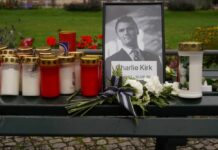
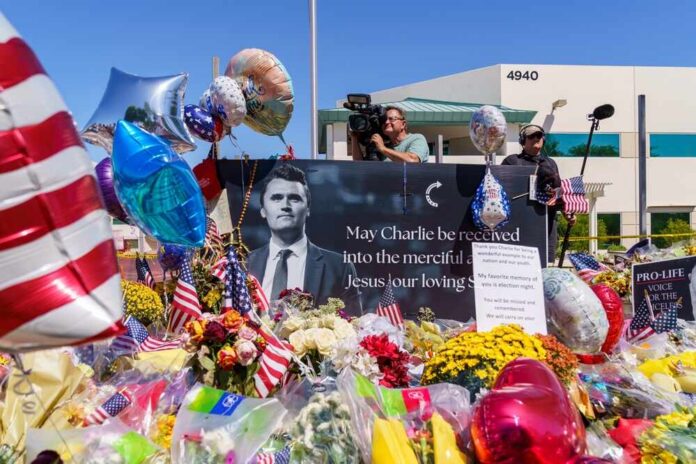
The targeted killing of Charlie Kirk represents another incident in what many conservatives view as escalating political violence against right-leaning public figures. Kirk’s murder amplifies fears within conservative circles that prominent activists face assassination risks simply for advocating traditional American values and limited government principles. The case will likely influence future debates about courtroom media access in politically charged trials. Defense arguments about prejudicial coverage must be weighed against the public’s legitimate interest in understanding threats to political discourse. The outcome may establish precedents for how courts handle high-profile cases where the victim’s political prominence intensifies public attention and potential bias concerns.
False flag conspiracy theories swirl around White House Correspondents' dinner attack…
Emotionless 'shooter' appears in court…
Charged with attempted assassination…
Possible life sentence…
Secret Service fired FIVE shots — and may have hit one of their own……
— Citizen Watch Live (@Citizenwatchrep) April 27, 2026
As Robinson remains in custody awaiting further proceedings, speculation continues about his motives and mental state. The lack of publicly available information about the murder’s circumstances, combined with the courtroom media blackout, fuels frustration among those seeking answers about why a prominent conservative voice was silenced. The judge’s visible reaction to Robinson’s demeanor suggests competency evaluations may become central to the case’s progression, potentially delaying trial proceedings while mental health assessments are conducted.