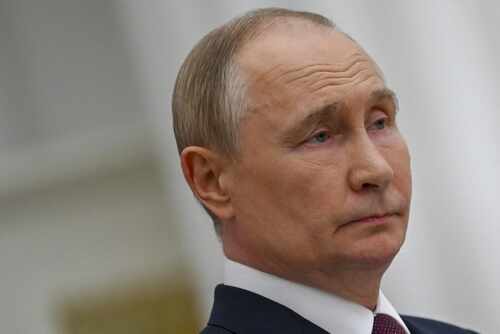
Russian President Vladimir Putin’s condemnation of the U.S.-Israeli strike that eliminated Iran’s Supreme Leader exposes the dangerous global divide between those who stand for liberty and those who enable tyranny.
Story Snapshot
- Putin labeled the killing of Ayatollah Ali Khamenei a “cynical violation” of morality and international law in a letter to Iran’s president
- The coordinated U.S.-Israeli strike on February 28, 2026, killed Khamenei and four family members, prompting 40 days of Iranian mourning
- President Trump justified the operation as “justice” and vowed continued action for Middle East peace
- Iranian citizens in multiple cities celebrated the death with dancing and anti-regime slogans, contradicting official mourning narratives
Putin Defends Iran’s Tyrannical Regime
Vladimir Putin issued a scathing rebuke of the military operation that killed Ayatollah Ali Khamenei on March 1, 2026, describing it as a cynical murder that violates all norms of human morality and international law. The Russian leader sent his condolences to Iranian President Masoud Pezeshkian, praising Khamenei as an “outstanding statesman” and emphasizing the “comprehensive strategic partnership” between Russia and Iran. Putin’s defense of the regime reveals Moscow’s deepening alliance with one of the world’s most oppressive governments, prioritizing geopolitical maneuvering over the Iranian people’s legitimate aspirations for freedom.
Operation Epic Fury Delivers Justice
The coordinated U.S.-Israeli strikes on February 28, 2026, targeted multiple Iranian locations, resulting in the deaths of the 86-year-old Supreme Leader, his daughter, grandchild, daughter-in-law, and son-in-law. President Trump announced Khamenei’s death on Truth Social Saturday evening, calling the operation justice and pledging continued bombing to achieve lasting Middle East peace. The strikes, dubbed Operation Epic Fury and Lion’s Roar, represent a decisive response to decades of Iranian aggression, terrorism sponsorship, and nuclear threats. This bold action follows precedents including the 2020 elimination of terrorist mastermind Qasem Soleimani, demonstrating unwavering commitment to American security interests and regional stability.
Iranian People Celebrate Liberation From Oppression
Despite Iran’s official declaration of 40 days of mourning with half-mast flags and heightened security measures, videos emerged from Iranian cities showing citizens celebrating Khamenei’s death. In Karaj suburbs and other locations, Iranian women danced unveiled while crowds chanted anti-regime slogans, exposing the vast disconnect between the totalitarian government and its suffering population. Former Israeli government spokesperson Eylon Levy highlighted these celebrations, while Iranian activist Masih Alinejad proclaimed a “new world” through shared videos of jubilation. These spontaneous demonstrations of joy reveal what Western media often ignores: millions of Iranians despise the regime that has brutalized them for 37 years under Khamenei’s iron fist.
Global Reactions Split Along Predictable Lines
International responses divided sharply between freedom-loving nations and authoritarian allies of Iran. China’s state media condemned the strike as “brazen aggression” violating the UN Charter, while Germany’s anti-Semitism commissioner Felix Klein warned of increased Iranian terror threats against Jewish sites worldwide. The European Union’s Kaja Kallas characterized the moment as potentially defining for a freer Iran while calling for de-escalation, and Pope Leo urged an end to the violence spiral. These varied reactions underscore how globalist bureaucrats prioritize appeasement over confronting evil, unwilling to acknowledge that decisive action sometimes proves necessary to counter regimes dedicated to terrorism and regional destabilization.
Succession Crisis and Strategic Implications
Iran’s Assembly of Experts now faces the unprecedented task of selecting a successor to Khamenei, whose 37-year reign began in 1989 following Ruhollah Khomeini’s death. The succession process occurs amid internal unrest, potential retaliatory attacks, and warnings from Germany about activated Iranian terror networks. Short-term risks include oil market volatility and escalating regional tensions, while long-term implications may involve regime weakening or fundamental shifts in Iranian leadership. Russia and China will likely strengthen diplomatic backing for Tehran, further isolating themselves from the international community. The Trump administration’s willingness to take decisive action against threats signals a return to peace through strength, rejecting the failed appeasement policies that allowed Iranian aggression to flourish for decades.
Sources:
Putin condemns Khamenei killing as ‘cynical violation’ – Kyiv Post