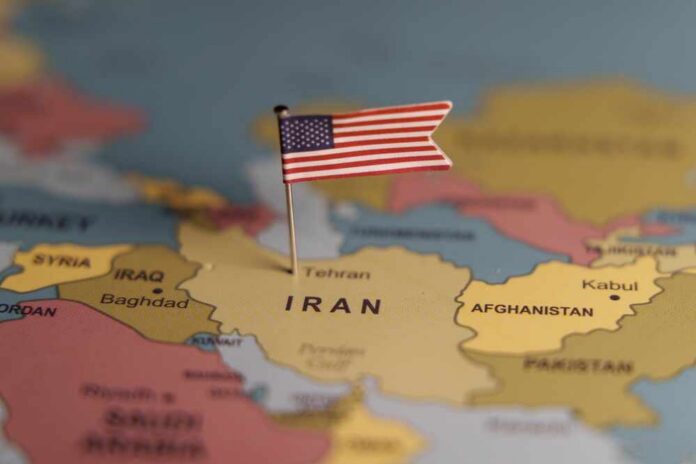
President Trump’s promise to keep America out of new wars hangs in the balance as he vows U.S. forces will “finish the job” in Iran within weeks, risking endless conflict and skyrocketing energy costs for families already battered by inflation.
Story Snapshot
- Trump declares Operation Epic Fury objectives “nearing completion” after five weeks of joint U.S.-Israel strikes on Iran.
- Iran’s Supreme Leader Khamenei killed; military decimated, including navy, missiles, and nuclear sites, but full victory uncertain.
- Strait of Hormuz closure drives global energy crisis, spiking gas prices and hurting American consumers.
- No boots on ground yet, but escalation risks casualties amid MAGA divide over foreign entanglements.
- Trump touts swift progress ahead of schedule, eyes negotiations with “reasonable” new Iranian leaders.
Operation Epic Fury Launch and Early Victories
U.S. and Israeli forces launched Operation Epic Fury on February 28, 2026, striking over 12,000 Iranian targets including military bases, nuclear facilities at Isfahan, Natanz, and Fordow, missile sites, navy assets, and government centers. Supreme Leader Ayatollah Ali Khamenei died early in the conflict. U.S. Central Command surged troops and assets, degrading Iran’s air defenses, air force, drone production, and navy within four weeks. These actions aimed to neutralize Iran as the world’s leading state sponsor of terrorism.
Trump’s Prime-Time Address Signals Endgame
On April 1, 2026, President Trump addressed the nation from the White House, stating core strategic objectives—destroying Iran’s missile arsenal, navy, and nuclear capabilities—are nearing completion. He promised U.S. forces would “finish the job” with intense strikes over the next two to three weeks, bringing Iran “back to the Stone Age.” Trump highlighted swift victories, with Iran’s navy “absolutely destroyed” and air force in ruins after 12,300 sites hit and 13,000 combat flights.
Energy Crisis and Domestic Frustrations Mount
Iran’s closure of the Strait of Hormuz paralyzed energy markets, causing oil turmoil and higher gas prices that hit American families hard. This exacerbates frustrations from past fiscal mismanagement and inflation under previous administrations. Conservatives question endless regime change wars, echoing Trump’s pledge to avoid new conflicts. No U.S. boots on the ground yet, but 13 American service members have died, prompting calls for a quick exit to protect lives and wallets.
Strategic Shifts and Expert Warnings
Trump noted a shift to more “reasonable” Iranian leaders like Speaker Mohammad Bagher Qalibaf after Khamenei’s death, with late March comments claiming operations ahead of the 4-6 week schedule and ongoing negotiations. However, IAEA reports indicate nuclear sites damaged but not fully destroyed. Experts from the Atlantic Council highlight U.S.-Israel tactical success but strategic rifts, warning of escalation risks if the Strait remains closed and no ceasefire emerges. Israel pushes for maximal regime change while Trump seeks an off-ramp.
Long-Term Implications for America First
Short-term, the war risks further casualties and economic pain from energy dependence. Long-term, a weakened Iran could reshape Middle East power, securing non-proliferation if uranium is neutralized. Yet, political backlash grows among Trump supporters divided on Israel aid and foreign wars eroding America First principles. Gulf states may back escalation for their interests, but Americans demand focus on borders, economy, and constitutional liberties over global policing.
Sources:
Donald Trump says Iran war objectives nearing completion in US address
Kurdistan24 story on Trump comments
Atlantic Council: Trump’s path forward on Iran
Trump declares near achievement of strategic goals in Iran conflict
CFR Global Conflict Tracker: Confrontation between US and Iran