A recent deal between Canada and China has sparked tensions, as President Trump threatens 100% tariffs on Canadian goods, raising concerns among U.S. allies.
Story Highlights
- Canada and China struck a preliminary trade deal.
- President Trump threatens 100% tariffs on Canadian goods.
- Canada reassures that the deal is not a free trade agreement.
- China claims the deal does not target the U.S.
Trump’s Strong Reaction to Canada-China Deal
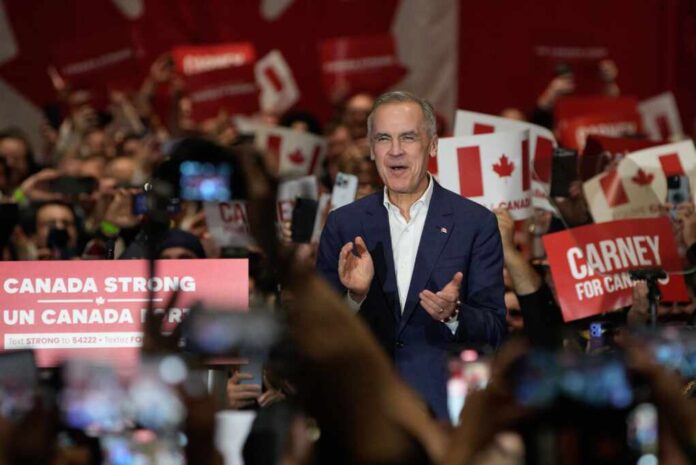
In early January 2026, Canadian Prime Minister Mark Carney visited Beijing to negotiate a preliminary trade agreement with Chinese President Xi Jinping. The deal involves reducing tariffs on Canadian canola and allowing visa-free travel for Canadians. However, this move was met with a sharp response from U.S. President Donald Trump, who threatened to impose 100% tariffs on Canadian goods. Trump’s concern is that Canada might become a “drop-off port” for Chinese products, undermining U.S. trade interests.
Trump’s response highlights ongoing trade tensions between the U.S. and China, a situation that has significantly involved Canada. This reaction is not surprising given Trump’s America First policy, which aims to protect U.S. markets from foreign influence. His administration’s focus on trade fairness and reciprocity often leads to strong measures against any perceived threats to U.S. economic security.
China says Canada deal not aimed at US after tariff threat https://t.co/GMZhtzpE04
— The Straits Times (@straits_times) January 26, 2026
Canada’s Stance and Clarification
Following President Trump’s threats, Prime Minister Carney quickly clarified that the agreement with China is not a free trade deal but a necessary step to rectify existing tariff issues. He emphasized that Canada has no intention of pursuing a free trade agreement with China or any non-market economy. Carney reassured both domestic and international audiences that the deal addresses specific tariffs without expanding into broader free trade territory.
China’s Foreign Ministry spokesman, Guo Jiakun, also weighed in, affirming that the deal is not aimed at the U.S. and promotes win-win cooperation. This statement seeks to mitigate fears of a geopolitical shift that might disadvantage the U.S. in North American trade relations.
Watch:
Implications for U.S.-Canada Relations
The implications of this deal and Trump’s subsequent threats could affect U.S.-Canada relations significantly. In the short term, the halt in deal expansion reinforces U.S.-Canada ties, delaying Chinese market access for Canadian agriculture and electric vehicles. However, in the long term, Canada’s reliance on the U.S. as its top trading partner might push it to seek more diversified trade partnerships, potentially straining the U.S.-Canada alliance.
The situation underscores the delicate balance Canada must maintain between its trade relationships with the U.S. and China, both major economic forces. As tensions continue to simmer, stakeholders on all sides will be closely monitoring any developments that could alter the current trade dynamics.
Sources:
Carney pushes back Trump’s 100% tariff threat over China trade deals Canada amid tensions
China says Canada deal not aimed at US after tariff threat
United States threatens new tariffs on Canada due to agreement with China