Sen. Rand Paul declares the U.S. is in an “active war” with Venezuela, igniting debate over constitutional authority.
Story Highlights
- Sen. Rand Paul criticizes U.S. actions in Venezuela as acts of war for oil acquisition.
- The Trump administration seizes Venezuelan oil and controls sales indefinitely.
- War Powers resolution to limit Trump’s military actions fails in Senate.
- U.S. exports 30-50 million barrels of Venezuelan oil under interim authority cooperation.
Paul’s Bold Statement on U.S. Actions in Venezuela
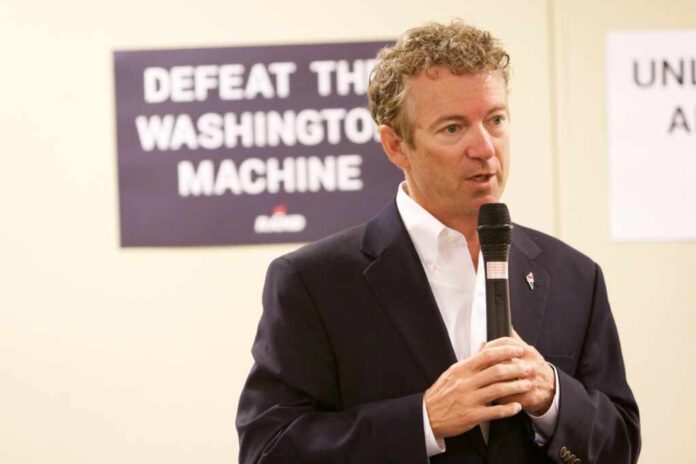
Sen. Rand Paul (R-Ky.) has publicly criticized the Trump administration, stating the U.S. is engaged in an “ongoing war” with Venezuela. His comments come after a series of aggressive U.S. actions, including the arrest of President Nicolás Maduro, the seizure of oil tankers, and a comprehensive naval blockade. Paul argues these military and economic maneuvers constitute acts of war aimed at acquiring Venezuelan oil, while expressing concern over the lack of congressional approval for such actions.
Despite the administration’s framing of its actions as efforts to stabilize and transition Venezuela post-Maduro, Paul remains steadfast in his critique. He emphasizes the constitutional requirement for congressional approval before engaging in warfare, warning against the dangers of unchecked executive power. The failure of a War Powers resolution in the Senate to limit further military intervention reflects the complexity and divisiveness of the issue within the legislative branch.
Rand Paul: "To say it's not a war in Venezuela — we still have hundreds of ships with a 100% blockade of the coast. That is an act of war. It's an ongoing war. To continue to take their oil — ongoing war." pic.twitter.com/VnpGft3ndx
— Polymarket Intel (@PolymarketIntel) January 18, 2026
Trump Administration’s Control Over Venezuelan Oil
President Trump, leveraging his platform on Truth Social, announced that the U.S. would control the sale of 30-50 million barrels of Venezuelan oil. This decision, facilitated by interim Venezuelan authorities, is positioned as a mutual benefit for both nations. Secretary of State Marco Rubio and Energy Secretary Chris Wright have confirmed that the U.S. will indefinitely oversee the marketing and sale of this crude oil, purportedly to stabilize Venezuela and support U.S. energy security.
The administration’s actions have been framed as a strategic move to prevent corruption and ensure that the proceeds benefit the Venezuelan people rather than the ousted regime. However, the indefinite control of oil resources raises concerns about sovereignty and the true motives behind the U.S.’s intervention, drawing ire from constitutionalists and non-interventionists alike.
Implications and Future Developments
The ongoing situation in Venezuela has significant implications for both short-term and long-term U.S. interests. In the immediate term, the influx of oil is expected to stabilize U.S. markets and provide much-needed funds for Venezuelan aid under U.S. oversight. However, the indefinite control of oil resources by the U.S. could reshape global energy dynamics and set a precedent for resource-driven interventions.
Venezuelans face a complex reality of potential economic recovery overshadowed by a loss of sovereignty. Meanwhile, U.S. consumers and the energy sector stand to benefit from increased oil supply, though the broader geopolitical and ethical ramifications remain hotly debated. As the Senate prepares for another vote on the War Powers resolution, the outcome could influence future U.S. policy and international relations.
Sources:
Rand Paul says US in ‘active war’ with Venezuela
Rand Paul says US active war
Venezuela Maduro capture President Trump Senate oil
Rand Paul seizure oil tankers Caribbean prelude war