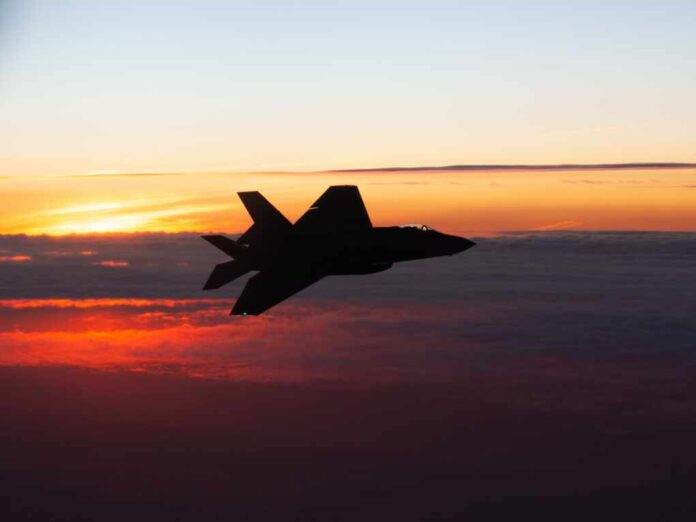
The Trump administration’s strategic deployment of US fighter jets to Puerto Rico signals a robust stance against Venezuelan provocations.
Story Highlights
- The US deploys advanced military assets to Puerto Rico, escalating tensions with Venezuela.
- Operation Southern Spear aims to counter drug trafficking and pressure Nicolás Maduro.
- Reactivation of the Roosevelt Roads base marks a significant shift in US military strategy.
- Potential implications for regional stability and US-Venezuela relations.
US Military Moves Bring Renewed Focus to Puerto Rico
In a decisive move, the Trump administration has bolstered its military presence in the Caribbean by deploying F-35 fighter jets, MQ-9 Reaper drones, and ground vehicles to Puerto Rico. This buildup is centered at the former Roosevelt Roads naval base, a strategic location less than 1,000 miles from Venezuela. The primary objective is to thwart drug trafficking while simultaneously exerting geopolitical pressure on Venezuela’s President Nicolás Maduro, whose regime has been accused of supporting drug cartels.
The deployments began in late August 2025, coinciding with increased naval activity in the southern Caribbean. The escalation follows incidents such as Venezuelan F-16 overflights of the USS *Jason Dunham*, prompting the US to send advanced military assets to the region. The US Navy has also positioned a submarine equipped with cruise missiles off the South American coast, signaling a robust show of force.
Watch:
Geopolitical Tensions and Strategic Implications
The current tensions are rooted in long-standing US-Venezuela frictions, with Maduro’s government accused of enabling the Cartel of the Soles and other illicit activities. Since 2017, US sanctions have aimed to curb these activities. The 2025 military buildup, dubbed Operation Southern Spear, serves as both an anti-drug initiative and a strategic countermeasure against Maduro’s provocations. This includes the recent buzzing of a US warship by Venezuelan jets and the mobilization of Venezuelan militias and navy near key oil hubs.
Puerto Rico’s strategic location makes it an ideal hub for the US military. Its proximity to Venezuela and existing naval infrastructure provide a significant tactical advantage. This is not the first time the US has exerted military pressure on Venezuela, but the integration of CIA operations and the reactivation of key military assets make this effort distinct from past diplomatic or sanction-based responses.
Potential Outcomes and Broader Implications
The ongoing US military operations in Puerto Rico are likely to have both short-term and long-term effects on regional stability. In the short term, heightened flight risks and disruptions to airline operations are anticipated. In the long term, the pressure on Maduro’s regime could lead to concessions or increased internal unrest, although a full regime change remains unlikely without further escalation.
US fighter jets deployed in Puerto Rico amid rising tensions with Venezuela pic.twitter.com/Jymzzqqex6
— HedgeFundTv (@JohnKimaiyo) December 31, 2025
For Puerto Ricans, the military buildup brings both economic and social impacts, as the revival of the Roosevelt Roads base affects the local community. Meanwhile, Venezuelan civilians face increased military exercises and militia mobilization, contributing to social and political strains. The broader geopolitical dynamics in the region, such as Guyana’s territorial disputes with Venezuela, further complicate the situation.
Sources:
United States military buildup in the Caribbean during Operation Southern Spear
A timeline of the US military’s buildup near Venezuela and attacks on alleged drug smuggling boats