

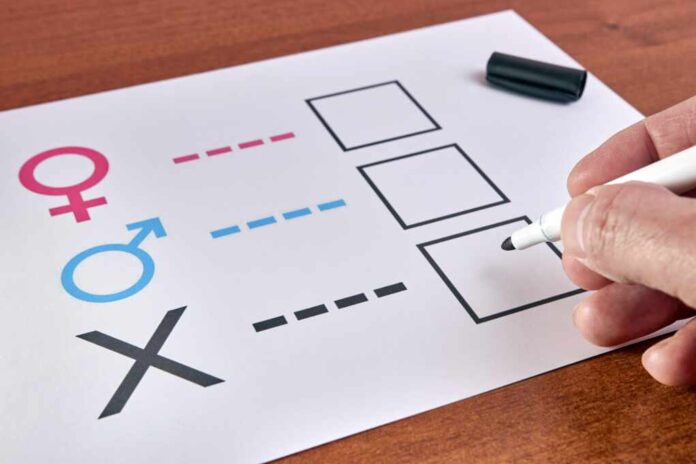
North Carolina’s new law solidifies biological sex as the only recognized genders, shaking the nation’s debates on gender identity.
Story Snapshot
- House Bill 805 officially defines sex as male or female, effective January 1, 2026.
- The bill restricts gender-affirming care for minors and mandates pornography consent verification.
- Governor Josh Stein’s veto was overridden by a Republican supermajority.
- Controversy arises over the exclusion of gender identity and implications for transgender rights.
North Carolina’s Legal Shift on Gender Identity
North Carolina’s House Bill 805 (HB805) has set a precedent by defining sex strictly as male or female, based on biological characteristics at birth, effective January 1, 2026. This move aligns with President Trump’s executive order, making North Carolina one of 16 states to adopt such a policy. The law excludes gender identity from legal recognition, a decision that has sparked significant debate regarding its implications for transgender and nonbinary individuals. The legislation also imposes restrictions on gender-affirming care for minors and alters birth certificate handling, extending the statute of limitations for medical malpractice related to transition procedures.
The bill’s journey to becoming law was marked by a partisan divide. Initially introduced to prevent sexual exploitation in online pornography, it expanded in the Senate to include gender definitions and school policy adjustments. Despite Governor Josh Stein’s veto, the Republican-controlled General Assembly, with a supermajority in the Senate and a pivotal Democratic vote in the House, managed to override the veto. This legislative decision reflects a broader national debate over gender identity, with supporters emphasizing child protection and critics arguing it discriminates against transgender communities.
Watch:
Implications and Concerns
The implications of HB805 are far-reaching. In the short term, it complicates processes for identification documents like birth certificates and driver’s licenses, which now acknowledge only male or female sexes. This change poses potential barriers for transgender and nonbinary individuals seeking accurate representation. Long-term effects could include increased discrimination and heightened legal battles as the state enforces these new definitions. Moreover, the law’s restrictions on gender-affirming care for minors have been labeled “malpractice” by NC HHS Secretary Robert F. Kennedy, further igniting controversy.
Republicans and supporters argue that HB805 aligns state law with biological reality and federal mandates, citing protections for minors and women. In contrast, opponents, including LGBTQ advocacy groups, view the law as an erosion of rights that endangers lives by nullifying gender identity. Organizations like the NC Values Coalition have supported the bill, emphasizing common-sense protections and the need for parental rights in educational settings. However, prominent democratic voices like Governor Stein and the LGBT Center of Raleigh have spoken against the bill, highlighting its potential harm to vulnerable populations.
The Path Forward
As HB805 takes effect, North Carolina faces the task of implementing and potentially defending its new laws. Agencies are now responsible for aligning state documents and practices with the new binary definitions, a process that could face legal challenges. While no immediate lawsuits have been reported, the potential for litigation looms as affected communities and advocacy groups assess the law’s impact. The broader political and social ramifications of HB805 continue to unfold as North Carolina becomes a focal point in the national discourse on gender identity and rights.
🚨 BREAKING: North Carolina officially recognizes MALE and FEMALE as the only two sexes and blocks taxpayer funding for gender transitions.
Basic biology is back in law. pic.twitter.com/xpsMCskVfT— TRUE EARTH NEWS (@TENNEWS_) January 2, 2026
Ultimately, House Bill 805 represents a significant shift in how gender is recognized and treated under North Carolina law. The controversy it has sparked underscores the ongoing tensions between traditional values and evolving definitions of identity in American society. As the state moves forward with these changes, the debate over gender identity and rights is likely to intensify, both within North Carolina and across the nation.
Sources:
New NC law targeting transgender people takes effect Jan. 1
NC Gender Identity Law Recognizes Male and Female Genders
North Carolina Law Defining Sex as Male and Female
New NC Laws Take Effect Jan. 1 Including Gender Recognition