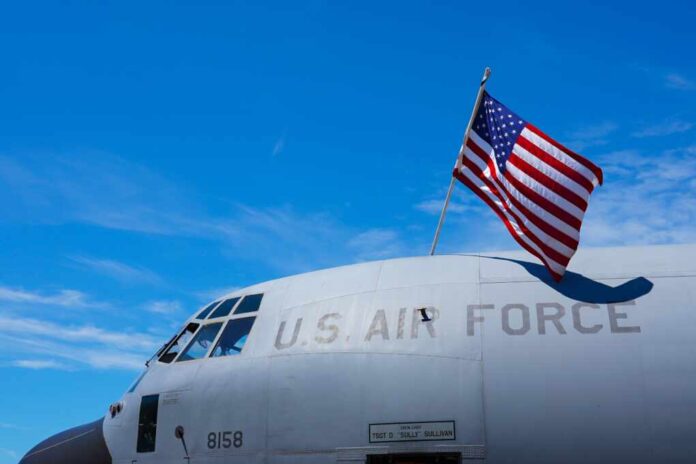
US Air Force tankers operating with transponders turned off have nearly collided with civilian aircraft twice in two days near Venezuela.
Story Highlights
- Second near-miss in two days between US military tankers and civilian flights off Venezuela coast
- Air Force tanker flew with transponder off, forcing pilots to rely on visual avoidance at 26,000 feet
- FAA issued unprecedented warnings about military activity threatening all altitudes near Venezuela
- Multiple airlines suspended Venezuela operations due to heightened military risks in the region
Military Tankers Operating Without Safety Systems
A Falcon 900EX private jet climbing from Aruba to Miami on Saturday afternoon encountered a US Air Force refueling tanker at approximately 26,000 feet in international airspace off Venezuela’s coast. The pilots reported the tanker as “big,” comparable to a Boeing 767 or 777, telling air traffic control “They were really close… We were climbing right into him.” This marked the second such dangerous encounter in 48 hours, following Friday’s near-miss between a US tanker and JetBlue Flight 1112 from Curaçao to JFK.
The most alarming aspect of these incidents involves US military aircraft operating with transponders turned off, eliminating crucial collision avoidance systems that civilian aviation relies upon for safety. Without transponder signals, air traffic control cannot track military aircraft positions, and civilian pilots lose automated warning systems designed to prevent midair collisions. This forces dangerous reliance on visual identification at high altitudes where reaction time is severely limited.
Watch:
FAA Issues Unprecedented Airspace Warnings
The Federal Aviation Administration reissued comprehensive warnings Tuesday about risks near Venezuela, extending advisories to all flight operations including arrivals, departures, overflights, and ground aircraft. These warnings cite “increased military activity” and potential threats at all altitudes, representing an unprecedented scope of concern for civilian aviation safety. The advisories followed initial warnings issued last month that prompted international carriers to suspend Venezuela operations entirely.
Copa Airlines extended its Caracas flight suspension through mid-January due to “operational conditions,” joining other carriers avoiding Venezuelan airspace altogether. The FAA’s explicit all-altitude threat warnings mark an unusual acknowledgment of military activity creating systematic risks for civilian aviation throughout the Caribbean region. Professional aviation outlets note these comprehensive advisories as unprecedented in their scope and duration.
Southern Command Reviews Dangerous Operations
US Southern Command confirmed awareness of the incidents and announced ongoing reviews of military aircraft operations in the Caribbean. The Pentagon and National Transportation Safety Board are gathering information about both encounters, while the Dutch Safety Board oversees investigation of the private jet incident. However, no timeline has been established for resolving the coordination failures that enabled these near-catastrophic events.
The heightened US military presence around Venezuela stems from regional tensions and the country’s political instability under the Maduro regime. While military operations serve legitimate national security interests, the execution raises serious questions about prioritizing mission objectives over civilian safety. These incidents highlight fundamental coordination breakdowns between military commanders and aviation authorities responsible for protecting innocent travelers and commercial operations in international airspace.