A second near-miss incident off the coast of Venezuela raises alarms about the implications of increased US military activity on civilian flight safety.
Story Highlights
- A private jet narrowly avoided a collision with a US military tanker.
- This marks the second near-miss in two days off Venezuela’s coast.
- Heightened US military presence is causing flight safety concerns.
- FAA warnings have led to airline suspensions in the region.
Recent Near-Miss Incidents Raise Safety Concerns
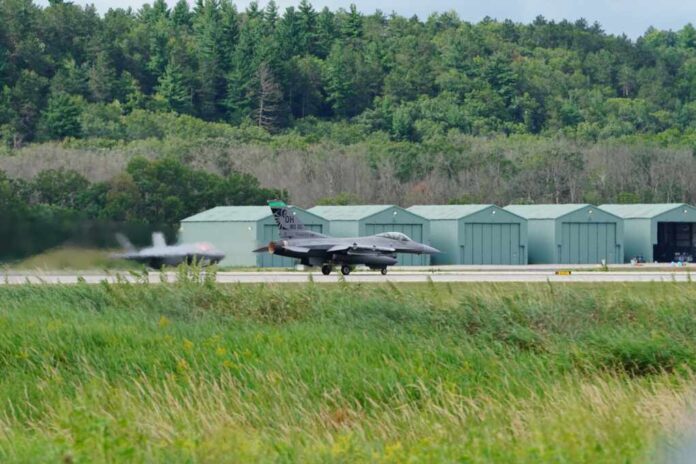
Over the past two days, two near-collisions off Venezuela’s coast have raised concerns about air safety amid heightened US military operations in the region. On Saturday, a Falcon 900EX private jet encountered a US Air Force refueling tanker at an altitude of 26,000 feet. The pilots, alarmed by the proximity, reported the incident to Curaçao air traffic control, highlighting the dangers posed by increased military flights with transponders off.
Friday saw a similar incident when a JetBlue flight had to halt its climb to avoid another US military tanker. These events occurred in international airspace managed partly by Curaçao ATC, where the US military’s presence has grown due to regional instability. The incidents underscore the risks linked to unannounced military operations that significantly impact commercial flight paths.
Watch:
Implications of US Military Activity in the Caribbean
The US military’s intensified operations in the Caribbean, particularly around Venezuela, have prompted the FAA to issue and reissue advisories warning of increased military activity. These warnings extend to all aspects of flight, from arrivals and departures to overflights and ground operations, leading some international carriers to suspend flights to Venezuela. Copa Airlines, for example, extended its suspension of Caracas routes through mid-January, citing operational conditions.
The Southern Command and the Pentagon are currently reviewing these incidents. Still, the continued pattern of near-misses raises questions about the potential need for revised protocols, particularly regarding military transponder use and coordination with civilian air traffic control to prevent future close encounters.
Continuing Tensions and Their Broader Impact
These near-misses highlight the ongoing tensions between the US and Venezuela, with broader implications for the aviation sector. The military’s dominance in international airspace and lack of coordination with civilian aviation authorities pose significant risks, drawing attention to the need for better deconfliction measures. The economic impact is also notable, as flight suspensions affect Venezuela’s connectivity, while socially, travelers experience disruptions across the Caribbean.
As these incidents undergo further review, the aviation industry may see increased international efforts to address airspace safety in militarily active regions, ensuring the safety of both civilian and military flights.
Sources:
Second Near-Miss with Military Jet Near Venezuela