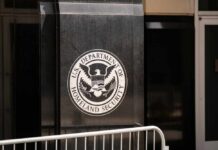
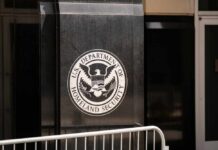
Americans are freezing on sidewalks outside airport terminals because Washington turned basic homeland security funding into a political hostage.
Quick Take
- Baltimore-Washington International (BWI) travelers have faced long, outdoor TSA lines amid a DHS-focused funding lapse and severe staffing shortfalls.
- DHS reported TSA attrition climbing from 376 quits to more than 450, with absences nationally around 10–11% and spikes reported at major airports.
- TSA officers—classified as essential—have been working without pay during the standoff, worsening callouts and undermining screening capacity during spring-break demand.
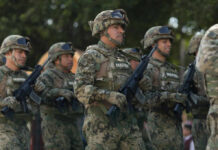
- DHS has deployed ICE/HSI personnel to help at 14 airports, but officials have warned Congress that emergency staffing options are being exhausted.
Freezing lines at BWI expose a federal system that breaks under shutdown pressure
BWI became a vivid symbol of dysfunction after travelers were filmed queueing outside the terminal in freezing conditions as security checkpoints backed up. Reports tied the delays to unusually high absenteeism at TSA, including a cited 23% absence rate at BWI during the current standoff. The scene is simple but telling: when staffing collapses at screening, travelers—not lawmakers—absorb the immediate cost in missed flights and unsafe crowding.
The broader context is a DHS-specific funding lapse that began around Valentine’s Day 2026, forcing TSA’s “essential” workforce to keep screening passengers while paychecks stop. TSA’s starting pay has been cited as low compared with the job’s demands, and reporting described officers facing acute financial stress—some falling behind on bills or taking extreme measures to stay afloat. Under those conditions, callouts rise, morale drops, and the checkpoint becomes a bottleneck.
Quits and callouts are rising, and DHS is warning about security risk
DHS updates in March showed the staffing problem worsening in real time. Earlier reports cited 376 TSA officers quitting since the standoff began, followed by a later update stating more than 450 had quit by March 24. Absences were described as running roughly 10–11% nationally, with spikes reportedly reaching 30% or more at certain airports. One consequence is unpredictability: passengers can face anything from normal flow to multi-hour waits depending on that day’s staffing.
In testimony to Congress, a senior TSA official described the situation as creating “major security risks” and warned that attrition would worsen without funding stability. That matters because TSA screening is not a convenience service; it is a federal security function tied to aviation safety. When staffing is thin, the government must choose between slower screening, reduced lane capacity, and heavier reliance on stopgap measures—none of which substitute for a stable, paid workforce operating at full readiness.
ICE deployments are a stopgap, not a fix—and they blur agency roles
To keep checkpoints moving, DHS deployed ICE/HSI officers to assist at 14 airports, including BWI, with deployments expanding in late March. That step can relieve pressure in the short run, but it also underscores a deeper problem: screening capacity is being propped up by personnel borrowed from other missions. Even when lawful and carefully managed, this kind of internal redeployment can strain enforcement priorities elsewhere and raises questions about how long the federal government can sustain basic operations without a budget deal.
For conservative readers who want orderly government without bureaucratic bloat, the takeaway is not that Washington needs more agencies. It is that Congress needs to do the job it is constitutionally tasked to do: fund core functions, debate policy changes openly, and stop using essential services as leverage. When politicians fuse unrelated demands to must-pass funding, the public gets chaos at airports and the country’s security posture becomes a bargaining chip.
The standoff is rooted in immigration politics, but the immediate victims are travelers and frontline staff
Reporting described Democrats withholding DHS funding while seeking changes tied to ICE policy and accountability demands following fatal Minneapolis shootings earlier in 2026. Republicans have resisted separating TSA funding from broader DHS negotiations, keeping the fight bundled. Regardless of which side a voter blames, the operational result is measurable: unpaid screeners, rising quits, higher callouts, and longer lines during a period when spring-break travel volume was reported as higher than last year.
Travelers Line Up on Sidewalk Outside Terminal in Freezing Temps at Baltimore Airport as Democrats Block Funding For TSA (VIDEO) https://t.co/I01ktwIJ4j #gatewaypundit via @gatewaypundit
— Ares Unchained (@AresUnchained) March 28, 2026
The shutdown fatigue is also compounding because this has not been a one-off event. Reporting described multiple funding lapses within roughly six months, including a lengthy 2025 shutdown and another brief lapse earlier in 2026, leaving TSA repeatedly whipsawed. Limited-government voters tend to support fiscal discipline, but discipline is not the same as dysfunction. If Washington wants secure borders, safe airports, and respect for working families, it cannot normalize governance by crisis that pressures essential workers to quit.
Sources:
Airport screeners quitting instead of working without pay poses a longer-term problem for TSA
US says more than 450 TSA officers have quit since funding standoff
TSA officers are quitting as a funding standoff forces them to staff airports without pay