Far from Washington and Beijing, the U.S. is quietly building a “war‑ready” weapons hub in rural Australia that could drag ordinary Americans and Aussies deeper into a future Pacific war.
Story Snapshot
- The U.S. Navy has tendered about $30 million for Marine Corps weapons warehouses in southeastern Victoria, Australia, billed as a “permanent war-ready stockpile.”[1][2]
- Officials say the site will hold ready‑for‑issue gear to support Marine operations and exercises across the Indo‑Pacific, and be integrated with Australian defense authorities.[2]
- The location sits beyond the range of most Chinese missiles and is part of a wider U.S. push to spread logistics hubs and prepositioned stocks across the Pacific.[2]
- Supporters call this smart deterrence; critics warn it turns Australia into a bigger target and deepens an alliance system many citizens already see as serving global elites more than regular people.[3]
What the new stockpile is and where it will go
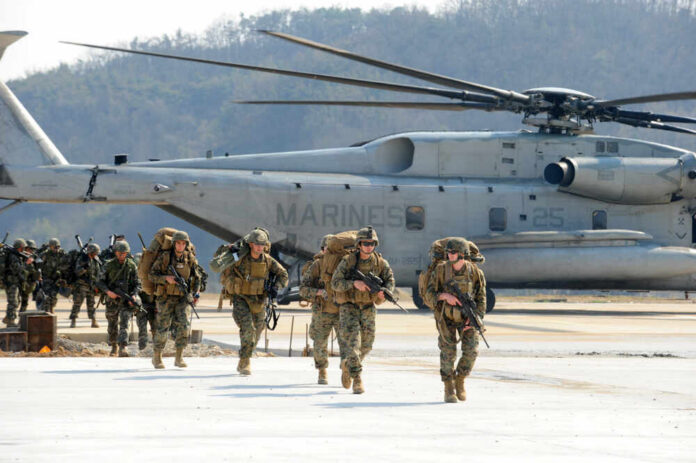
Documents from the United States Navy show roughly $30 million set aside to build new warehouses and offices in southeastern Victoria, described as “critical forward provisioning” for the Marine Corps.[1][2] The plan is to create a permanent weapons and equipment stockpile on Australia’s southeast coast, the first land-based Marine Corps depot of its kind in the country.[1][2] Reporting says the stockpile is expected to reach full capacity by 2028, with some equipment first stored around Melbourne before moving to new facilities at the Bandiana army base.[2]
The tender documents say the site will hold items including “crew-served weapons,” a military term for heavier guns run by small teams.[2] United States Marine Corps Forces Pacific told reporters the goal is to maintain “ready-for-issue” equipment and supplies to support operations and training across the Indo‑Pacific region.[2] Officials say the facilities and contracts will be closely coordinated with Australia’s Department of Defence.[2] This means Australian soil, power, and local communities will support a long-term American war reserve even though voters in both countries have had little direct say.
How this fits a wider Pacific buildup
This stockpile is not a one-off, but part of a broader plan to scatter United States logistics hubs across the Pacific so forces can fight and resupply if shipping lanes or fuel depots are attacked. A recent report described how last year’s Talisman Sabre exercises left behind about 330 vehicles, 130 containers, and other gear in Bandiana, enough to supply several logistics companies for a future drill, disaster response, or war. The United States Army has also begun testing “Joint Theater Sustainment Distribution Centers,” with one in Australia and one in the Philippines to shelter equipment and supplies for crises and conflict alike.
Analysts say the southeast Australian site is chosen in part because it sits beyond the reach of most Chinese missiles, unlike many bases closer to China’s coast.[2] Naval reporting describes the Marine Corps exploring new prepositioning locations in Australia and Palau to counter growing Chinese missile threats and harden supply chains.[4] At the same time, other changes are underway: permanent storage of Marine Osprey aircraft in Australia, new logistics centers in Townsville, and tighter integration of Australian facilities into American war plans.[3] Together, these moves shift Australia from a distant ally to a key rear-area hub in any U.S.–China showdown.
Deterrence, militarization, and why both sides are uneasy
American and Australian officials frame these steps as common sense deterrence and insurance. They argue that if the United States cannot keep fuel, parts, and munitions flowing, it cannot defend allies or prevent China from trying to seize places like Taiwan.[2] Supporters say prepositioned stocks and shared supply chains make war less likely, because they signal that the alliance can endure a long fight if needed. For them, this is about stability, not aggression, and uses existing bases rather than building new, obvious American-only installations.[1]
𝗜𝗡 𝗧𝗛𝗘 𝗡𝗘𝗪𝗦 | 𝗣𝗛𝗜𝗟𝗜𝗣𝗣𝗜𝗡𝗘 𝗠𝗔𝗥𝗜𝗡𝗘 𝗖𝗢𝗥𝗣𝗦, 𝗨.𝗦. 𝗠𝗔𝗥𝗜𝗡𝗘 𝗖𝗢𝗥𝗣𝗦 𝗞𝗜𝗖𝗞 𝗢𝗙𝗙 𝗞𝗔𝗠𝗔𝗡𝗗𝗔𝗚 𝟭𝟬-𝟮𝟬𝟮𝟲
The Philippine Marine Corps (PMC) and the United States Marine Corps (USMC) officially launched KAMANDAG Exercise 10-2026 on June… pic.twitter.com/p6BDySLwJM
— Philippine Marine Corps (@AlphaCoyMarines) June 16, 2026
Critics in the region see the same facts very differently. Some Australian security experts warn that as more American forces, aircraft, and depots move in, Australia becomes “a more conspicuous target” in any major conflict.[4] Commentators also point out that the media language of a “war‑ready stockpile” built to counter China’s military build‑up sounds less like calm defense and more like gearing up for a great‑power showdown.[1][6] That fuels fears, on both the left and right, that decisions made by a small circle of defense planners and contractors are pulling whole societies toward a war most citizens do not want and cannot control.
Why this matters for Americans who already distrust Washington
For many Americans, this story hits several raw nerves at once: endless foreign commitments, rising defense budgets, and a political class in both parties that seems more focused on distant chessboards than on crumbling bridges, high prices, or border chaos at home. The same government that struggles to manage debt and basic services is now paying to harden distant depots and move weapons halfway around the world.[1] Defense experts talk about “forward deterrence” and “supply chain resilience,” but ordinary taxpayers hear another open‑ended bill.
Both conservatives and liberals have reasons to be wary. Voters who back “America First” question why Australia’s defense and a possible war over Taiwan should rest so heavily on U.S. Marines and U.S. money. Many on the left see yet another step toward militarizing the Indo‑Pacific instead of pursuing real diplomacy with China and investing at home. Underneath the partisan fights sits a shared concern: major strategic choices, like building a war‑ready stockpile in a quiet corner of Victoria, are being made through tenders and elite consultations, not robust public debate. That is exactly the pattern that keeps feeding anger at the “deep state” and a sense that the federal government serves global interests long before it serves its own people.
Sources:
[1] Web – US military to build war-ready stockpile in Australia: documents
[2] Web – Documents: US Military to Build War-ready Stockpile in Australia
[3] Web – US Marines to build weapons stockpile in Australia, documents show
[4] YouTube – Why the US Military Just Changed Australia’s Position in its War Plans