

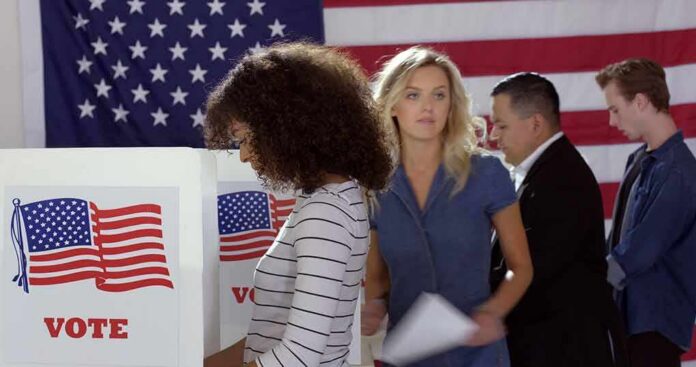
Democrats hold a clear edge in early and mail voting so far, reshaping key midterm battlegrounds before Election Day.
Story Snapshot
- National trackers show Democrats leading early and mail voting participation.
- Competitive Senate states report Democratic advantages among ballots cast to date.
- Georgia and North Carolina post record early turnout, raising the stakes for both parties.
- Faster Democratic mail returns offset fewer requests compared with 2022, complicating forecasts.
What the Early Vote Shows Nationwide
National early vote trackers reported millions of ballots already cast, with Democrats forming a larger share of these voters than Republicans. NBC News listed 8.9 million early and mail votes through October 17, with a distribution of about 47 percent Democratic, 30 percent Republican, and 23 percent other or unaffiliated voters. A separate report used similar data sources and found a comparable split, framing it as a Democratic participation edge before Election Day.
These figures reflect participation, not vote choice. The reports classify voters by registration or modeled affiliation and count ballots received, without indicating which candidates these voters selected. States also differ on whether party registration is tracked, which makes national aggregates a blend of direct registration counts and modeled estimates. Still, the topline pattern remains clear: more early ballots are coming from Democratic registrants than from Republican registrants at this stage.
Battleground Patterns and Notable State Surges
Several competitive Senate states show the same participation tilt. Reports cited registration-based shares favoring Democrats in Michigan, Iowa, and Maine among early and mail voters. Texas showed one of the largest gaps, with Democrats holding a sizable registration advantage among ballots cast so far, a striking data point given the state’s Republican lean in recent cycles. These patterns matter because campaigns bank votes early, build turnout lists, and shift resources as daily files update.
Turnout volume also changed the landscape. Georgia recorded more than 188,000 ballots on the first day of early voting, setting a state record and surpassing the comparable 2022 day. North Carolina officials reported a surge as well, with Democrats outpacing Republicans among voters who had already cast ballots and first-day in-person totals higher than in 2022. High early participation widens the pool where partisan differences in mode and timing can shape the race before Election Day.
Mail-Ballot Behavior and the Limits of Prediction
Analysis from NBC News and research partners points to a shift in how Democrats use mail ballots. Democratic registrants who requested mail ballots this year returned them at a higher rate by this date than in 2022, even as total Democratic mail-ballot requests fell sharply compared with that cycle. One report quantified the request decline at about 40 percent from 2022, while noting the quicker return pace among those who did request ballots. That mix can look like a larger edge than it is.
As early voting continues, some states have seen the apparent Democratic share narrow from initial levels, even if day-to-day differences remain stronger than in 2024. The composition of the early electorate also does not lock in the final outcome. Many Republicans prefer voting on Election Day, which could reduce or even erase early participation gaps without contradicting current data. These are participation snapshots, not final scoreboards.
Why This Matters Beyond Party Tactics
Americans on the right and left worry that the system serves insiders, not citizens. Early voting data will be used by both parties to claim momentum and shape narratives. That is fair game in politics, but it can blur the line between who voted and how they voted. Treating registration shares as results risks leaving voters with a headline instead of hard truth—especially when different state systems feed into national totals with mixed methods.
🚨Early Voting Updates🚨
Georgia – Very strong turnout in the Atlanta area and surrounding suburbs, while turnout in rural areas continues to be considerably weaker.
Texas – Too early to tell, but Democrats have gotten off to a very strong start.
Nevada – This morning’s early…
— The Political HQ (@ThePoliticalHQ) October 17, 2026
Voters deserve clarity as they judge claims about turnout and energy. The big picture is this: Democrats are casting a larger share of early and mail ballots so far in several key states, while overall turnout is up in places like Georgia and North Carolina. Campaigns will fight over the meaning. The final call still rests with everyone who has not voted yet. Showing up—early or on Election Day—matters more than any spin about who is ahead.
Sources:
nypost.com, nbcnews.com, nytimes.com, thinkbigpicture.substack.com