Dozens of diplomats walking out on a head of government at the United Nations turned a policy speech into a public verdict on power, war, and truth.
Story Snapshot
- Dozens of UN delegates walked out as Israel’s Benjamin Netanyahu began speaking, signaling sharp diplomatic pushback.
- Netanyahu framed Israel’s actions as lawful self-defense and said Israel has every right to remove threats.
- UN human rights officials have accused Israel of large-scale violations and possible crimes against humanity.
- The spectacle reflects a broader UN pattern where walkouts overshadow substance and deepen mistrust across blocs.
What Sparked the Walkout and Why It Matters
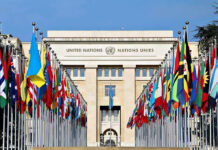
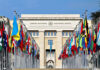
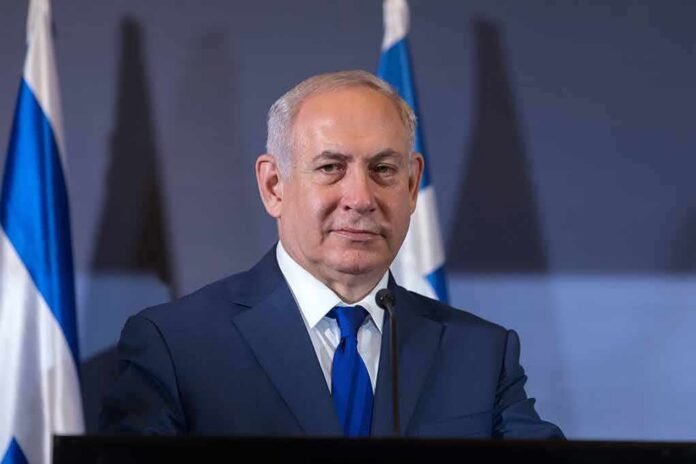
United Nations delegates from multiple countries stood up and left as Israeli Prime Minister Benjamin Netanyahu took the stage at the General Assembly. Reuters and other outlets described the exits as a coordinated protest tied to the war in Gaza and broader complaints about Israeli policy. The walkout created a strong image of diplomatic isolation. That scene, beamed worldwide, matters because it shapes public memory more than the details that followed at the podium.
Netanyahu’s critics aimed to signal that parts of the world will not accept his defense of Israel’s military actions. The Palestinian Mission to the United Nations had urged delegations to show they would not be “complicit” in alleged crimes, a message echoed in protest calls around the event. Whether one views the exits as moral courage or political theater, the effect was the same: the drama defined early coverage and set a combative tone for the rest of the address.
Netanyahu’s Case: Self-Defense and Security First
Netanyahu argued that Israel acts in self-defense and has the right to remove threats, citing sustained attacks and security risks. In a prior United Nations address preserved in the General Debate archive, he said Israel “has every right” to restore safety and protect its people, a theme he has repeated across years of speeches. His framing sought to place military actions within international law, with a focus on protecting civilians in Israel from cross-border rockets and militia activity.
He also presented the fight as a response to a long period of provocation, using phrases like “enough is enough” to stress urgency and necessity. Supporters say this view reflects a basic duty of any state: keep citizens safe and deter future attacks. Still, the strongest backing in the public record remains his own statements and official transcripts. These sources document his position, but they do not by themselves verify operational choices or proportionality in each strike.
The Counter-Case: Rights Violations and Civilian Harm
United Nations human rights officials have issued sharp critiques of Israel’s conduct in Gaza and the West Bank. Reuters reported that the UN human rights chief, Volker Türk, said Israel’s operations in Gaza “consistently breached international law” and showed “unprecedented disregard for human rights” while presenting a formal report. A United Nations News brief said the same reporting documented large-scale violations, including possible crimes against humanity by Israeli and Palestinian actors.
Those claims are serious and go beyond rhetoric into findings from an official human rights review process. They reflect a deep split between Israel’s self-defense narrative and a rights-based judgment of outcomes on the ground. That split fuels diplomatic protests like the walkout. It also feeds public anger across the spectrum: conservatives see a world body that ignores terror threats, while liberals see unchecked force and growing human cost. Both sides see institutions that do not fix root problems.
Why This Resonates With Americans Who Feel Failed by Institutions
Americans watching this spectacle see a familiar pattern. Big events become stagecraft. Leaders repeat talking points. Institutions argue, but little gets solved. The walkout spotlights how global forums often trade in signals, not solutions. Critics on the right cite double standards and elite posturing. Critics on the left cite civilian suffering and power without accountability. Both camps sense that leaders defend positions first and people last. The empty seats at the United Nations captured that mood in one frame.
Israeli PM Netanyahu attacks NYC Mayor Mamdani as 'antisemitic' in UN speech https://t.co/7LeRZsnZA0
— MissCrayon 🌊🇺🇸 (@moughthere) September 25, 2026
For U.S. politics, the moment cuts two ways. Security-first voters hear Netanyahu’s message and nod at a state’s right to defend itself. Rights-first voters hear the UN findings and demand limits, oversight, and relief for civilians. Yet a larger, shared worry stands out: if world bodies cannot even keep listeners in their seats, how will they curb violence, restrain abuses, and move bitter enemies toward a real settlement? Until leaders answer that, the distrust grows.
Sources:
reuters.com, pbs.org, gadebate.un.org, gov.il, ynetnews.com, europarl.europa.eu, canberratimes.com.au, bbc.co.uk